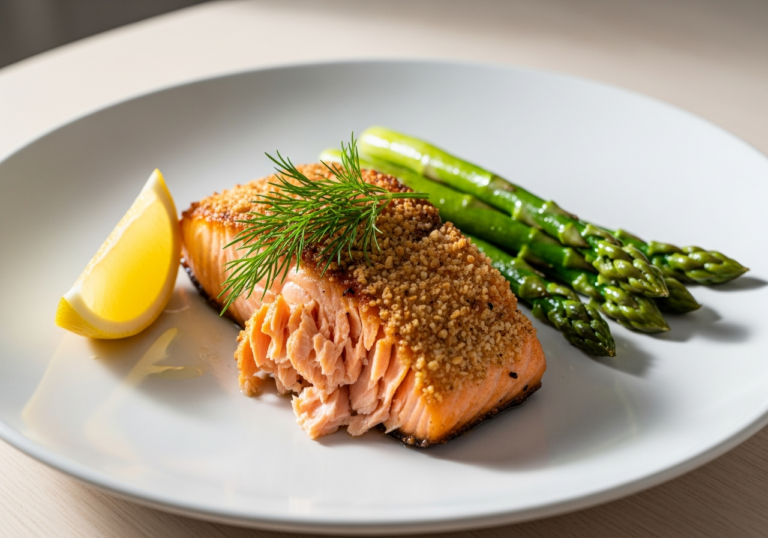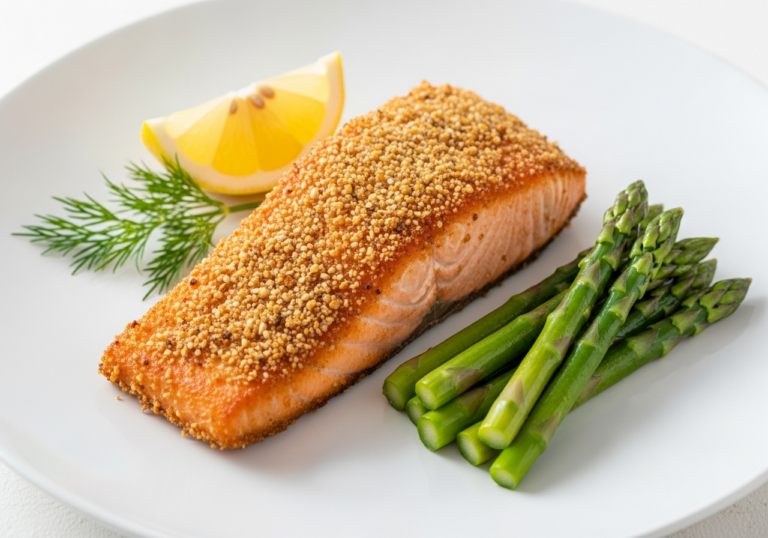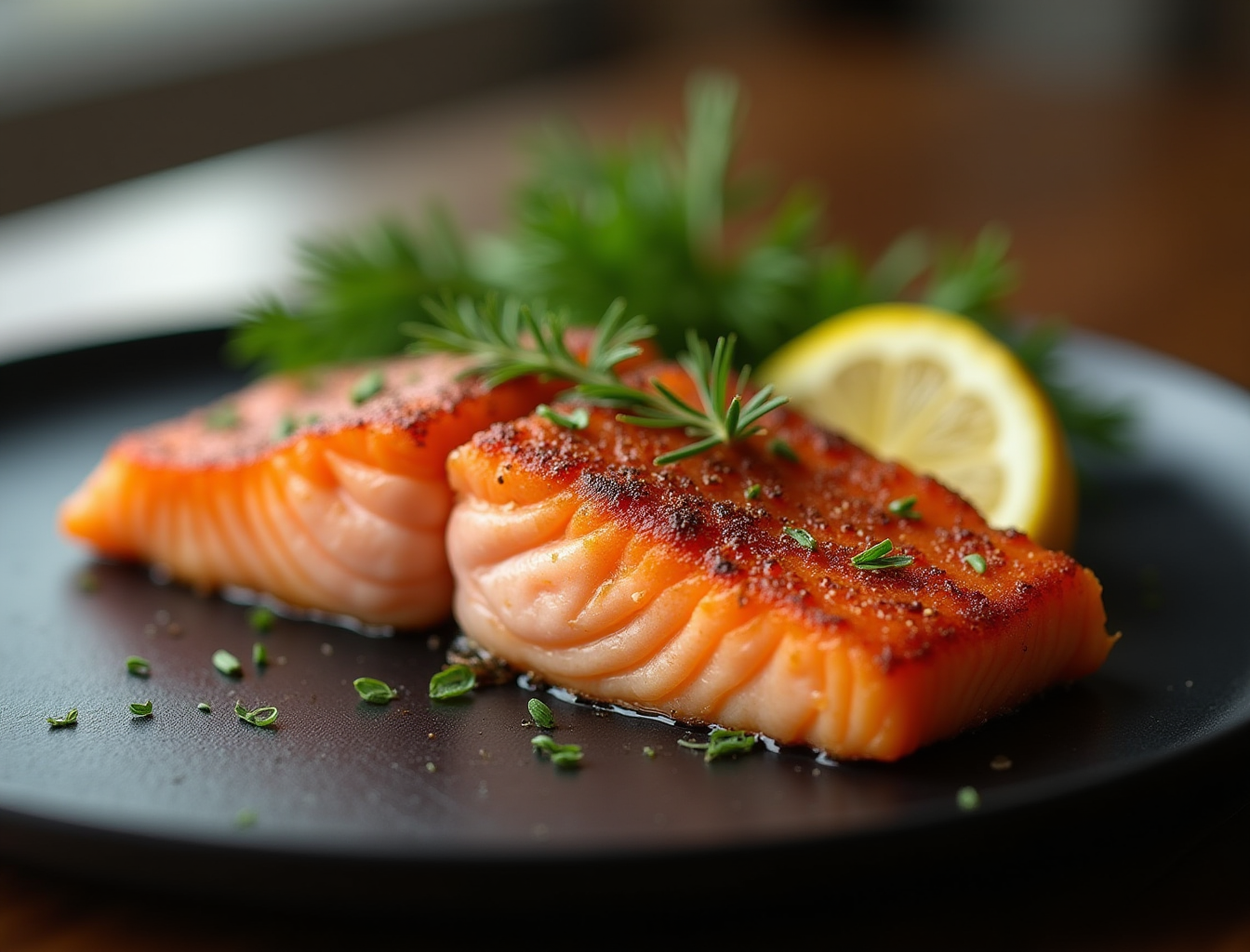
Air Fryer Salmon Recipe | Crispy & Healthy in 10 Minutes!
Why Is Air Fryer Salmon the Fastest Healthy Dinner You Can Make?
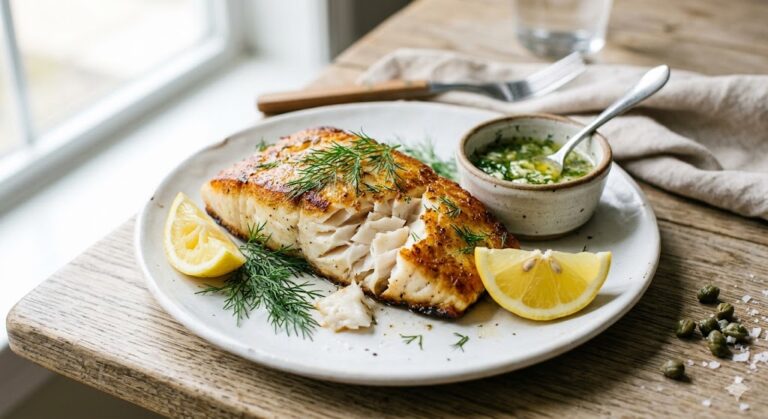
Air fryer salmon is the fastest path from refrigerator to dinner table for a genuinely nutritious meal, and the method produces results that rival restaurant-quality fish in under 15 minutes total. The air fryer’s high-speed circulating heat accomplishes two things simultaneously: it creates a lightly crisp, caramelized exterior on the fillet while preserving the tender, flaky interior that makes salmon worth eating. Unlike pan-searing, there is no oil spatter, no flipping required, and no risk of the fillet sticking to the pan. Unlike oven baking, there is no 15-minute preheat and no 20–25 minute cook time. Salmon is a rich source of omega-3 fatty acids, high-quality protein, and vitamins D and B12 — nutrients that are better preserved by quick, high-heat cooking methods that minimize time exposure. At 375°F (190°C) for 8–10 minutes, a 6-ounce fillet reaches the FDA-recommended internal temperature of 145°F (63°C) with a moist, just-cooked center and a slightly crisped surface.
PrintAir Fryer Salmon
Crispy-outside, tender-inside salmon fillets cooked in the air fryer in just 10 minutes. A fast, healthy dinner with minimal cleanup and no flipping required.
- Prep Time: 10 minutes
- Cook Time: 10 minutes
- Total Time: 20 minutes
- Yield: 4 servings 1x
- Category: Dinner
- Method: Air Fryer
- Cuisine: American
Ingredients
- 4 salmon fillets, skin-on, approximately 6 oz each (about 1 inch thick)
- 1 tbsp olive oil or avocado oil
- 1 tsp garlic powder
- 1 tsp dried dill (or 1 tbsp fresh)
- ½ tsp kosher salt
- ½ tsp black pepper
- 1 lemon, sliced, plus additional juice for serving
Instructions
- Remove fillets from the refrigerator 10 minutes before cooking. Pat each fillet completely dry with paper towels on both the skin and flesh sides — removing surface moisture is essential for browning.
- Preheat the air fryer to 375°F (190°C) for 3–5 minutes. Brush each fillet with olive oil on all sides. Mix garlic powder, dill, salt, and pepper and sprinkle evenly over the flesh side of each fillet.
- Place salmon fillets skin-side down in the air fryer basket in a single layer, leaving space between each piece for air circulation. Do not overlap.
- Cook at 375°F for 8–10 minutes without flipping. Add lemon slices to the basket during the last 2 minutes if desired. Start checking internal temperature at 7 minutes.
- Use an instant-read thermometer to verify doneness — the FDA recommends 145°F (63°C) for fish. Salmon should be opaque and flake easily. Remove immediately and serve with fresh lemon juice.
Notes
Don’t overcrowd: Cook in batches if making more than 2–3 fillets. Overlapping fillets steam rather than air fry, losing the crisp exterior.
Quick marinade option: Mix soy sauce, grated ginger, and a small amount of sesame oil and marinate for 15 minutes. Pat off excess before cooking to prevent burning.
Dry salmon fix: Overcooking is almost always the cause. Start checking at 6–7 minutes and pull the fillet when the center still has slight translucency — residual heat will finish it. You can also drop the temperature to 360°F for more control.
Thickness guide: ¾-inch fillets cook in 7 minutes; 1-inch in 9 minutes; 1¼-inch in 11 minutes; 1½-inch in 13 minutes. Add 2–3 minutes for frozen-then-thawed fillets.
What Ingredients Do You Need for Air Fryer Salmon?
Ingredients
- 4 salmon fillets, skin-on, approximately 6 oz each (about 1 inch thick)
- 1 tbsp olive oil or avocado oil
- 1 tsp garlic powder
- 1 tsp dried dill (or 1 tbsp fresh)
- ½ tsp kosher salt
- ½ tsp black pepper
- 1 lemon (sliced, plus additional juice for serving)
Tools Needed
- Air fryer (basket-style or oven-style)
- Instant-read meat thermometer
- Pastry brush or spoon for oil application
- Paper towels for patting fillets dry
- Parchment paper liner or perforated air fryer liner (optional, prevents sticking)
Skin-on fillets are the better choice for air frying. The skin acts as a natural barrier between the delicate flesh and the hot basket surface, protecting the fillet from overcooking on the bottom while the circulating air works on the top and sides. Wild-caught salmon varieties such as sockeye and coho tend to be leaner and have more concentrated flavor, while Atlantic salmon (typically farm-raised) is richer in fat and more forgiving if slightly overcooked.
How Do You Cook Salmon in the Air Fryer Step by Step?
Step 1: Prepare the Salmon Fillets
Remove fillets from the refrigerator 10 minutes before cooking to take the chill off — this promotes more even cooking. Pat each fillet completely dry with paper towels, pressing firmly on the skin and flesh sides. Any surface moisture will turn to steam in the air fryer, preventing the exterior from browning.
Step 2: Season and Set Up the Air Fryer
Preheat the air fryer to 375°F (190°C) for 3–5 minutes. While it preheats, brush each fillet with olive oil on all sides. Mix garlic powder, dill, salt, and pepper together and sprinkle evenly over the flesh side of each fillet. If using lemon slices as a cooking garnish, set them aside to add in the final 2 minutes.
Step 3: Place Fillets Skin-Side Down
Place salmon fillets in the air fryer basket skin-side down in a single layer. Leave space between each piece so air can circulate freely. Do not overlap fillets — stacking prevents the circulating air from reaching all surfaces and produces uneven cooking with a raw center and overcooked edges.
Step 4: Cook and Monitor
Cook at 375°F for 8–10 minutes without flipping. There is no need to flip salmon when cooking skin-side down — the heat penetrates from all sides. For a 6-oz fillet at 1-inch thick, 8 minutes will produce a medium-done center; 10 minutes gives a fully cooked through result. Add lemon slices to the basket during the last 2 minutes if desired. Cooking time varies by thickness — see the chart below.
Step 5: Check Internal Temperature and Serve
Use an instant-read thermometer to verify doneness. The FDA recommends an internal temperature of 145°F (63°C) for fish to eliminate pathogens. At 145°F, salmon will be opaque throughout and flake easily with a fork. Remove from the air fryer immediately and serve with fresh lemon juice.
Source: FDA Food Code — Fish safe minimum internal temperature 145°F. fda.gov
What Is the Air Fryer Salmon Cooking Time Chart by Thickness?
| Fillet Thickness | Weight (approx.) | Air Fryer Temperature | Cook Time | Internal Temp Target |
|---|---|---|---|---|
| ¾ inch | 4–5 oz | 375°F (190°C) | 6–7 minutes | 145°F (63°C) |
| 1 inch | 6 oz | 375°F (190°C) | 8–9 minutes | 145°F (63°C) |
| 1¼ inch | 7–8 oz | 375°F (190°C) | 10–11 minutes | 145°F (63°C) |
| 1½ inch | 8–10 oz | 375°F (190°C) | 12–13 minutes | 145°F (63°C) |
| Frozen (thawed) | Any | 375°F (190°C) | Add 2–3 minutes | 145°F (63°C) |
Always begin checking the internal temperature 1–2 minutes before the suggested time, as air fryer wattages vary by model. For a complete reference, see the Air Fryer Cooking Times and Temperatures Chart.
What Are the Best Pro Tips for Perfect Air Fryer Salmon?
Tip 1: The “Perfect Every Time” Checklist
- Fillet at room temperature (10 minutes out of fridge)
- Completely dry surface before oiling
- Air fryer fully preheated
- Single layer, skin-side down, no overlap
- Thermometer ready to check at 7 minutes
- Serve immediately — salmon does not improve with sitting
Tip 2: Do Not Overcrowd the Basket
If cooking more than 2–3 fillets, do it in batches. The air fryer basket has a maximum effective capacity — once pieces start touching, the cooking method shifts from air frying to steaming, and you lose the textural benefit the appliance provides.
Tip 3: Marinate for 15 Minutes for Deeper Flavor
A quick marinade of soy sauce, grated ginger, and a small amount of sesame oil penetrates the salmon surface meaningfully in just 15 minutes. Pat off excess marinade before cooking to prevent the sugars from burning on the basket. The seasoning guide for air fryer fish has more marinade combinations.
Tip 4: Why Is My Salmon Dry? (Troubleshooting)
Dry salmon almost always means overcooking. Salmon goes from perfect to dry within 1–2 minutes past the ideal temperature. Start checking at 6–7 minutes for a 1-inch fillet. Pull the salmon when the center still has a very slight translucency — residual heat will carry it to 145°F. If you consistently get dry results, reduce your air fryer temperature to 360°F and add 1–2 minutes — this gentler approach gives you more control.
What Flavor Variations Can You Try with Air Fryer Salmon?
| Variation | Marinade or Seasoning | Best Pairing | Diet Notes |
|---|---|---|---|
| Spicy Honey Sriracha | 1 tbsp honey + 1 tsp sriracha + soy sauce, brush before cooking | Steamed jasmine rice, cucumber salad | Gluten-free with tamari |
| Mediterranean | Olive oil + dried oregano + lemon + capers + sun-dried tomatoes on top | Quinoa, roasted zucchini | Keto-friendly |
| Teriyaki | Soy sauce + mirin + ginger + garlic, marinate 15 min | Steamed broccoli, sesame noodles | Use coconut aminos for paleo |
| Lemon Herb | Base oil + thyme + rosemary + lemon zest | Air fryer asparagus, roasted potatoes | Whole30, paleo |
| Low-Carb Cajun | Cajun spice blend + avocado oil — skip glaze | Cauliflower rice, avocado | Keto, low-carb |
What Side Dishes Pair Best with Air Fryer Salmon?
The best side dishes for air fryer salmon are those you can cook in the air fryer at a similar temperature, allowing for a complete meal with minimal cleanup. Consider air fryer vegetables like asparagus (375°F, 7–8 minutes), broccoli (375°F, 8–10 minutes), or green beans (380°F, 6–8 minutes). For grain-based sides, quinoa and cauliflower rice complement the richness of salmon without competing with it. A simple green salad with lemon vinaigrette cuts through the fattiness of the fish.
How Do You Store and Reheat Leftover Air Fryer Salmon?
Cooked salmon keeps in the refrigerator for up to 3 days in an airtight container. Salmon is more delicate than chicken when it comes to reheating — high heat will dry it out almost immediately. Reheat in the air fryer at 300–325°F for 3–4 minutes only. Alternatively, enjoy leftover salmon cold over salad greens or flaked into pasta — this avoids the reheating challenge entirely and is common in many cuisines where salmon is used as a room-temperature protein.
Freezing cooked salmon: wrap tightly in plastic wrap, then foil. Frozen cooked salmon keeps for up to 2 months. Thaw in the refrigerator overnight. Note that texture quality declines noticeably after freezing and reheating — freezing raw salmon and cooking fresh is preferable if your schedule allows.
What Are the Health Benefits of Eating Air Fryer Salmon Regularly?
Salmon is among the most nutritionally dense proteins available, and air frying preserves its nutrients better than methods that require extended heat exposure. A single 6-oz serving of salmon provides approximately 34 grams of high-quality protein, roughly 2,000–2,500 mg of omega-3 fatty acids (EPA and DHA), and meaningful amounts of vitamins D, B12, and B6, plus selenium and potassium.
Air frying preserves these nutrients because the cooking time is short (8–10 minutes) and no water bath is involved, which would leach water-soluble vitamins. Pan-frying in significant amounts of butter or oil adds substantial caloric load; baking at lower temperatures for longer periods can degrade heat-sensitive vitamins. Air frying at 375°F for under 10 minutes hits the optimal balance: safe internal temperature achieved, minimal nutrient degradation, no added fat unless you choose to add it. At roughly 250–280 calories per 6-oz serving prepared with light oil and seasoning, air fryer salmon fits comfortably into calorie-conscious eating plans, keto diets, paleo frameworks, and Mediterranean diet patterns.
Note: this content describes general nutritional properties of salmon as a food. It is not medical advice. Consult a registered dietitian for personalized nutrition guidance.
How Does Air Fryer Salmon Compare to Other Cooking Methods?
| Cooking Method | Cook Time (6 oz fillet) | Exterior Texture | Oil Needed | Hands-On Difficulty |
|---|---|---|---|---|
| Air fryer | 8–10 minutes | Lightly crisp, golden | Minimal — 1 tsp | Low — no flipping required |
| Pan sear (skillet) | 8–10 minutes | Excellent crust (skin side) | 1–2 tbsp | Medium — needs monitoring, flipping |
| Oven bake | 12–15 minutes at 400°F | Soft, no crust | 1–2 tsp | Low — hands off |
| Broil | 6–8 minutes | Very good crust | 1 tsp | High — must watch constantly |
| Poach | 8–10 minutes | None — soft throughout | None | Medium — temperature control |
| Grill | 8–12 minutes | Excellent grill marks | Yes | High — sticking risk |
For weeknight cooking when you want fast, healthy, and low-effort results, air fryer salmon is the clear winner. The method that comes closest in crust quality is pan searing, which produces an exceptional skin-side crust but requires more oil and active attention. Consider cooking air fryer vegetables as a side at the same temperature as a complete one-pan approach — the salmon and asparagus or broccoli can often go in simultaneously for a full meal in under 15 minutes total.
Frequently Asked Questions About Air Fryer Salmon
Do I need to flip salmon in the air fryer?
No. Cooking salmon skin-side down for the entire cook time is the recommended approach. The skin protects the bottom of the fillet from the basket heat, while the circulating hot air cooks the flesh side from above. Flipping risks breaking apart the delicate fillet and is unnecessary for good results.
Can I cook frozen salmon in the air fryer?
Yes, with adjustments. Thaw the salmon completely in the refrigerator overnight for best results and full control over cook time. If cooking from frozen in an emergency, add 3–5 minutes to the cook time and check the internal temperature carefully — frozen pieces cook unevenly and require extra attention. The FDA’s safe internal temperature of 145°F (63°C) applies regardless of starting state.
How do I tell when air fryer salmon is done without a thermometer?
Gently press the thickest part of the fillet with a fork. Done salmon will flake apart easily along the natural separations in the flesh and will be opaque throughout with no translucent or raw-looking areas in the center. That said, a thermometer is the only reliable method and costs under $15 — it is a worthwhile investment for any fish cook.
Can I cook salmon without skin in the air fryer?
Yes. Skinless fillets work fine but require a light coating of oil on the flesh side facing down to prevent sticking to the basket. A parchment liner is especially helpful with skinless salmon. Cook time is the same; just monitor more closely as skinless fillets can dry out slightly faster without the fat-insulating layer the skin provides.
What is the difference between air fryer salmon at 375°F vs. 400°F?
375°F (190°C) gives you more control and a slightly more gently cooked, moist interior. It is the preferred temperature for thicker fillets or when you want a precise medium-done result. 400°F cooks faster (7–8 minutes for a 6-oz fillet) and produces a more pronounced crust, but leaves less margin for error — it is better for thin fillets where you want speed. Both temperatures are valid; choose based on fillet thickness and your preference for interior texture.