Air Fryer Meal Prep: The Complete Weekly Guide (Save Time Every Night)
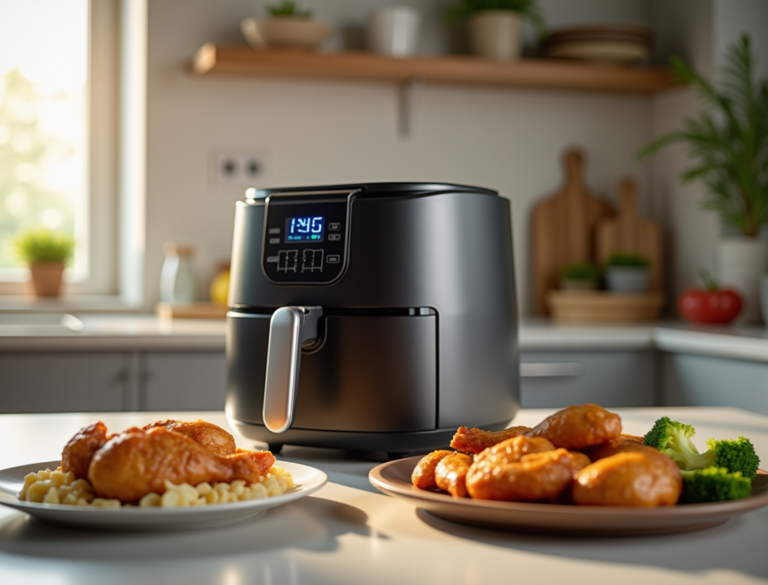
The air fryer is a faster, more efficient meal prep tool than most people realise. Proteins that take 25–30 minutes in an oven are done in 15–18 in the air fryer. Vegetables roast in 10–12 minutes instead of 25. Preheat takes 3 minutes instead of 15. Over a 90-minute Sunday session, those differences add up to a full week of meals — prepped, stored, and ready to assemble in under 5 minutes each night.
This guide covers the complete system: why the air fryer works for batch cooking, the 90-minute Sunday workflow, the best proteins and vegetables to prep, five complete weekly menus, a master time-and-temperature chart, storage durations, and the most common mistakes that ruin meal prep results.
For individual recipe details on any food mentioned, see our guides to air fryer chicken thighs, air fryer chicken breast, air fryer salmon, air fryer butternut squash, air fryer broccoli, and air fryer baked potato. Full cooking times for 100+ foods are in our air fryer cooking times chart.
Why Use an Air Fryer for Meal Prep?
Most people who do Sunday meal prep use the oven. The oven works well for large batches — multiple sheet pans at once — but it has real drawbacks for a home cook doing 1–2 portions of each item. Preheating takes 12–15 minutes. A single sheet of chicken uses the full oven. Cleanup involves scrubbing the pan.
The air fryer solves all three problems:
- Preheat in 3 minutes instead of 12–15. In a 90-minute session, that’s 10+ minutes saved on preheat cycles alone.
- Smaller batches are not a penalty. The air fryer is designed for 1–4 portions — exactly the size of most meal prep batches. You don’t waste energy heating a large oven for a small quantity.
- Crisper results. For proteins and vegetables, the air fryer produces better texture than a flat oven tray. Chicken thighs come out with properly crisped skin. Vegetables brown on all surfaces, not just the bottom.
Air Fryer vs. Oven for Batch Cooking
| Factor | Air Fryer | Oven |
|---|---|---|
| Preheat time | 2–3 minutes | 10–15 minutes |
| Cook time: chicken breast | 15–18 minutes | 25–30 minutes |
| Cook time: broccoli | 10–12 minutes | 20–25 minutes |
| Crispiness on proteins | High — all surfaces | Medium — bottom side only |
| Batch size | 1–4 portions | Full sheet pan (8–12 portions) |
| Energy use | Lower (1,400–1,800W) | Higher (2,000–5,000W) |
| Simultaneous cooking capacity | Limited — one basket | High — multiple racks/trays |
| Ideal for | Proteins, vegetables, crispy items | Large batches, roasts, casseroles |
Best strategy: Use the air fryer and stovetop simultaneously during meal prep. Air fryer handles proteins and vegetables (which benefit from the air fryer’s direct heat and crispiness). Stovetop handles grains (quinoa, rice — which the air fryer cannot cook). Oven is optional for large-batch items only.
The Air Fryer Meal Prep System — How It Works
The system has three phases, designed to run in sequence within 90 minutes while maximising parallel cooking:
- Phase 1 — Proteins (0–30 min): Start with proteins that have the longest cook time and the strictest food safety requirements. Get these going first while you prep everything else.
- Phase 2 — Vegetables (30–60 min): While proteins finish or cool, batch the vegetables. Most vegetables cook in 10–15 minutes — you can rotate 3–4 batches through the air fryer in 30 minutes.
- Phase 3 — Carbs and Extras (60–90 min): Air fry sweet potatoes, potato wedges, or baked potatoes while grains cook on the stovetop in parallel. This is also when you portion, label, and store everything.
The 90-minute window works for 1–2 people’s meal prep. For a family of 4, plan for 2–3 hours or supplement with the oven for larger batches.
The 90-Minute Sunday Meal Prep Plan
Phase 1 (0–30 min): Proteins
Before you start: Remove proteins from the fridge to take off the chill. Marinate if using (a quick 15-minute marinade in oil, lemon, garlic, and herbs is enough for meal prep proteins). Pre-wash and pre-chop all vegetables while the first protein batch is cooking — don’t waste that time standing next to the air fryer.
Batch 1 (0–20 min): Chicken thighs or chicken breast at 375°F for 15–20 minutes. Season simply — salt, pepper, garlic powder, a little olive oil. Simple seasoning means the protein is flexible enough to be used in multiple different meals during the week.
Batch 2 (20–30 min, if needed): Second protein — salmon fillets at 400°F for 8–10 minutes, or a second batch of chicken if cooking for a larger household. On the stovetop simultaneously: hard boil a batch of eggs (bring to boil, 10 minutes, ice bath).
Food safety checkpoint: Use an instant-read thermometer. Chicken must reach 165°F (74°C) internal temperature. Salmon should reach 145°F (63°C). Pull and set aside to cool before storage — do not put hot protein directly into containers.
Phase 2 (30–60 min): Vegetables
Vegetables are fast. Most cook in 10–12 minutes at 380–400°F. In 30 minutes you can rotate through 2–3 batches covering 3 different vegetables, giving you variety throughout the week without cooking each one separately on weeknights.
Batch 3 (30–42 min): Broccoli or asparagus at 380°F for 10–12 minutes. Add garlic powder and a light drizzle of olive oil. The high heat gives the florets slightly crispy tips — better texture than steamed.
Batch 4 (42–55 min): Butternut squash cubes or Brussels sprouts at 380–400°F for 18–20 minutes. While this batch cooks, portion and label the proteins you’ve already cooked. Get the containers ready.
Batch 5 (optional, 55–65 min): Mixed vegetables (bell pepper, zucchini, red onion) at 400°F for 10–12 minutes. Good for grain bowl toppings or fajita-style assembly meals.
Phase 3 (60–90 min): Carbs and Extras
Air fryer carbs (60–80 min): Sweet potato cubes at 400°F for 15–18 minutes, or baked potatoes at 400°F for 35–40 minutes (start these earlier if including — they’re the longest cook on this list). Potato wedges at 380°F for 20–25 minutes are a good alternative that takes less time.
Stovetop carbs (60–80 min): Start quinoa or rice on the stovetop — these take about 15–20 minutes and run completely passively. Start them as you begin Phase 3 and they’ll be done by the time the air fryer carbs are finished.
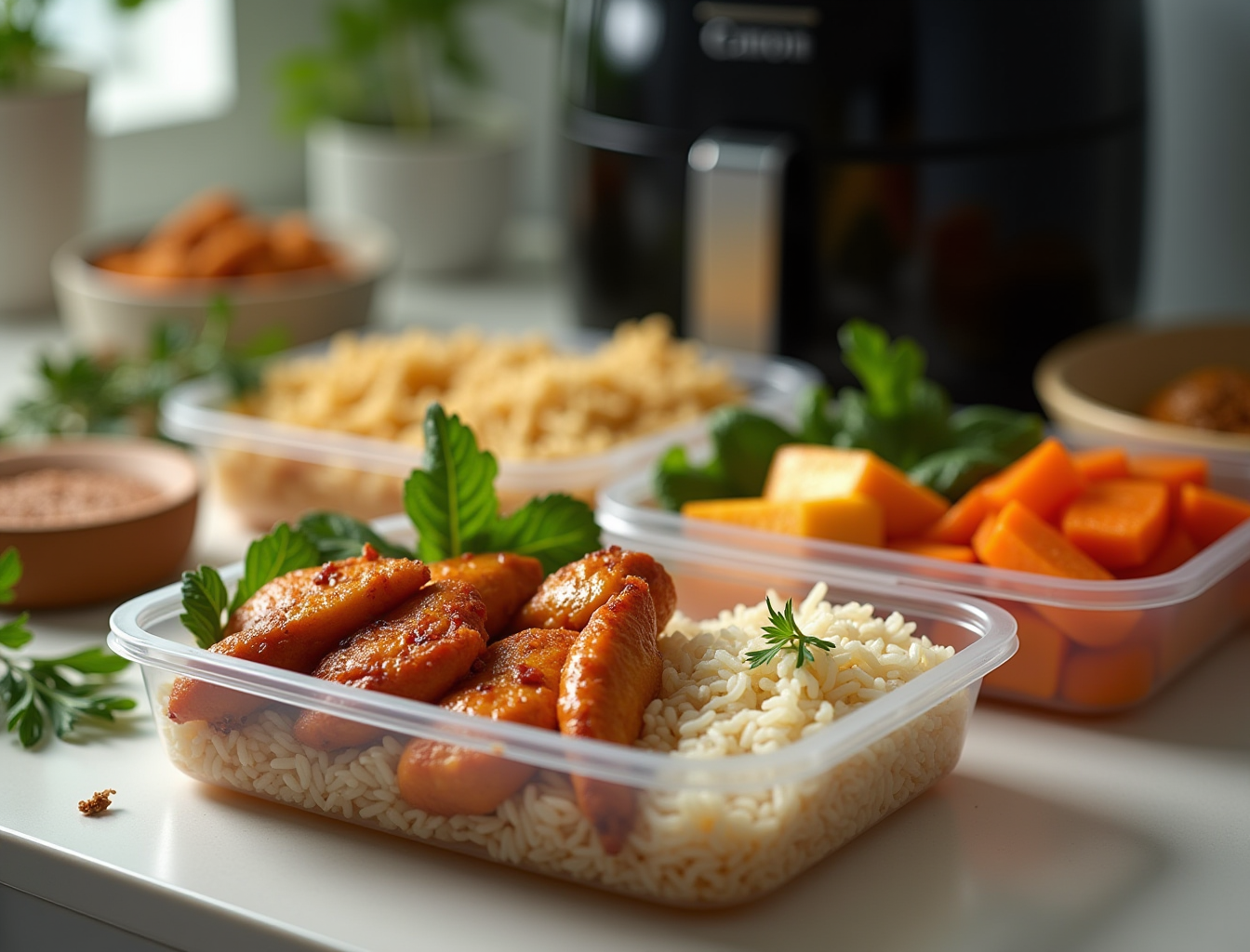
Assembly (80–90 min): Everything has cooked. Now label, portion, and store. Use masking tape and a marker — it takes 30 seconds per container and saves enormous confusion by Wednesday. Stack labeled containers in the fridge by type: proteins together, vegetables together, carbs together.
Best Proteins to Meal Prep in the Air Fryer
Chicken — Breast, Thighs, and Tenders
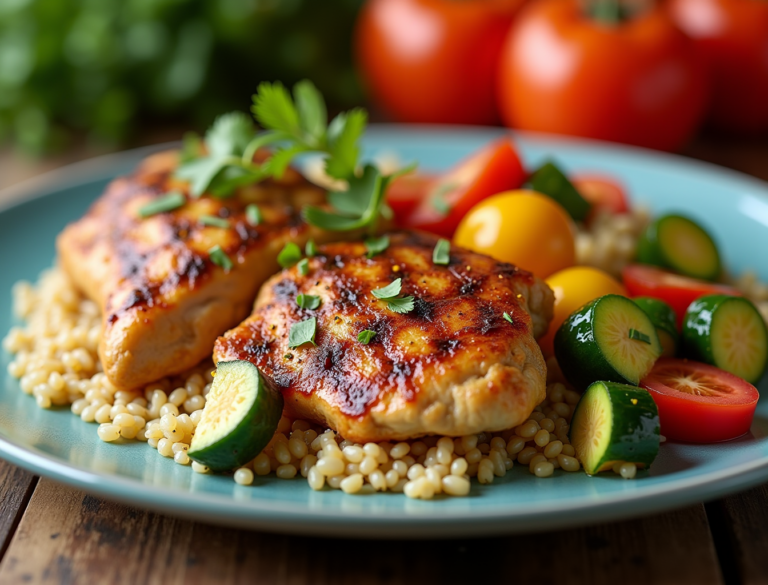
Chicken thighs are the best meal-prep protein for most people. They’re forgiving (harder to overcook than breast), cheaper, more flavourful, and reheat well without drying out. Cook bone-in thighs at 400°F for 20–22 minutes, boneless at 380°F for 15–18 minutes. See our complete guide to air fryer chicken thighs.
Chicken breast is leaner and more neutral-flavoured, making it extremely versatile for different meals throughout the week. The challenge: it dries out quickly when overcooked and when reheated. Pull it at exactly 165°F and slightly undercook by 2–3°F to account for carryover heat when reheating. See our guide to air fryer chicken breast.
Chicken tenders are the fastest protein option — 12–14 minutes at 375°F. Excellent for weekly meal prep for kids, or as a quick lean protein for adults who want variety from whole cuts.
Salmon and Fish
Salmon is the ideal meal-prep fish: firm enough to hold up in the fridge, flavourful enough to be the centrepiece of a meal, and done in 8–10 minutes at 400°F. Season simply with olive oil, lemon, garlic, salt, and pepper. It’s the most delicate meal-prep item — eat it earlier in the week (days 1–2) rather than pushing it to Thursday. See our full guide to air fryer salmon.
Meatballs
Air fryer meatballs are one of the best meal-prep proteins because they freeze well, reheat in under 5 minutes, and are versatile — they work over pasta, in wraps, in grain bowls, or as a snack with dipping sauce. Make a double batch (20–25 meatballs) and freeze half. Cook at 400°F for 10–12 minutes.
Turkey Breast
Air fryer turkey breast is underused for weekly meal prep but excellent — lean, mild, and versatile. It takes 45–55 minutes at 350°F, so it needs to go in first if including. Slice thin after cooking and store flat; use in sandwiches, wraps, grain bowls, and salads throughout the week.
Best Vegetables to Meal Prep in the Air Fryer
The best meal-prep vegetables are those that hold their texture and reheat without turning mushy. Cruciferous vegetables (broccoli, Brussels sprouts, cauliflower) and root vegetables (sweet potatoes, butternut squash, carrots) are ideal. Delicate vegetables (zucchini, asparagus, green beans) are best eaten within 2 days of prep.
- Broccoli: 380°F, 10–12 min. Excellent for 4 days in the fridge. Reheat 2 min at 375°F.
- Brussels sprouts: 380°F, 12–15 min. Crispy leaves hold up well. Store 4 days; reheat 3 min at 375°F.
- Butternut squash: 400°F, 18–22 min. Stores 5 days — one of the best-keeping prepped vegetables.
- Carrots: 380°F, 12–15 min. Glazed or plain, hold for 4–5 days.
- Cauliflower: 400°F, 12–15 min. Versatile — use as a side or blend into cauliflower rice.
- Asparagus: 400°F, 8–10 min. Best eaten within 2 days; loses texture quickly.
- Zucchini: 400°F, 8–10 min. Eat within 1–2 days; releases water in storage.
Best Carbs and Sides to Meal Prep in the Air Fryer
- Baked potatoes: 400°F, 35–40 min. Store whole, reheat split at 350°F for 5 min. Versatile base.
- Sweet potato cubes: 400°F, 15–18 min. Excellent 5-day storage. Use in grain bowls, wraps, and salads.
- Potato wedges: 380°F, 20–25 min. Reheat at 380°F for 6 min — crisp up well.
- Quinoa/rice: Stovetop — 15–20 min. Store 5 days in fridge. The most flexible carb base.
Air Fryer Meal Prep Time and Temperature Master Chart
| Food | Temp | Cook Time | Fridge Storage | Freezer | Reheat (Air Fryer) |
|---|---|---|---|---|---|
| Chicken breast | 375°F (190°C) | 15–18 min | 4 days | 3 months | 350°F, 4 min |
| Chicken thighs (boneless) | 400°F (200°C) | 18–20 min | 4 days | 3 months | 375°F, 5 min |
| Chicken thighs (bone-in) | 400°F (200°C) | 20–22 min | 4 days | 3 months | 375°F, 6 min |
| Salmon fillet | 400°F (200°C) | 8–10 min | 3 days | 2 months | 325°F, 3 min |
| Turkey breast | 350°F (175°C) | 45–55 min | 4 days | 3 months | 325°F, 5 min |
| Meatballs | 400°F (200°C) | 10–12 min | 4 days | 2 months | 375°F, 4 min |
| Broccoli | 380°F (195°C) | 10–12 min | 4 days | 2 months* | 375°F, 2 min |
| Brussels sprouts | 380°F (195°C) | 12–15 min | 4 days | 2 months* | 375°F, 3 min |
| Butternut squash | 400°F (200°C) | 18–22 min | 5 days | 3 months* | 380°F, 4 min |
| Sweet potato cubes | 400°F (200°C) | 15–18 min | 5 days | 3 months* | 380°F, 4 min |
| Carrots | 380°F (195°C) | 12–15 min | 4–5 days | 2 months* | 380°F, 3 min |
| Potato wedges | 380°F (195°C) | 20–25 min | 3 days | Not recommended | 380°F, 6 min |
| Baked potato (whole) | 400°F (200°C) | 35–40 min | 4 days | Not recommended | 350°F, 5 min |
| Hard boiled eggs (stovetop) | Boiling water | 10 min | 1 week (unpeeled) | Not recommended | Serve cold |
* Frozen vegetables lose texture; best used in cooked dishes (soups, stews) rather than served as roasted sides after freezing.
5 Full Weekly Meal Prep Menus
Menu 1 — Simple Family Plan
Prep day: 8 chicken thighs (bone-in), 4 cups broccoli, 4 baked potatoes
Weekday dinners:
- Monday: Chicken thigh + broccoli + potato (classic plate)
- Tuesday: Shredded chicken tacos (pull the thigh meat) + potato wedges from leftover baked potato
- Wednesday: Chicken and broccoli fried rice (use stovetop rice + eggs)
- Thursday: Baked potato topped with pulled chicken, shredded cheese, and sour cream
- Friday: Quesadillas using leftover shredded chicken + fresh vegetables
Menu 2 — High-Protein / Fitness Plan
Prep day: 6 chicken breasts, 4 salmon fillets, 16 meatballs, sweet potato cubes, broccoli, Brussels sprouts
Weekday dinners:
- Monday: Salmon + sweet potatoes + Brussels sprouts
- Tuesday: Chicken breast + broccoli + quinoa bowl
- Wednesday: Meatballs over zucchini noodles (fresh)
- Thursday: Chicken breast + sweet potatoes + mixed greens salad
- Friday: Salmon + broccoli + remaining sweet potatoes
Approximately 35–45g protein per meal. Hard-boil 8–10 eggs on prep day for high-protein snacks and breakfast.
Menu 3 — Vegetarian Plan
Prep day: Extra-firm tofu (cubed and air fried at 400°F for 15–18 min), cauliflower, roasted sweet potato, stuffed peppers, falafel
Weekday dinners:
- Monday: Falafel bowls with sweet potato, cauliflower, and tahini
- Tuesday: Crispy tofu grain bowl with quinoa, roasted vegetables, and sesame dressing
- Wednesday: Stuffed peppers with remaining grain and vegetable mix
- Thursday: Cauliflower and sweet potato curry (simmer prepped vegetables in store-bought sauce)
- Friday: Tofu stir-fry with fresh noodles and leftover vegetables
Menu 4 — Budget Plan
Prep day: 8 bone-in chicken thighs (cost: ~$6–8), 4 cups frozen mixed vegetables air fried at 400°F for 12–15 min, 6 baked potatoes, 8 hard-boiled eggs
Weekday dinners:
- Monday: Chicken thigh + roasted vegetables + baked potato (~$1.50/serving)
- Tuesday: Chicken soup using leftover chicken, canned chickpeas, and broth
- Wednesday: Egg fried rice using eggs + leftover rice + frozen vegetables
- Thursday: Loaded baked potato with leftover chicken, cheese, and sour cream
- Friday: Chicken and vegetable wraps with tortillas and hot sauce
Total ingredient cost for 5 dinners (4 people): approximately $25–35 depending on location and existing pantry.
Menu 5 — Single-Person Plan
Prep day (half portions throughout): 2 chicken thighs, 2 salmon fillets, 2 cups broccoli, 2 cups sweet potato cubes, 1 cup quinoa (stovetop)
Weekday dinners:
- Monday: Salmon + sweet potato + broccoli
- Tuesday: Chicken thigh + broccoli + quinoa bowl
- Wednesday: New cook (20-minute mid-week reset — add 1 protein + 1 fresh vegetable)
- Thursday: Chicken pulled into salad with remaining quinoa and fresh greens
- Friday: Takeout night — you’ve earned it
Single-person meal prep tip: cook half-portions and supplement with a 20-minute mid-week session on Wednesday. This prevents food waste and ensures everything stays fresh. Avoid prepping all 5 days’ worth on Sunday — food prepped Sunday degrades noticeably by Friday.
Storage Guide — How Long Does Air Fried Food Last?
| Category | Fridge Life | Freezer Life | Notes |
|---|---|---|---|
| Cooked chicken | 4 days | 3 months | Store whole; slice before serving. Thaw overnight in fridge. |
| Cooked fish (salmon, cod) | 3 days | 2 months | Most delicate — eat earlier in the week. |
| Roasted vegetables (root) | 4–5 days | 2 months* | *Texture degrades in freezer; best used in soups after freezing. |
| Roasted vegetables (cruciferous) | 4 days | 2 months* | *Freezing works but texture becomes soft. Fine for cooked dishes. |
| Cooked potatoes | 3–4 days | Not recommended | Texture deteriorates significantly when frozen then reheated. |
| Cooked grains (quinoa, rice) | 5 days | 3 months | Add 1 tbsp water when microwaving to prevent dryness. |
| Hard boiled eggs | 1 week (unpeeled) | Not recommended | Peeled eggs: 5 days in a water-filled container in fridge. |
Reheating Meal Prepped Food in the Air Fryer
The air fryer is the best tool for reheating meal-prepped food — it restores texture in a way that a microwave cannot. Key temperatures and times:
- Chicken thighs/breast: 350–375°F for 4–6 minutes. Slightly undercook on prep day (pull at 163°F) to account for this reheat.
- Salmon: 325°F for 3 minutes maximum. Salmon reheats poorly compared to other proteins — gentle heat is critical. Alternatively, eat cold over salad greens.
- Meatballs: 375°F for 4 minutes. These reheat excellently — close to freshly cooked quality.
- Vegetables: 375–380°F for 2–4 minutes depending on density. Add a tiny drizzle of oil before reheating to refresh surface browning.
- Potato wedges and baked potatoes: 350–380°F for 5–6 minutes. These reheat better in the air fryer than any other method.
Microwave for: Grains (rice, quinoa), soup components, and anything where texture isn’t the focus. For everything else, the air fryer produces dramatically better results.
Common Meal Prep Mistakes and How to Avoid Them
- Cooking everything at the same high temperature. Salmon at 400°F is overcooked; chicken at 375°F is perfect; sweet potatoes at 350°F won’t brown properly. Follow individual recipe temperatures — they differ because the foods are structurally different.
- Storing everything together. Wet items (marinated proteins) stored with dry items (potato wedges) transfer moisture and soften textures within hours. Store components in separate containers. Each component stays better longer when isolated.
- Not labelling storage containers. By Wednesday, unlabelled meal prep containers are a guessing game. Label with food name and prep date. Masking tape and a sharpie — 30 seconds per container — prevents food waste and decision fatigue.
- Overcooking proteins for later reheating. Food continues to cook as it cools and cooks again when reheated. Pull proteins 2–3°F below target temperature during prep. They’ll finish during the initial rest and reach target during reheat.
- Putting hot food directly into sealed containers. Hot food in an airtight container creates condensation on the lid, which drips back down and softens everything. Cool on a wire rack or open plate for 10–15 minutes before sealing. This also improves food safety.
Frequently Asked Questions
How many meals can I prep in the air fryer in one day?
In 90 minutes, a typical home air fryer can batch cook 3–4 proteins (2 batches each), 2–3 vegetable dishes, and 1–2 sides. This yields 8–12 portions covering 4–5 weeknight dinners for 1–2 people, or 2–3 dinners for a family of 4. The constraint is the basket size — a compact 3–4 quart air fryer requires more batches than a 6–8 quart model.
What should I meal prep first in the air fryer?
Start with proteins that need the most time — chicken thighs, turkey breast, or salmon. While those cook, prep your vegetables. Move to starchier sides last. Proteins also have strict food safety temperature requirements (165°F for chicken), so completing them with full attention reduces risk. Vegetables are more forgiving and can be done while you’re doing other kitchen tasks simultaneously.
Can you meal prep in an air fryer for a whole family?
Yes, but batch cooking will take more time since most air fryers hold 2–4 portions per basket. For a family of 4, plan 2–3 hours for a complete prep session, or use the air fryer alongside the oven: air fryer for proteins and vegetables (where texture benefits from the circulating heat), oven for large-batch items like roasted potatoes or a whole chicken.
How do you keep meal-prepped air fryer food crispy?
The honest answer is that most prepped food will lose its crunch during refrigeration — moisture redistributes within the food and softens any crispy surfaces. The solution is to reheat in the air fryer (not the microwave), which re-crisps surfaces effectively. For vegetables, add a tiny drizzle of oil before reheating for best results. Accept that Monday’s meal prep will have better texture than Friday’s.
Is it worth meal prepping with an air fryer versus a slow cooker?
They serve different purposes. The air fryer excels at producing well-textured, browned proteins and vegetables that hold up as individual components throughout the week. A slow cooker excels at braised, saucy, collagen-rich dishes (pulled chicken, beef stew, chili) that improve over several days. For a meal prep system with variety, use both: air fryer for the quick-cook components, slow cooker for any saucy or braised items. They run in parallel with almost no active time required from either.
Cooking times and temperatures verified against multiple tested sources including Taste of Home, Dash for Dinner, and Temecula Blogs cooking times chart. Storage durations aligned with USDA food safety guidelines.