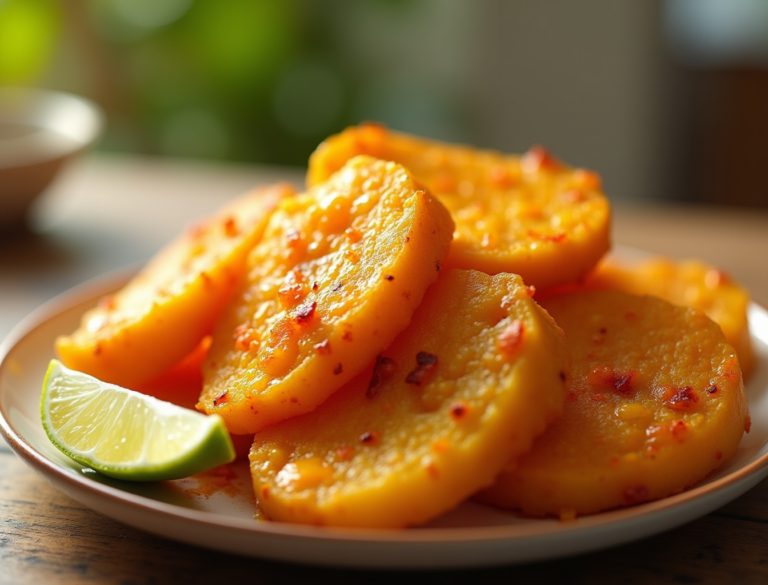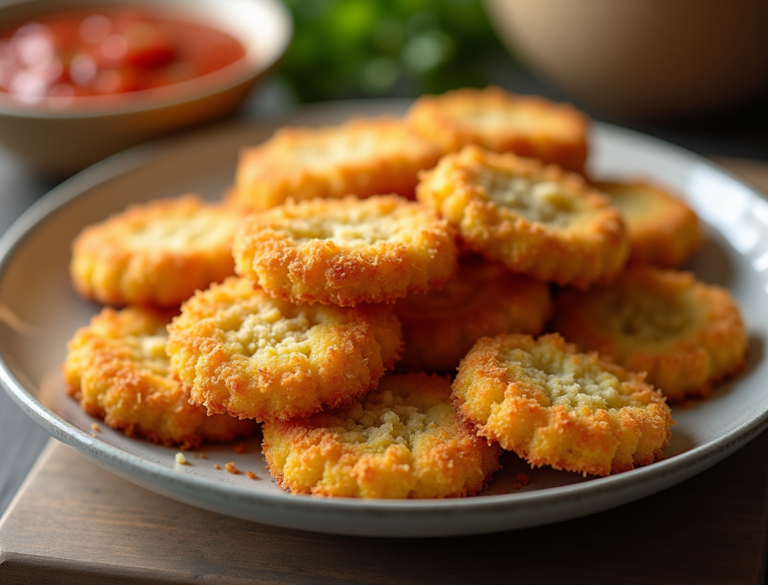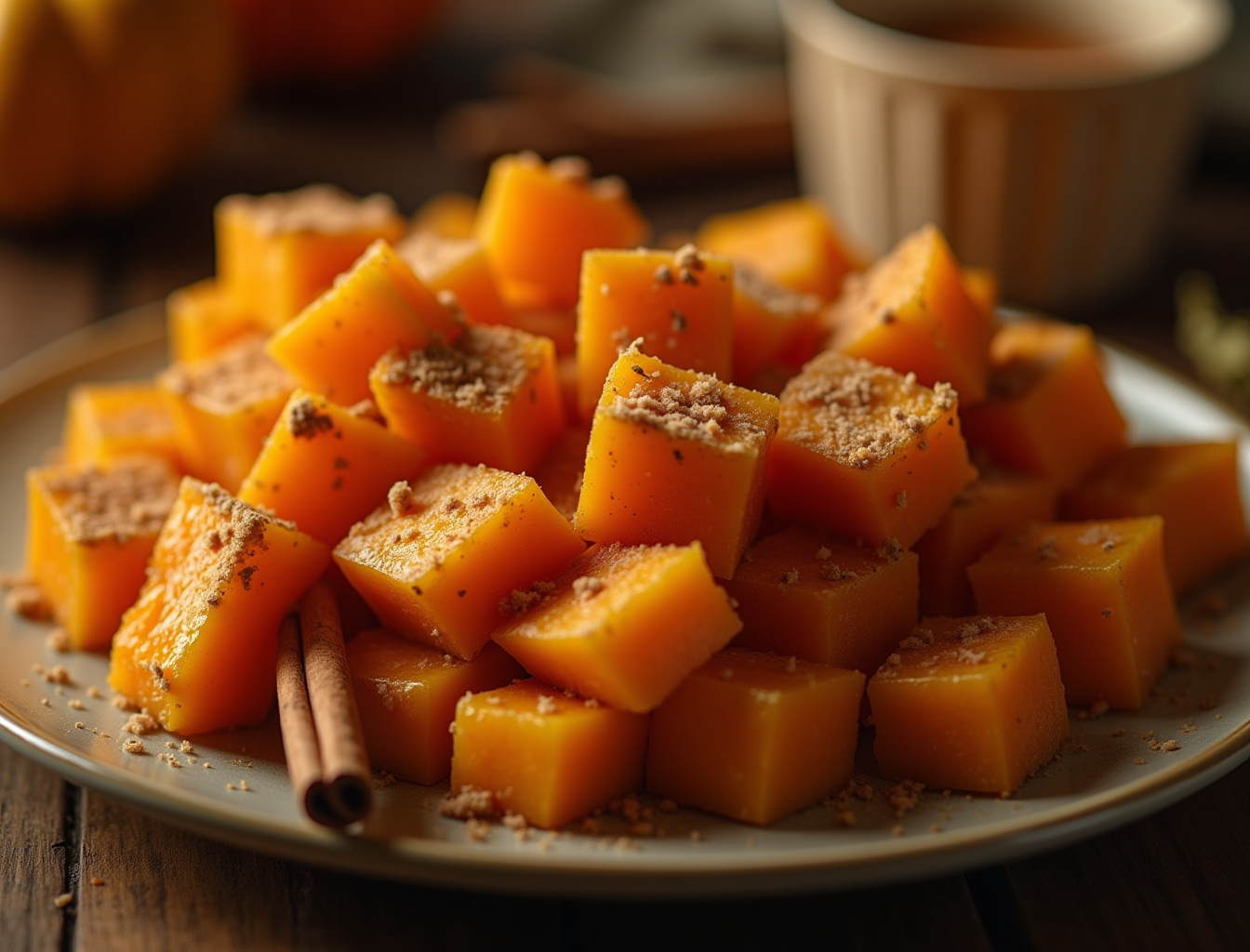
Air Fryer Butternut Squash (Caramelized, Tender, Ready in 20 Minutes)
Butternut squash has a reputation for being a weekend-only vegetable — too much work, too much oven time. The air fryer removes both objections. Cubed butternut squash goes from raw to deeply caramelised and fork-tender in 18–22 minutes at 400°F, versus 35–45 minutes in a standard oven. That difference turns butternut squash from a Sunday-only side into a weeknight staple.
PrintAir Fryer Butternut Squash
Cubed butternut squash air fried at 400°F until deeply caramelized and fork-tender in under 25 minutes. Includes a savory garlic-paprika version and a sweet maple-cinnamon variation.
- Prep Time: 10 minutes
- Cook Time: 22 minutes
- Total Time: 32 minutes
- Yield: 4 servings 1x
- Category: Side Dish
- Method: Air Fryer
- Cuisine: American
- Diet: Vegan
Ingredients
- Savory Version:
- 1 medium butternut squash (about 2 lbs / 900g), peeled and cubed into 1-inch pieces
- 2 tbsp olive oil
- 1 tsp garlic powder
- 1 tsp smoked paprika
- ½ tsp cumin
- Salt and black pepper, to taste
- Optional: pinch of cayenne, balsamic glaze for finishing, fresh sage
- Sweet Version (Maple Cinnamon):
- 1 medium butternut squash, peeled and cubed into 1-inch pieces
- 1 tbsp maple syrup
- 1 tbsp olive oil
- 1 tsp ground cinnamon
- ¼ tsp nutmeg
- Pinch of salt
- Optional: 1 tbsp brown sugar for deeper caramelization
Instructions
- Pierce the whole squash a few times with a fork and microwave on high for 3 minutes to soften the skin and make peeling easier.
- Cut off both ends, stand upright on a flat base, peel from top to bottom, then halve lengthwise, scoop out seeds, and cut into uniform 1-inch cubes.
- Toss cubed squash with olive oil and seasonings (savory: garlic powder, smoked paprika, cumin, salt, pepper; sweet: maple syrup, cinnamon, nutmeg, salt) until every cube is evenly coated.
- Preheat air fryer to 400°F (200°C) for 3 minutes. Arrange squash in a single layer in the basket — do not stack or crowd; cook in batches if needed.
- Air fry at 400°F for 18–22 minutes, shaking or tossing with tongs at the 10-minute mark.
- In the final 2 minutes, add fresh sage leaves or a drizzle of balsamic glaze (savory), or an extra splash of maple syrup (sweet). Watch closely to avoid burning.
- Remove when edges are golden-brown and centers are fork-tender with no resistance. Serve immediately.
Notes
Uniform size is essential: Cut to 1-inch cubes so every piece finishes at the same time. Mixed sizes result in overcooked mush and undercooked firm chunks in the same batch.
Never overcrowd the basket: Butternut squash releases significant moisture as it cooks. Crowding traps steam and prevents caramelization. Cook in batches if necessary.
Halves method: For soup or mash, place halves cut-side up at 375°F (190°C) for 25–30 minutes until a knife slides in with no resistance.
Sweet version tip: Natural squash sugars plus maple syrup can go from caramelized to burnt quickly — watch closely in the final 2–3 minutes.
The caramelisation is real — not just tender, soft squash, but sweet, slightly charred golden edges that only develop when the flesh hits hot, dry air directly. The air fryer produces this effect better than an oven for one reason: there’s no tray to interrupt the heat underneath each cube. Hot air reaches every surface simultaneously.
This guide covers both cubes and halves, the savory and sweet versions, and everything from the safety tip for cutting a hard butternut squash to what to do with leftovers. For more fall and year-round vegetables, see our guides to air fryer vegetables and air fryer broccoli. Complete cooking times for all vegetables are in our air fryer cooking times chart.
Why Air Fry Butternut Squash?
Three reasons the air fryer beats the oven for butternut squash:
- Speed: 18–22 minutes versus 35–45 minutes in an oven. A full 50% faster, which genuinely makes the difference between using butternut squash on a Tuesday night or saving it for the weekend.
- Caramelisation: The air fryer’s dry, concentrated heat dehydrates the squash’s natural sugars faster, producing more dramatic browning on the cut edges. Oven squash can be slightly steamed on the inside of a crowded tray; air fryer squash browns on all surfaces.
- Less energy and cleanup: No preheating a large oven for one side dish. No baking sheet to scrub. The air fryer basket wipes clean.
| Method | Temp | Time (cubes) | Caramelisation | Cleanup |
|---|---|---|---|---|
| Air Fryer | 400°F (200°C) | 18–22 min | Excellent — all surfaces | Minimal |
| Oven (roasted) | 425°F (220°C) | 35–45 min | Good — tray side can steam | Baking sheet |
| Microwave | High | 8–10 min | None — steamed texture | Minimal |
| Stovetop (sauté) | Medium-high | 12–15 min | Good on cut surfaces only | Pan |
How to Peel and Cut Butternut Squash Safely
Butternut squash is notoriously hard to peel and cut. The exterior is tough and the squash tends to roll on the cutting board. Before picking up a knife, try this:
Microwave it first: Pierce the whole squash a few times with a fork and microwave on high for 3 minutes. The skin softens enough to make peeling significantly easier and the flesh firms up slightly, which paradoxically makes it easier to cut cleanly. This extra 3 minutes prevents the most common butternut squash kitchen injuries.
- Cut off both ends (top and bottom) so you have flat, stable surfaces
- Stand the squash upright on its flat base — it won’t roll
- Peel from top to bottom using a sharp vegetable peeler or a knife
- Cut in half lengthwise; scoop out the seeds with a spoon
- Cut each half into planks, then into 1-inch cubes — aim for uniform size
Uniform size matters: This is the single most important preparation step. Cubes of different sizes will cook unevenly — smaller pieces overcook and turn mushy while larger pieces remain firm in the centre. 1-inch cubes are the target: substantial enough to hold their shape, small enough to cook through in 18–22 minutes.
Ingredients You’ll Need
Savory Version:
- 1 medium butternut squash (about 2 lbs / 900g), peeled and cubed into 1-inch pieces
- 2 tbsp olive oil
- 1 tsp garlic powder
- 1 tsp smoked paprika
- ½ tsp cumin
- Salt and black pepper
- Optional: pinch of cayenne, balsamic glaze for finishing, fresh sage
Sweet Version (Maple Cinnamon):
- Same squash, cubed
- 1 tbsp maple syrup
- 1 tbsp olive oil
- 1 tsp ground cinnamon
- ¼ tsp nutmeg
- Pinch of salt
- Optional: 1 tbsp brown sugar for deeper caramelisation
How to Cook Air Fryer Butternut Squash
Prep time: 10 minutes | Cook time: 18–22 minutes | Serves: 4
Savory Version
Toss the cubed squash with olive oil, garlic powder, smoked paprika, cumin, salt, and pepper. Use your hands to ensure every cube is coated on all surfaces.
Preheat air fryer to 400°F (200°C) for 3 minutes. Arrange squash in a single layer in the basket — do not stack or crowd. If you have more squash than fits in a single layer, cook in batches. Overcrowding is the number-one reason butternut squash comes out soft and steamed rather than caramelised.
Air fry at 400°F for 18–22 minutes, shaking or tossing with tongs at the 10-minute mark. In the final 2 minutes, add fresh sage leaves if using — they will crisp in the hot air and add a fragrant, nutty flavour. Add any balsamic glaze in the final 2 minutes as well; earlier and it burns.
Done when the edges are golden-brown and the centres are fork-tender. A fork pressed into a cube should meet no resistance.
Sweet Version (Maple Cinnamon)
Toss cubed squash with olive oil, maple syrup, cinnamon, nutmeg, and salt. The maple syrup is a thin liquid — toss well so it coats evenly. Work in batches and arrange in a single layer.
Air fry at 400°F for 18–20 minutes, shaking at 10 minutes. In the final 3 minutes, drizzle an extra splash of maple syrup over the squash for deeper caramelisation. Watch closely in the final few minutes — the natural sugars in the squash combined with maple syrup will brown quickly, and there is a short window between perfectly caramelised and burnt.
Air Fryer Butternut Squash Halves
If you want to cook butternut squash halves (and scoop out the flesh afterward for soup, mash, or puree):
- Cut the squash in half lengthwise; scoop out the seeds
- Brush the cut side generously with olive oil, butter, or a mixture of the two
- Season with salt, pepper, and any additional spices (cinnamon and brown sugar for sweet; garlic and herbs for savory)
- Place cut-side up in the air fryer at 375°F (190°C)
- Cook 25–30 minutes until a knife slides in with no resistance
The skin acts as a natural container, holding the flesh together and making the half easy to handle and serve. After cooking, scoop the flesh directly into soups, mashes, or grain bowls — the texture will be soft and silky from the contained heat.
Pro Tips for Perfect Air Fryer Butternut Squash
- Cut to uniform 1-inch cubes. Uniform size ensures every cube finishes cooking at the same time. Mix large and small pieces and you’ll have overcooked mush and undercooked firm chunks in the same batch.
- Don’t overcrowd — moisture is the enemy of caramelisation. Squash releases significant moisture as it cooks. Crowding the basket traps that moisture and causes steaming instead of roasting. Single layer, space between pieces, work in batches if needed.
- 400°F is the sweet spot. Lower temperatures (350°F or below) produce soft, steamed squash without browning. Higher temperatures (425°F+) can scorch the sweet flesh before the centre cooks through. 400°F gives the optimal caramelisation-to-tenderness ratio.
- Add fresh herbs and glazes in the final 2 minutes only. Fresh sage, thyme, rosemary, and sugary glazes burn at high heat. Add them in the last 2–3 minutes — enough time to impart flavour without turning bitter.
- Microwave the squash 3 minutes before cutting if it feels too hard. The most genuinely useful prep tip: a 3-minute microwave blast softens the skin without cooking the flesh, making peeling and cutting dramatically safer and easier.
Variations
Maple Cinnamon Butternut Squash
Toss cubes in maple syrup, olive oil, cinnamon, and nutmeg; finish with an extra maple drizzle in the final 3 minutes. Rich, sweet, and autumnal — a natural pair for roast turkey, pork, or as part of a Thanksgiving spread.
Moroccan Spiced Butternut Squash
Season with ras el hanout, ground cumin, ground coriander, and a pinch of harissa paste mixed into the oil. After cooking, serve with a cool yogurt sauce (plain yogurt, lemon juice, garlic, mint) and a scatter of pomegranate seeds. The contrast of hot, spiced squash with cool yogurt and tart pomegranate is excellent as a grain bowl topping or a side for lamb.
Brown Butter Butternut Squash
Air fry the squash with just olive oil and salt. While it cooks, make brown butter on the stovetop: melt butter over medium heat until the solids turn golden and nutty-smelling. Fry 4–5 fresh sage leaves in the brown butter until crispy (about 30 seconds). Toss the hot air-fried squash in the brown butter, scatter with crispy sage leaves, add flaky salt and a squeeze of lemon. This is a restaurant-quality preparation with very little effort.
Serving Ideas — What to Make With Air Fryer Butternut Squash
- Side dish: Alongside air fryer chicken thighs, air fryer pork chops, or roast turkey
- Grain bowls: Toss with farro, quinoa, or wild rice, plus arugula, toasted pecans, dried cranberries, and goat cheese
- Fall salads: Add to mixed greens with candied pecans, shaved Parmesan, and apple cider vinaigrette
- Soup base: Blend cooked squash (either cubes or halves) with chicken or vegetable stock, a little cream, and nutmeg for a fast butternut squash soup
- Pasta: Toss with short pasta, sage, brown butter, walnuts, and Parmesan
- Stuffed dishes: Fold into a stuffed chicken breast filling with herbs and goat cheese
Storage and Reheating
Storage: Cool completely, then store in an airtight container in the refrigerator for up to 5 days. Butternut squash holds up well as a stored component — it’s one of the better meal-prep vegetables precisely because it stays good for nearly a week.
Freezer: Freeze cooked cubes in a single layer on a baking sheet, then transfer to a freezer bag for up to 3 months. Frozen and thawed butternut squash softens significantly — use it in soups, purees, and mashes rather than serving as roasted cubes.
Reheating: Air fryer at 380°F (195°C) for 4–5 minutes to refresh caramelisation and texture. Alternatively, microwave for 90 seconds if serving as part of a soup or blended dish where texture isn’t critical.
Frequently Asked Questions
How long does butternut squash take in the air fryer?
Butternut squash cubes cut to 1-inch take 18–22 minutes at 400°F (200°C), with the basket shaken at the 10-minute mark. Halves take 25–30 minutes at 375°F (190°C) with the cut side facing up. Cooking times vary with cube size — smaller cubes (¾-inch) will be done in 15 minutes, while larger 1½-inch cubes may need 25 minutes.
Do you peel butternut squash before air frying?
For cubes, yes — peel before cutting into cubes. The skin on cubed squash is too tough to eat comfortably. For halves, you can cook skin-on and scoop the flesh out after cooking; the skin acts as a natural container and is actually easier to handle when cooking halves. Do not try to eat the skin of halves either.
Why is my air fryer butternut squash soft but not caramelised?
Overcrowding is almost always the cause. Too many cubes in the basket trap the moisture the squash releases during cooking, turning the environment steamy rather than dry and hot. Caramelisation requires direct contact with hot, dry air. Cook in a single layer with space between pieces, and make sure the air fryer is fully preheated to 400°F before adding the squash.
Can you air fry butternut squash without oil?
Yes, though the results are noticeably less caramelised. Oil helps conduct heat directly to the surface of the squash and carries the fat-soluble flavour compounds from spices into the flesh. Without oil, the squash will cook through but the edges will be drier and paler. If avoiding oil for health reasons, use a very light misting spray rather than cutting it entirely.
Is air fryer butternut squash good for meal prep?
Butternut squash is one of the best meal-prep vegetables: it stores for up to 5 days in the refrigerator without significant texture degradation, reheats well in the air fryer, and is versatile enough to be added to grain bowls, salads, soups, and pasta throughout the week. It also freezes better than most roasted vegetables when used in blended preparations.
Cooking times verified against multiple tested sources including Skinnytaste and Running to the Kitchen. Caramelisation technique cross-referenced with Air Fryer Plates.