Air Fryer Pork Tenderloin
Why Is the Air Fryer the Best Way to Cook Pork Tenderloin?
Pork tenderloin is the ideal air fryer protein. It is naturally lean, cooks relatively quickly, has a cylindrical shape that fits perfectly in most air fryer baskets, and responds beautifully to the machine’s combination of high radiant heat and circulating air. The exterior sears to a deeply browned crust in the same timeframe that the oven is still working its way up to temperature.
PrintAir Fryer Pork Tenderloin
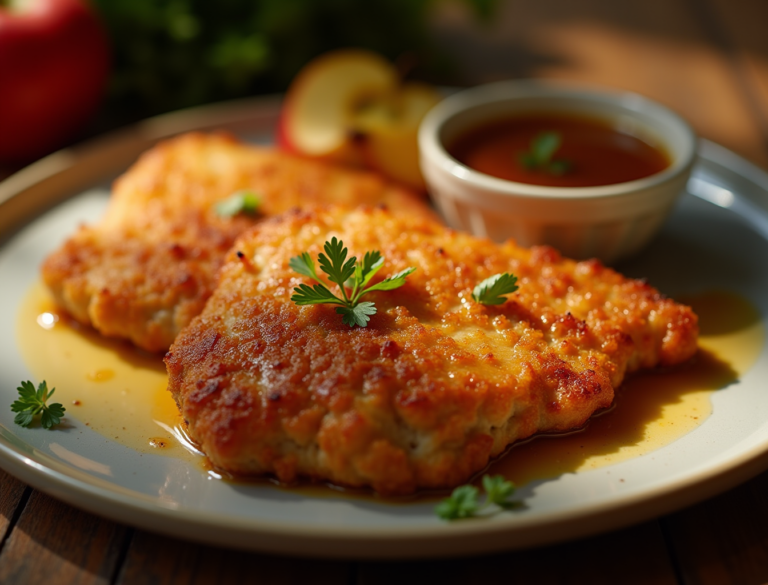
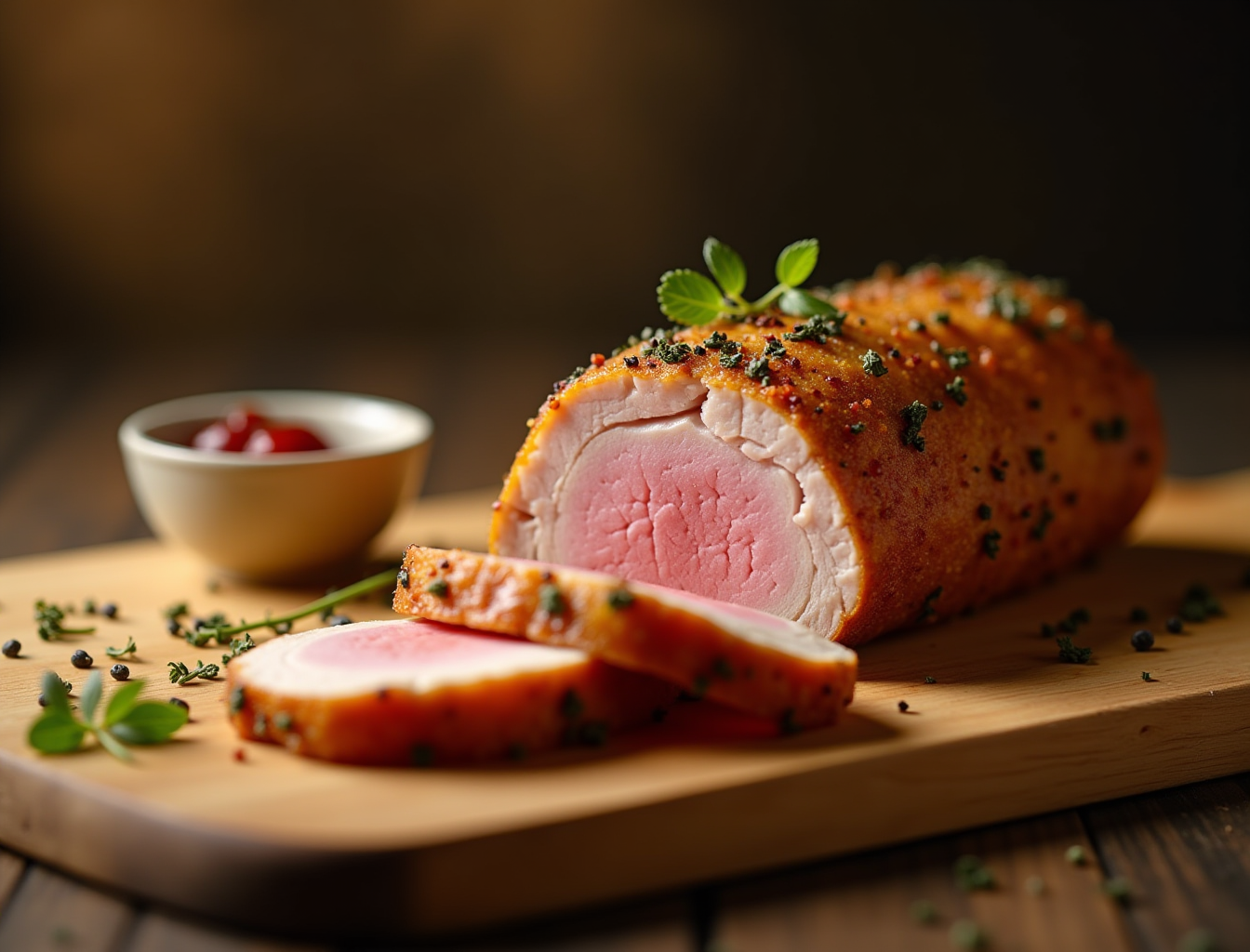
A herb-rubbed pork tenderloin air fried at 400°F for a deeply browned, crispy crust and juicy pink-centered interior, ready in about 35 minutes.
- Prep Time: 10 minutes
- Cook Time: 22 minutes
- Total Time: 35 minutes
- Yield: 4 servings 1x
- Category: Dinner
- Method: Air Fryer
- Cuisine: American
Ingredients
- 1–1.5 lb pork tenderloin (one piece or two smaller ones)
- 1 tablespoon olive oil
- 3 garlic cloves, minced (or 1 teaspoon garlic powder)
- 1 teaspoon dried rosemary (or fresh, finely chopped)
- 1 teaspoon dried thyme
- 1 teaspoon kosher salt
- 1/2 teaspoon black pepper
- 1/2 teaspoon smoked paprika (optional)
Instructions
- Remove the silver skin from the tenderloin by sliding a sharp knife just under the thin white-silver connective tissue and sawing along its length. Pat the surface dry with paper towels.
- Mix olive oil, minced garlic, rosemary, thyme, salt, pepper, and smoked paprika into a paste. Rub evenly over the entire tenderloin, including the tapered ends.
- Preheat the air fryer to 400°F (205°C) for 3–4 minutes.
- Place the tenderloin in the air fryer basket and cook at 400°F for 10 minutes. Flip with tongs, then cook for another 8–12 minutes, checking internal temperature at 18 minutes total. Target 145°F (63°C) in the thickest part.
- Remove the tenderloin and rest on a cutting board for at least 3 minutes.
- Slice into 1/2-inch medallions and serve immediately. The interior should be pale pink — this is safe and correct at 145°F.
Notes
Remove silver skin before seasoning — it doesn’t break down during cooking and creates a tough, chewy layer.
Pat the meat dry before rubbing; surface moisture delays browning and reduces crust quality.
For deeper flavor, refrigerate the rubbed tenderloin for 2–12 hours before cooking.
Use an instant-read thermometer every time — pork tenderloin has a narrow window between juicy (145°F) and dry (155°F+).
If the thin tapered end cooks faster, fold it back under the main body before air frying to equalize thickness.
In a conventional oven at 400°F, a 1-pound pork tenderloin takes 25–30 minutes and requires monitoring and flipping. In the air fryer, the same tenderloin is done in 18–22 minutes at 400°F, with better all-around browning on every surface because the air reaches under and around the meat rather than just from above. The result is a pork tenderloin that is genuinely crispy on the outside — not just pale and cooked — with a juicy, pink-centered interior that pulls apart cleanly when sliced.
The air fryer also shines for tenderloin because it handles the narrow margin between perfect and dry extremely well. Pork tenderloin is very lean (roughly 3 grams of fat per 3-ounce serving), which means it dries out fast if overcooked. The air fryer’s speed reduces the total time above the danger zone, and an instant-read thermometer makes hitting the 145°F target reliable and repeatable.
What Is the Difference Between Pork Tenderloin and Pork Loin?
This is a common source of confusion at the grocery store, and the difference matters significantly for air frying:
| Cut | Size | Fat Content | Air Fry Time | Texture |
|---|---|---|---|---|
| Pork Tenderloin | 0.75–1.5 lbs | Very lean | 18–22 min at 400°F | Extremely tender, fine grain |
| Pork Loin | 2–5 lbs | Moderate | 45–55 min at 375°F | Firmer, slice well for roasting |
| Pork Chop | 4–8 oz each | Varies by cut | 12–15 min at 380°F | Firm, can be chewy if overcooked |
Pork tenderloin comes from the psoas muscle, which runs along the inside of the backbone and does almost no work during the pig’s life. This makes it exceptionally tender — it is the tenderloin equivalent in pork as filet mignon is in beef. Pork loin comes from the back and is significantly larger, firmer, and requires much longer cooking. Do not attempt to cook pork loin using pork tenderloin timings, or you will have raw pork inside.
What Ingredients Do You Need for Air Fryer Pork Tenderloin?
The base recipe uses a simple herb and oil rub that caramelizes into a flavorful crust:
- 1–1.5 lb pork tenderloin (one piece or two smaller ones)
- 1 tablespoon olive oil
- 3 garlic cloves, minced (or 1 teaspoon garlic powder)
- 1 teaspoon dried rosemary (or fresh, finely chopped)
- 1 teaspoon dried thyme
- 1 teaspoon kosher salt
- 1/2 teaspoon black pepper
- 1/2 teaspoon smoked paprika (optional — adds depth and color)
Ingredient Notes
The silver skin: Before seasoning, check the tenderloin for silver skin — the thin, white-silver connective tissue sheath along one side. This tissue does not break down during cooking and creates a tough, chewy layer. Slide a sharp knife just under the silver skin, angle the blade slightly upward, and saw along its length to remove it cleanly. If your tenderloin was sold pre-trimmed, this step is already done.
Marinating: The base recipe works as a same-day rub applied right before cooking. For deeper flavor penetration, mix the oil, garlic, and herbs into a paste and refrigerate the rubbed tenderloin for 2–12 hours. Longer marinating does not change the cook time.
How Do You Cook Air Fryer Pork Tenderloin Step by Step?
Prep time: 10 minutes | Cook time: 18–22 minutes | Total: 30–35 minutes | Servings: 4
Step 1: Remove Silver Skin and Pat Dry
Remove the silver skin as described above. Pat the surface of the tenderloin dry with paper towels. Dry meat browns faster and more evenly — any surface moisture must evaporate before the Maillard reaction (browning) can begin, which wastes cooking time and reduces the quality of the crust.
Step 2: Apply the Rub
Mix olive oil, minced garlic, rosemary, thyme, salt, pepper, and smoked paprika into a paste. Rub this mixture all over the tenderloin, coating every surface including the tapered ends. Ensure even coverage — the seasoning on the surface is what forms the flavorful crust during cooking, so any bare patches will result in pale, under-seasoned sections on the finished meat.
Step 3: Preheat the Air Fryer
Preheat to 400°F (205°C) for 3–4 minutes. This is a case where preheating makes a substantial difference. The initial contact with a hot basket sears the outside of the tenderloin immediately, creating a crust before the interior temperature has risen significantly. Starting in a cold air fryer produces a slower, more oven-like cook — still acceptable, but with less of the distinctive crispy exterior that makes this recipe exceptional.
Step 4: Air Fry and Flip
Place the seasoned tenderloin in the air fryer basket. Cook at 400°F for 10 minutes. Open the basket and flip the tenderloin with tongs. Cook for another 8–12 minutes, checking with an instant-read thermometer at 18 minutes total.
The target internal temperature is 145°F (63°C). This is the USDA-safe minimum for whole cuts of pork, updated from the old standard of 160°F — a revision the USDA announced in 2011 based on research showing 145°F with a 3-minute rest is equally safe while producing significantly better results. At 145°F, pork tenderloin will have a slight pinkness in the center — this is correct, safe, and desirable. It is not undercooked.
If the tenderloin is narrower or thinner at one end (common with the tapered tip), this section will reach temperature before the thick end. You can fold or tuck the thin end back under the main body before air frying to equalize thickness, or simply accept that the tip will be more well-done than the center.
Step 5: Rest the Meat
This step is not optional. Remove the tenderloin from the air fryer when it reaches 145°F and let it rest on a cutting board for at least 3 minutes — the USDA includes this rest time as part of the safety standard. During rest, the internal temperature continues to rise (often by 3–5°F), and the juices redistribute from the center outward into the muscle fibers. Cut immediately after cooking and the juices pour out onto the board; rest for 3 minutes and they stay in the meat when you slice.
Step 6: Slice and Serve
Slice the rested tenderloin into 1/2-inch medallions. The interior should be pale pink with no red or raw-looking areas. Serve immediately.
What Are the Pro Tips for Juicy Air Fryer Pork Tenderloin?
Use a Thermometer — Every Single Time
Pork tenderloin has a very narrow window between properly cooked (145°F) and dry and disappointing (155°F+). Relying on time alone is unreliable because tenderloin weight varies, starting temperature varies (cold from fridge vs. room temp), and air fryer models vary. A $15 instant-read thermometer eliminates all of this uncertainty. Insert it into the thickest part of the tenderloin, not the tip. When it reads 142–145°F, pull it — it will coast up to 145°F during rest.
Don’t Crowd the Basket — At All
Pork tenderloin benefits from having clearance on every side. If you are cooking two small tenderloins (common — packages often contain two pieces totaling 1.5–2 lbs), arrange them lengthwise with at least 1 inch between them. If your air fryer basket is too small, cook them sequentially, keeping the first warm loosely tented with foil while the second cooks. Crowding reduces airflow, lowers the effective temperature around the meat, and results in less browning and longer cook times.
Add a Honey-Mustard Glaze in the Last 3 Minutes
The base herb rub produces a savory, aromatic crust. For a more complex finish, mix 1 tablespoon honey with 1 tablespoon Dijon mustard and brush it over the tenderloin during the last 3 minutes of cooking. The honey caramelizes rapidly in the hot air fryer, creating a lacquered, slightly sticky glaze with excellent color and a sweet-savory flavor that makes the entire dish more restaurant-quality. Do not add the glaze earlier — the sugar in the honey will burn.
Pound the Tenderloin to Even Thickness (Optional)
A standard pork tenderloin tapers significantly at one end, creating a thickness difference of sometimes 2–3 inches across the same piece of meat. For more even cooking, place the tenderloin between two sheets of plastic wrap and use a meat mallet or rolling pin to gently pound the thick end to a more uniform thickness. This is optional but significantly improves the consistency of doneness from one end to the other.
What Are the Best Air Fryer Pork Tenderloin Variations?
BBQ Smoked Paprika Pork Tenderloin
Replace the rosemary and thyme with 1 teaspoon smoked paprika, 1 teaspoon brown sugar, 1/2 teaspoon cumin, 1/2 teaspoon chili powder, and 1/4 teaspoon cayenne. Apply the rub and cook as directed. In the final 3 minutes, brush with your favorite BBQ sauce and allow it to set into a caramelized glaze. The brown sugar in the rub also contributes to deeper exterior color. This version pairs well with air fryer corn or roasted sweet potato.
Asian-Inspired Ginger Soy Tenderloin
Marinate the trimmed tenderloin for at least 2 hours (up to overnight) in: 3 tablespoons soy sauce, 1 tablespoon sesame oil, 1 tablespoon honey, 1 teaspoon fresh grated ginger, 2 minced garlic cloves, and 1/4 teaspoon white pepper. Pat the surface dry before air frying (excess marinade drips and can smoke). Cook as directed. After slicing, garnish with sesame seeds and thinly sliced scallions. Serve over jasmine rice with steamed bok choy.
Lemon Herb Tenderloin with Dijon Crust
Mix 1 tablespoon Dijon mustard, zest of 1 lemon, 1 tablespoon olive oil, 1 teaspoon herbes de Provence, 1/2 teaspoon garlic powder, salt and pepper. Apply to the tenderloin and cook as directed. The mustard creates a paste that adheres the herbs to the surface and develops a complex, slightly tangy crust. Serve with roasted vegetables and a simple pan sauce made from the resting juices mixed with a splash of white wine and chicken broth.
Spicy Cayenne-Garlic Tenderloin
Add 1/2 teaspoon cayenne pepper and 1 teaspoon onion powder to the base herb rub. Increase the garlic to 4 cloves. After cooking, let rest and slice, then drizzle with a sauce of Greek yogurt, lime juice, minced jalapeño, and fresh cilantro. The cool, acidic yogurt sauce against the spicy, garlicky tenderloin is an excellent contrast. This version also works cold — sliced thin and served over a salad the next day.
How Do You Store and Reheat Air Fryer Pork Tenderloin?
Refrigerator Storage
Slice the tenderloin fully or store whole — whole keeps better (less surface area exposed to air). Store in an airtight container for up to 4 days. The meat stays moist when stored whole; sliced tenderloin can dry out slightly by day 3, which is easily addressed during reheating by adding a small amount of chicken broth to the container before reheating.
Freezer Storage
Cooked pork tenderloin freezes well for up to 3 months. Slice before freezing for easier portion control — individual slices thaw much faster than a whole piece. Wrap each portion in plastic wrap, then place in a freezer bag. Thaw overnight in the refrigerator.
Reheating
Reheat sliced tenderloin in the air fryer at 350°F (175°C) for 4–5 minutes, or until the center reaches 145°F. Add a teaspoon of water or chicken broth to the bottom of the basket to prevent drying. Alternatively, heat in a covered skillet over medium-low heat with a splash of broth for 3–4 minutes per side. Avoid microwaving if possible — it tends to make the lean meat rubbery.
For more air fryer timing reference, see the Air Fryer Cooking Times Chart.
Frequently Asked Questions About Air Fryer Pork Tenderloin
What temperature should pork tenderloin reach in the air fryer?
The USDA-safe minimum internal temperature for whole cuts of pork, including tenderloin, is 145°F (63°C) with a 3-minute rest time. This standard was updated by the USDA in 2011 from the previous recommendation of 160°F. At 145°F, pork tenderloin will have a slight pinkness in the center — this is safe, intentional, and produces the best texture. Cooking to 160°F or above results in dry, tough meat.
How long does it take to cook pork tenderloin in the air fryer?
A standard 1–1.25 lb pork tenderloin cooks in 18–22 minutes at 400°F (205°C) in a preheated air fryer, flipped once at the halfway point. A larger 1.5 lb tenderloin may take 22–25 minutes. Start checking with a thermometer at 18 minutes regardless of weight — air fryer models vary significantly, and some run 15–25°F hotter than their set temperature.
Can I cook pork tenderloin from frozen in the air fryer?
Yes, but with limitations. A frozen pork tenderloin requires approximately 35–40 minutes at 375°F, flipping every 10 minutes. The larger challenge is that the exterior can become quite dark before the center reaches a safe temperature. For better results, partially thaw in cold water for 30–45 minutes before air frying. Fully thawed tenderloin always produces better results than straight-from-frozen.
Why is my pork tenderloin dry after air frying?
Overcooked tenderloin is dry tenderloin. This cut has very little fat and connective tissue to retain moisture at high internal temperatures. The most common cause is cooking to 160°F or higher — the old guideline that many cooks have memorized — when 145°F is both safe and optimal. The second common cause is not resting the meat, which allows all the juices to flow out immediately when sliced. Third: a too-hot air fryer (verify yours is calibrated accurately) or too small a piece that cooks faster than expected.
Can I marinate the pork tenderloin overnight?
Yes, and the results are excellent. Overnight marination with an acidic component (citrus juice, vinegar, soy sauce, yogurt) partially denatures the muscle proteins near the surface, creating more tender, more flavorful results. The limitation of marinating tenderloin is that it is already extremely tender — you will not see the same transformation you would with a tougher cut. The main benefit of marinating tenderloin is flavor depth, not tenderization. When ready to cook, pat the surface dry with paper towels to remove excess marinade before placing in the air fryer.