Air Fryer Dumplings and Gyoza (Crispy Bottoms, No Steaming Required)
Few things in the frozen food section deliver a better return on effort than a bag of dumplings. Gyoza from Trader Joe’s, Bibigo potstickers, CJ brand mandu — these are genuinely good products that, with the right cooking method, can produce results indistinguishable from a restaurant order. The question has always been: what’s the right method?
PrintAir Fryer Dumplings and Gyoza
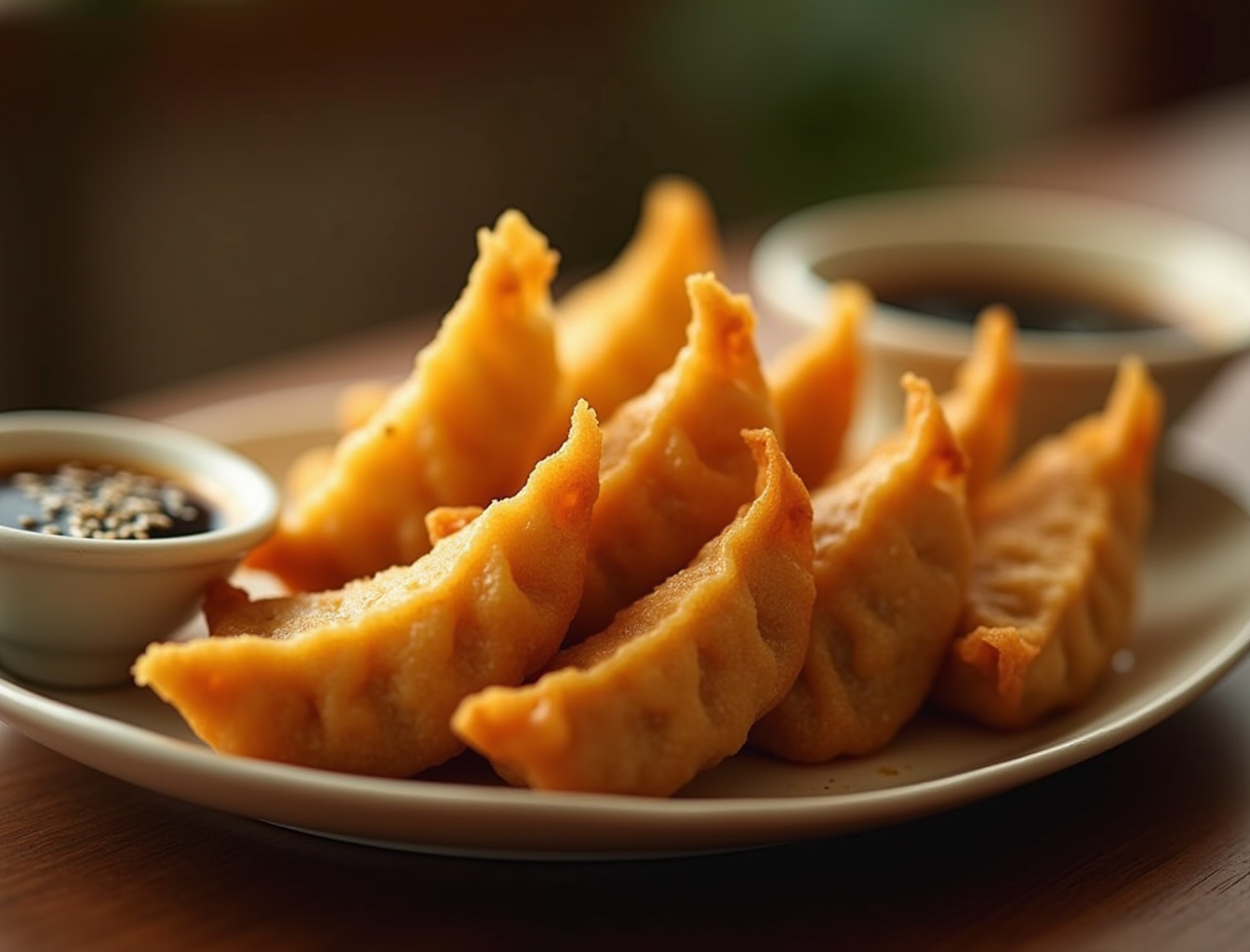
Frozen gyoza, potstickers, or mandu cooked in the air fryer for crispy, golden skins and juicy filling — no steaming, no stovetop, ready in under 15 minutes.
- Prep Time: 3 minutes
- Cook Time: 11 minutes
- Total Time: 14 minutes
- Yield: 16–20 dumplings 1x
- Category: Appetizer
- Method: Air Fryer
- Cuisine: Asian
Ingredients
- 1 bag frozen dumplings, gyoza, or potstickers (16–20 pieces)
- Cooking oil spray (avocado or canola oil)
- Dipping sauce for serving (soy sauce, ponzu, or dumpling sauce)
Instructions
- Preheat the air fryer to 375°F for 3 minutes. Keep dumplings in the freezer until the fryer is ready — do not allow them to begin thawing.
- Arrange dumplings flat-side down in a single layer in the basket, spacing them at least ½ inch apart. Do not stack or crowd — touching dumplings will steam rather than crisp.
- Spray the dumplings generously with cooking oil spray to coat the wrappers evenly.
- Air fry at 375°F for 8–9 minutes for gyoza, 9–11 minutes for larger potstickers or mandu, until golden and crispy. For mini wontons, shake the basket at the halfway point.
- Serve immediately with dipping sauce.
Notes
Do not air fry xiaolongbao (Shanghai soup dumplings) — the paper-thin wrappers burst when the gelatinized broth liquefies under dry air pressure.
A 4-quart basket holds 12–15 regular gyoza; a 5–6 quart basket holds 16–20. Single layer only.
Oil spray is not optional — without it, wrappers turn pale and papery instead of golden and crispy.
To reheat previously cooked dumplings, air fry at 375°F for 3–4 minutes to restore crispness.
The air fryer has a legitimate claim to being the best way to cook frozen dumplings. It’s faster than pan-frying (which requires water, a lid, and active attention), produces a crispier exterior than steaming, and never scatters oil droplets across the stovetop. You get golden, slightly blistered gyoza skins with juicy filling — in 8 minutes, hands-off, every time.
This guide covers frozen dumplings, fresh homemade dumplings, and the important question of which dumplings should never go in the air fryer (looking at you, xiaolongbao).
How Does Air Frying Compare to Pan-Frying and Steaming Dumplings?
Texture comparison — what each method gives you
Each cooking method produces a different dumpling. Understanding the differences helps you choose the right technique for the occasion.
Steaming produces soft, tender skins with a slight chew and a light sheen — the filling is juicy and the wrapper is never dry. No crispness at all. This is the traditional method for dim sum har gow and many Chinese dumplings.
Pan-frying (potsticker method) creates the iconic flat-bottom crispy crust: a browned, lacy-edged bottom combined with a steamed, soft top. This is the jiaozi/gyoza cooking style — the combination of crust and steam in one piece. It requires oil, a hot pan, water added midway, and a lid to steam the tops while the bottoms fry. It produces the best result of any method, but it takes practice and attention.
Air frying produces a result between steaming and pan-frying: overall even browning across all surfaces (not just the bottom), a crispy skin without the lacy-bottom potsticker effect, and a fully cooked, juicy filling. It’s the most convenient method and the most forgiving — no risk of burning the bottom while the tops stay raw.
| Method | Bottom Crispness | Top Crispness | Filling | Active Time | Mess |
|---|---|---|---|---|---|
| Steamed | None | None | Very juicy | 10 min | Low |
| Pan-fried (potsticker) | Excellent (lacy) | Soft | Juicy | 12 min (active) | Medium |
| Air fryer | Very good | Good | Juicy | 8–10 min (hands-off) | Minimal |
| Boiled | None | None | Very tender | 5 min | Low |
When air frying wins outright
Air frying is the clear winner when you want consistent results without standing at the stove. It’s ideal for frozen dumplings (no thawing, no water required), cooking for more than two people (a 5–6 quart basket holds 16–20 dumplings in one batch), and when you want overall crispy texture rather than just a potsticker bottom. It’s also the best reheating method for previously cooked dumplings — restoring crispness in 3–4 minutes that no other method can match.
What Types of Dumplings Can You Air Fry?
Gyoza (Japanese pan-fried style)
Gyoza — Japan’s version of Chinese jiaozi — are thin-skinned, pleated dumplings filled with ground pork, cabbage, garlic, and ginger. The wrappers are designed for pan-frying (the bottom crisps, the tops steam) but adapt beautifully to the air fryer. The thin skin crisps quickly at 375°F, and the pork filling is juicy enough to remain moist even with the air fryer’s dry heat. Trader Joe’s Gyoza Potstickers are the most commonly air-fried brand in North America and consistently produce excellent results.
Potstickers (Chinese jiaozi)
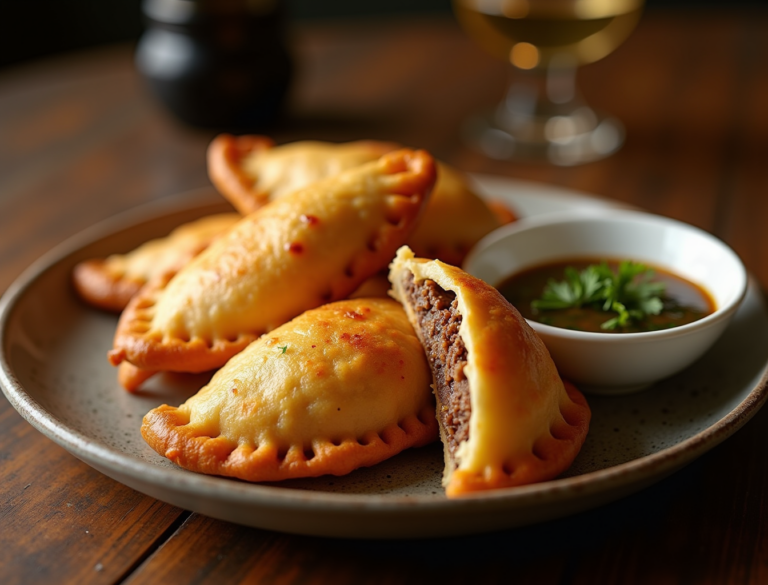
Chinese potstickers are slightly larger than gyoza, with thicker skins and typically more filling. They need a slightly longer cooking time in the air fryer (9–11 minutes vs. 8–9 for gyoza) and benefit from being placed flat-side down so the thicker flat bottom crisps properly. Bibigo Korean Dumpling Mandu, which are widely available at Costco and H-Mart, are similar in size and cook in the same range.
Mandu (Korean dumplings)
Korean mandu come in multiple sizes and shapes — round (pyeon-mandu), half-moon (joseon-mandu), and the large steamed wang-mandu. For air frying, the smaller half-moon and round varieties work best. Fillings typically include pork, tofu, glass noodles, and kimchi. The kimchi variety (kimchi mandu) releases slightly more moisture during cooking, so spacing is especially important — give these an extra half-inch between pieces.
Xiaolongbao — DO NOT air fry
This point deserves its own section. Xiaolongbao (Shanghai soup dumplings) contain a gelatinized pork broth that liquefies when heated. The wrappers are paper-thin and designed only for steaming in bamboo steamers. Air frying xiaolongbao will cause the thin wrapper to burst from the combination of air pressure and steam from the liquefying soup — the filling will spill out, the wrappers will collapse, and the dumplings will be destroyed. Xiaolongbao must be steamed. There is no air fryer workaround.
What Frozen Dumpling Brands Work Best in the Air Fryer?
| Brand | Type | Temp | Time | Notes |
|---|---|---|---|---|
| Trader Joe’s Gyoza Potstickers | Pork/veggie gyoza | 375°F | 8–9 min | Best widely available option |
| Bibigo Steamed Dumplings | Pork & vegetable mandu | 375°F | 9–11 min | Larger size — check at 9 min |
| Feel Good Foods Potstickers | Pork/veggie, gluten-free | 375°F | 8–10 min | GF wrapper is slightly thicker |
| CJ Foods Bibigo Mini Wontons | Pork & vegetable mini | 370°F | 8–10 min | Shake basket at halfway |
| Ling Ling Potstickers | Chicken/pork potstickers | 375°F | 9–10 min | Good filling, slightly thicker skin |
How Do You Air Fry Dumplings Step-by-Step?
Step 1 — Preheat to 375°F
Preheating matters more for dumplings than for most air fryer foods. A cold air fryer means the dumplings sit in gradually warming air rather than being hit immediately with 375°F heat. The initial blast of high heat is what sets the wrapper and begins the crisping process — without it, the dumpling skin softens before it crisps and the bottom can stick to the basket before it’s properly set.
Preheat for 3 minutes at 375°F. While the fryer heats, take the dumplings directly from the freezer — do not let them sit and begin thawing.
Step 2 — Arrange flat-side down with space between
For gyoza and potstickers, the flat bottom should face down — this is the surface that crisps most dramatically and it benefits from direct contact with the hot basket. The pleated top will brown from the circulating hot air without direct contact. Space dumplings at least ½ inch apart — touching dumplings steam each other rather than crisping.
A 4-quart basket holds approximately 12–15 regular-sized gyoza. A 5–6 quart basket holds 16–20. Cooking in a single layer is non-negotiable — stacked dumplings are a guaranteed failure.
Step 3 — Spray generously with oil
This step is not optional. Gyoza and dumpling wrappers are made from wheat dough — without oil, they turn pale, slightly papery, and tough rather than golden and crispy. The oil application creates the Maillard browning reaction on the dough surface that produces the characteristic golden color and light crunch. Use a neutral oil spray (avocado or vegetable) and coat all visible surfaces, including the pleated tops and the sides. If you can see dry, uncoated dough, you haven’t used enough oil.
Step 4 — Cook 8–10 minutes, check at 8
Air fry at 375°F for 8–10 minutes. There is no standard flip required — placing the dumplings flat-side down means the bottom crisps against the basket and the circulating air handles the tops. Check at the 8-minute mark by pressing one dumpling lightly with a silicone spatula: it should feel firm and hold its shape. If it feels soft or doughy, give it 2 more minutes.
For an extra-crispy bottom, after the 8–10 minutes are up, bump the temperature to 400°F for 2 minutes. This final high-heat blast crisps the bottom to near-potsticker quality.
Step 5 — Serve immediately with dipping sauce
Gyoza and potstickers are best eaten immediately — the skin softens as it cools and the maximum crispness lasts only about 5 minutes. Prepare your dipping sauce while the dumplings cook, not after.
What Are the Complete Air Fryer Dumpling Times and Temperatures?
| Type | Temperature | Time | Flip? | Notes |
|---|---|---|---|---|
| Frozen gyoza (small) | 375°F (190°C) | 8–9 min | No | Flat-side down, generous oil spray |
| Frozen potstickers (medium) | 375°F (190°C) | 9–11 min | No | Check at 9 min |
| Frozen mandu/large dumplings | 375°F (190°C) | 11–13 min | Optional at 7 min | Larger size needs more time |
| Fresh/refrigerated dumplings | 375°F (190°C) | 8–10 min | No | Same as frozen |
| Homemade (thicker skin) | 375°F (190°C) | 10–12 min | No | Thicker homemade skins need extra time |
| Reheat (cooked dumplings) | 375°F (190°C) | 3–4 min | No | Restores most crispness |
Should You Flip Dumplings in the Air Fryer?
The case for not flipping
For standard gyoza and potstickers, flipping is unnecessary and slightly counterproductive. The flat bottom of a gyoza placed flat-side down crisps against the basket surface — the point of direct heat contact. The pleated top, exposed to circulating air, crisps on its own without needing to face the basket. Flipping a gyoza mid-cook places the pleated top against the basket (where it can catch and tear on the basket wires) and exposes the flat bottom to less direct heat for the second half of cooking.
When flipping helps
For very large dumplings (over 3 inches long) — such as some Korean wang-mandu or large Chinese crescent dumplings — flipping halfway through helps ensure the top surface browns evenly. Large dumplings have more surface area that the circulating air may not reach as uniformly. If you’re cooking large dumplings and notice the tops remaining pale at the 7-minute mark, flip carefully with silicone tongs and give them 3–4 more minutes.
What Are the Pro Tips for Perfect Air Fryer Dumplings?
Never thaw frozen dumplings first
This is the most common mistake. Thawing frozen dumplings creates condensation on the wrapper surface — a thin film of water that prevents oil from adhering, turns into steam during cooking, and makes the wrapper soggy before the crisping process can begin. Cook frozen dumplings straight from the freezer every time. The frozen interior actually helps — it keeps the filling from drying out during the 8–10 minutes it takes to crisp the wrapper.
Oil spray is non-negotiable
Under-oiled dumpling wrappers turn pale, slightly tough, and papery — not crispy. The color difference between a well-oiled and a poorly oiled gyoza is dramatic. A well-oiled gyoza skin turns deep amber-gold and develops a slight crunch. An under-oiled one turns matte and light tan with a dry, leathery chew. Use enough oil that every visible surface has a slight sheen.
Give them space or they stick together
Dumplings placed touching each other will steam each other rather than crisping, and may stick together as the starch on the wrapper surfaces gelatinizes under heat. The minimum spacing is ½ inch between pieces. If your basket is too small for a single layer with spacing, cook in batches — second batches cook in the same time as the first.
What Are the Best Dipping Sauces for Air Fryer Dumplings?
Classic soy-rice vinegar sauce
The standard: 2 tablespoons soy sauce, 1 tablespoon rice vinegar, 1 teaspoon sesame oil, and ½ teaspoon sugar, whisked together. For heat, add 1 teaspoon of chili crisp oil (Lao Gan Ma brand is the gold standard). This sauce works with every style of dumpling — gyoza, potstickers, and mandu alike. Make it ahead; it keeps at room temperature for the duration of the meal and refrigerated indefinitely.
Chili crisp oil
A spoonful of good chili crisp (Lao Gan Ma Spicy Chili Crisp or Fly By Jing) alone is sufficient for those who want heat, umami, and texture in one condiment. The crispy fried shallots and chilies in chili crisp add a textural element that complements the crispy dumpling skin, and the deep umami from the fermented black beans ties directly to the pork filling’s flavors.
Gyoza tare — the restaurant version
Japanese gyoza restaurants typically offer a house tare sauce that’s slightly different from the generic soy-vinegar version. Mix 2 tablespoons soy sauce, 1 tablespoon rice vinegar, 1 teaspoon chili oil (pure chili-infused oil, not chili crisp), ½ teaspoon grated fresh ginger, and ¼ teaspoon toasted sesame seeds. The fresh ginger brightens the sauce in a way that ground ginger doesn’t, and the pure chili oil integrates more cleanly than chili crisp in this particular balance.
How Do You Make Homemade Air Fryer Dumplings?
Simple pork and cabbage filling
Combine ½ lb ground pork (80/20 — leaner pork produces dry, tight filling), 1 cup napa cabbage that has been salted, squeezed dry, and minced, 2 minced green onions, 1 tablespoon soy sauce, 1 teaspoon sesame oil, 1 teaspoon freshly grated ginger, and 1 minced garlic clove. Mix in one direction (always clockwise, or always counter-clockwise — consistency matters for texture) until the mixture becomes sticky and cohesive. This sticky texture is what keeps the filling together inside the wrapper without needing egg or starch as a binder.
The salted, squeezed cabbage step is essential. Unsqueezed cabbage releases a large amount of water into the filling during cooking, which makes the inside of the dumpling watery and prevents the wrapper from getting fully crispy from the inside surface. Salt the cabbage, let it sit 10 minutes, then wring it out in a clean kitchen towel until almost completely dry.
Wrapping technique for beginners
Place a gyoza wrapper in your palm. Wet the edge with water. Add 1 teaspoon of filling in the center — do not overfill. Fold the wrapper in half over the filling to form a half-moon. Press the edges together at the center top to seal the middle first. Then, starting from the center, pleat the front edge: pinch a small fold of dough toward the center, press it against the flat back edge, and repeat 3–4 times in each direction from the center. This creates the classic gyoza pleat pattern and, more importantly, a seal that holds under the pressure of cooking. Press all edges firmly to close.
What Are the Best Homemade Dumpling Filling Variations?
Shrimp and chive gyoza
Replace the pork with ½ lb coarsely chopped raw shrimp and substitute the napa cabbage with ½ cup finely minced Chinese chives (garlic chives — distinctive flavor, not the same as regular chives). Add white pepper instead of black. This is a classic Cantonese combination — the shrimp stays plump and sweet in the air fryer and the chives provide an intensely savory, garlicky note that pairs with the shrimp beautifully. Air fry at the same temperature and time as pork gyoza.
Vegetable and tofu mandu (Korean)
Crumble firm tofu and press out all moisture in a clean towel. Combine with 1 cup cooked and drained glass noodles (dangmyeon), ½ cup chopped kimchi (squeeze out juice), ½ cup shredded carrots, 2 minced green onions, 1 tablespoon soy sauce, and 1 teaspoon sesame oil. This is a traditional Korean dumpling filling that’s naturally vegan and packed with texture. The kimchi must be squeezed dry — wet kimchi makes the filling too moist and will compromise the wrapper.
Kimchi pork dumpling filling
Add ¼ cup finely chopped kimchi (well-squeezed) to the basic pork and cabbage filling. The kimchi contributes fermented sourness and heat that transforms the flavor profile entirely. Use fully fermented, sour kimchi (not fresh) for the most pronounced flavor. This filling works equally well in gyoza wrappers (thin, crispy) and thicker dumpling wrappers (denser, more substantial).
How Do You Store and Reheat Air Fryer Dumplings?
Cooked dumplings keep in the refrigerator for 2–3 days. Do not stack cooked dumplings — they stick together as they cool and pulling them apart tears the skins. Store in a single layer if possible, or separate layers with parchment paper.
Reheat at 375°F for 3–4 minutes. The air fryer is the only reheating method that restores meaningful crispness to cooked dumplings. Microwaved dumplings become steamy and soft; reheating in a dry pan without water makes them dry and hard. The air fryer brings them back to within about 80% of the original just-cooked quality.
For uncooked homemade dumplings: freeze on a parchment-lined tray until solid, then transfer to a freezer bag. Cook from frozen at 375°F for 12–14 minutes. The extra time (vs. 8–10 minutes for frozen store-bought) accounts for the thicker homemade wrapper and the fully raw filling.
Frequently Asked Questions About Air Fryer Dumplings
How long do you cook frozen dumplings in an air fryer?
Cook frozen dumplings at 375°F for 8–10 minutes. No thawing needed. Place flat-side down, spray generously with oil, and check at 8 minutes. Small gyoza are done at 8 minutes; larger potstickers may need 10–11 minutes. Very large mandu-style dumplings may need 12–13 minutes.
Do you need to flip dumplings in the air fryer?
Generally no — place flat-side down and let the circulating air handle the pleated top. The flat bottom crisps against the basket surface and the top browns from above. For very large dumplings (over 3 inches), a halfway flip helps ensure even browning on the top surface.
Can you air fry soup dumplings (xiaolongbao)?
No — never air fry xiaolongbao. The thin wrapper will burst from the heat, releasing the soup broth and destroying the dumpling. Xiaolongbao must be steamed. The air fryer is appropriate for gyoza, potstickers, mandu, and similar pan-fry style dumplings with sturdier wrappers and solid fillings.
Why are my air fryer dumplings sticking to the basket?
Two causes: not preheating the air fryer (cold basket sticks; hot basket releases), and insufficient oil spray (the oil creates a barrier between the starchy wrapper and the metal basket). Preheat for 3 minutes, spray the basket with oil before placing dumplings, and spray the tops of the dumplings as well. A quality parchment liner designed for air fryers also prevents sticking effectively.
Can you cook wontons the same way as dumplings in the air fryer?
Yes, with a caveat. Fried wontons (the flat, crispy triangle type) work well at 375°F for 5–7 minutes. Filled wontons designed for soup (the rounded, gathered-top type) can be air fried at 375°F for 8–9 minutes, but they’re more fragile than gyoza wrappers and need careful handling. Ensure the filling is completely sealed before cooking.
For all air fryer cook times in one place, visit the Air Fryer Cooking Times Chart. For more Asian air fryer recipes, try Air Fryer Spring Rolls — and for a completely different regional classic, see Air Fryer Samosas.
Sources: The Woks of Life | Carmyy | Cheat Day Design