Air Fryer Spring Rolls (Shatteringly Crispy — Frozen or Homemade)
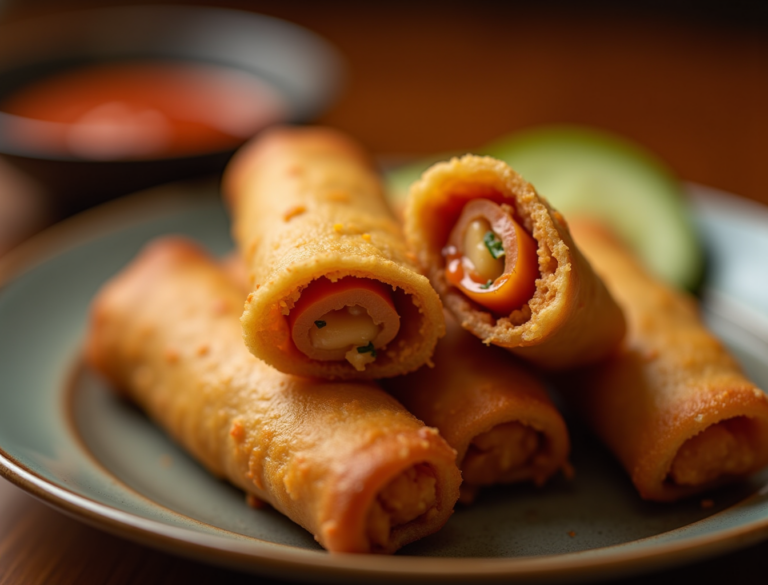
There is a specific sound a perfect spring roll makes when you bite into it — a sharp, clean crack, like breaking a thin sheet of caramelized sugar. That sound is the goal. It means the wrapper has been dehydrated at the surface to the point where it has no give left, just crunch. In a deep fryer, achieving this is straightforward: plunge the roll into 375°F oil and the wrapper fries instantly. In an air fryer, with the right temperature and technique, you can get essentially the same result.
PrintAir Fryer Spring Rolls
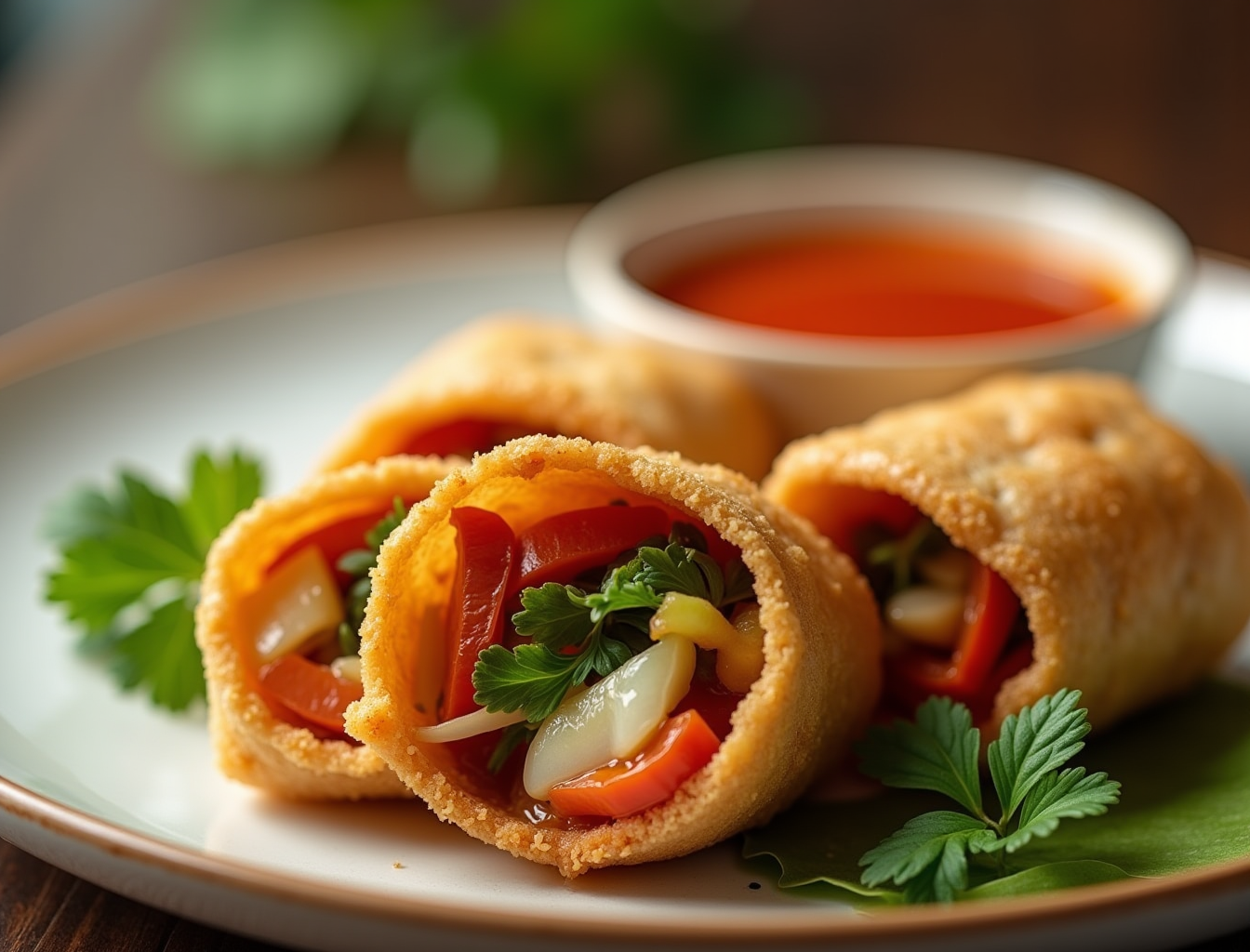
Shatteringly crispy air fryer spring rolls with a thin wheat-starch wrapper and savory vegetable filling cooked at 390°F for chip-like crunch. Works for both frozen and homemade spring rolls.
- Prep Time: 25 minutes
- Cook Time: 10 minutes
- Total Time: 35 minutes
- Yield: 12 spring rolls 1x
- Category: Appetizer
- Method: Air Fryer
- Cuisine: Chinese
Ingredients
- For the filling:
- 2 cups napa cabbage, finely shredded
- 1 cup carrots, julienned or shredded
- 1 cup bean sprouts
- 2 green onions, thinly sliced
- 2 garlic cloves, minced
- 1 tsp fresh ginger, grated
- 2 tbsp soy sauce
- 1 tsp sesame oil
- 1 tsp oyster sauce (optional — omit for vegetarian)
- For assembly:
- 12 spring roll wrappers (8-inch square, thawed)
- 2 tbsp cornstarch + 2 tbsp water (sealing slurry)
- Neutral oil spray (avocado or vegetable)
Instructions
- Heat a wok or large pan over high heat until smoking. Add 1 tablespoon neutral oil and stir-fry the cabbage and carrots for 2 minutes until slightly wilted. Add garlic and ginger and stir 30 seconds.
- Add bean sprouts, soy sauce, oyster sauce, and sesame oil and toss for 1 minute more. Spread the filling on a sheet pan and let it cool completely — blot any pooling liquid with paper towels until the filling is visibly dry.
- Keep thawed spring roll wrappers covered with a damp kitchen towel as you work. Separate them one at a time to avoid tearing.
- Place a wrapper in the diamond position (one corner pointing toward you). Place 2 tablespoons of filling in a horizontal line in the lower third, leaving 1 inch of wrapper on each side.
- Fold the bottom corner tightly over the filling and tuck it under. Fold both side corners in, then roll upward firmly. Seal the final corner with cornstarch slurry and press to close.
- Preheat air fryer to 390°F. Arrange spring rolls in a single layer without touching and spray generously with neutral oil on all sides.
- Air fry at 390°F for 8–10 minutes, flipping halfway through, until golden and shatteringly crispy.
Notes
Do not thaw frozen spring rolls before air frying — cook straight from frozen to prevent condensation from softening the wrapper.
The filling must be completely dry before rolling. Even a small amount of residual moisture will make the wrapper soggy no matter the cooking temperature.
For extra crispiness, use thin lumpia wrappers instead of standard spring roll wrappers.
For a pork and shrimp version, stir-fry ½ cup minced raw shrimp and ¼ cup ground pork first until cooked through, then add the vegetables. Cook the filling even drier than the vegetable-only version.
The secret is not just heat — it’s the right heat (390°F, not 350°F), generous oil application, and a wrapper rolled so tightly that no air pockets remain to go limp. This guide covers both frozen and homemade spring rolls, explains the key differences between spring rolls and egg rolls, and gives you the exact times and temperatures to get that crack every time.
What Is the Difference Between a Spring Roll and an Egg Roll?
This question comes up constantly and the distinction matters for air frying, because the two wrappers behave completely differently at high temperatures.
Wrapper thickness and texture comparison
Spring roll wrappers are thin, delicate sheets made from wheat starch (or rice flour in the Vietnamese version), typically 1–2mm thick when raw. When deep-fried or air-fried at high heat, they turn shatteringly crispy — thin enough that the outer surface nearly burns while the inner surface barely cooks. The result is a wrapper with the texture of a chip: rigid, dry, and crackling.
Egg roll wrappers are thicker, made from wheat flour and egg, more like a pasta sheet. They brown but remain chewy rather than shattering. The chewier texture means egg rolls need slightly lower heat and longer cooking time than spring rolls — at 390°F, a thin spring roll wrapper is ideal; a thick egg roll wrapper might scorch before fully cooking through.
Filling differences and cooking implications
Spring rolls typically use lighter, more finely shredded fillings (napa cabbage, carrots, bean sprouts, thin noodles) that cook quickly and don’t release much liquid. Egg rolls use heartier, chunkier fillings (chopped cabbage, ground pork) that contain more moisture. The drier spring roll filling is better suited to the air fryer’s lower-moisture environment.
| Feature | Spring Roll | Egg Roll |
|---|---|---|
| Wrapper | Thin wheat starch or rice paper | Thick egg-based dough |
| Cooked texture | Shatter-crisp, chip-like | Chewy, crunchy, denser |
| Filling style | Finely shredded, light | Chunky, heartier |
| Air fryer temp | 390°F (199°C) | 370–380°F (188–193°C) |
| Air fryer time | 8–10 min | 10–14 min |
| Origins | China, Southeast Asia | Chinese-American |
How Do Frozen and Homemade Spring Rolls Differ in the Air Fryer?
Frozen spring rolls: what to expect and which brands work
Frozen spring rolls are pre-assembled and partially cooked — most commercial brands are blanched or briefly fried before freezing. This means the wrapper is already partially set, and the filling is pre-cooked. In the air fryer, the goal is simply to crisp the wrapper and heat the filling through.
The best results come from brands that use thin wheat-starch wrappers rather than thicker dough: Feel Good Foods, Trader Joe’s Spring Rolls (the vegetable variety), and most Asian grocery store house brands typically perform well. The denser, thicker-wrapped American-style frozen spring rolls (common at warehouse stores) crisp less dramatically and are more similar to an egg roll texture.
Key rule: do not thaw frozen spring rolls before air frying. Thawing creates condensation on the wrapper surface that prevents crisping. Cook straight from frozen — the frozen filling actually helps prevent the inside from becoming dry while the wrapper crisps.
Homemade spring rolls: the wrapper is the key variable
For homemade spring rolls, the wrapper you choose determines the final texture more than any other variable. Look for spring roll wrappers in the frozen section of Asian grocery stores — they’re typically sold as 25-sheet or 50-sheet packs, square or round. Thaw overnight in the refrigerator and keep covered with a damp towel while working — spring roll wrappers dry out fast and become brittle.
The thinner the wrapper, the better the crunch. Lumpia wrappers (used for Filipino lumpia) are slightly thinner than standard spring roll wrappers and produce the crispiest results. Standard Chinese spring roll wrappers are slightly thicker. Both work well at 390°F.
What Ingredients Do You Need for Homemade Air Fryer Spring Rolls?
Vegetable filling (makes 12 spring rolls):
- 2 cups napa cabbage, finely shredded
- 1 cup carrots, julienned or shredded
- 1 cup bean sprouts
- 2 green onions, thinly sliced
- 2 garlic cloves, minced
- 1 tsp fresh ginger, grated
- 2 tbsp soy sauce
- 1 tsp sesame oil
- 1 tsp oyster sauce (optional — omit for vegetarian)
For assembly:
- 12 spring roll wrappers (8-inch square, thawed)
- 2 tbsp cornstarch + 2 tbsp water (sealing slurry)
- Neutral oil spray (avocado or vegetable)
Pork and shrimp filling option
For a heartier spring roll in the Cantonese style, add ½ cup minced raw shrimp and ¼ cup ground pork to the filling. Stir-fry the pork and shrimp first until cooked through, then add the vegetables. The proteins add richness and the shrimp contributes a sweetness that balances the soy sauce. Cook the filling even drier than the vegetable-only version — proteins release additional moisture during cooking that the wrapper must be protected from.
How Do You Make Air Fryer Spring Rolls Step-by-Step?
Step 1 — Make and completely dry the filling
Heat a wok or large pan over high heat until smoking. Add a tablespoon of neutral oil and stir-fry the cabbage and carrots for 2 minutes — you want them to wilt slightly but retain some crunch. Add garlic and ginger, stir 30 seconds. Add the bean sprouts, soy sauce, oyster sauce, and sesame oil, and toss for 1 minute more.
The critical step: spread the filling on a wide sheet pan or large plate and let it cool completely. The filling should be visibly dry — if there’s any liquid pooling around it, blot with paper towels or continue cooking. Steam from wet filling is what destroys spring roll crispness from the inside. Even a small amount of residual moisture will make the wrapper soggy no matter what temperature you cook at.
Step 2 — Prepare the wrappers
Keep thawed spring roll wrappers covered with a damp (not wet) kitchen towel as you work — they dry out in minutes and become brittle and crackly when dry, which makes tight rolling impossible. Separate them one at a time; they sometimes stick together and tearing them ruins the wrapper.
Step 3 — Roll tightly using the diamond position
Place a wrapper with one corner pointing toward you (diamond position, not square). Place 2 tablespoons of filling in a horizontal line in the lower third of the wrapper, leaving 1 inch of wrapper on each side. This placement ensures you have enough wrapper to fold over the ends and complete a tight roll.
Fold the bottom corner over the filling and tuck it under — pull it tight, as if wrapping a package. Fold both side corners inward, pressing firmly. Now roll the wrapped filling upward in a tight cylinder, pressing and compressing as you go. Roll as tightly as possible — loose rolls have air pockets that go soggy and soft during cooking. When you reach the final corner, apply a generous amount of cornstarch slurry to both the corner and the roll’s surface, press firmly, and hold for 3 seconds.
Step 4 — Oil and air fry at 390°F
Brush or spray the rolled spring rolls generously with neutral oil on all surfaces, paying particular attention to the seam line. Preheat your air fryer to 390°F.
Place spring rolls in a single layer — do not let them touch. Air fry at 390°F for 8–10 minutes, flipping at the 5-minute mark and spraying the newly exposed surfaces with oil. The rolls are done when the wrapper surface has visible golden blistering and the color is deep amber — not pale gold. Pull one spring roll out and listen: it should sound hollow when you tap it. Drain on a wire rack for 1 minute before serving.
What Are the Air Fryer Spring Roll Times and Temperatures?
| Type | Temperature | Time | Flip? | Notes |
|---|---|---|---|---|
| Frozen mini spring rolls | 390°F (199°C) | 6–8 min | Yes, at 4 min | Do not thaw |
| Frozen large spring rolls | 390°F (199°C) | 10–12 min | Yes, at 5 min | Do not thaw |
| Homemade (fresh-rolled) | 390°F (199°C) | 8–10 min | Yes, at 5 min | Spray both sides with oil |
| Homemade (refrigerated) | 390°F (199°C) | 10–12 min | Yes, at 5 min | Cold wrapper needs extra time |
| Reheat (cooked) | 390°F (199°C) | 4 min | No | Near-fresh crispness restored |
390°F is the key temperature. At 350°F, spring roll wrappers don’t get hot enough quickly enough to shatter-crisp — they turn crispy but lack the shattering texture of a great spring roll. The higher heat is what makes the difference.
What Rolling Technique Prevents Blowouts?
The tight roll — why loose rolling ruins the crunch
Every air pocket inside a loosely rolled spring roll becomes a steam trap. The filling releases moisture during cooking; in a tightly rolled spring roll, that moisture escapes through the ends or through the wrapper material. In a loose roll with air gaps, the steam condenses in the pockets, soaks into the wrapper from the inside, and creates soft, pale, chewy spots regardless of the external temperature or oil application.
A tightly rolled spring roll feels notably firm when you hold it — there should be no give when you squeeze it lightly. If you feel the filling shifting inside, unroll and re-roll more firmly. This sounds tedious but is the single most impactful skill in spring roll making.
Sealing both ends completely
When you fold the side flaps in before rolling, press them firmly so they bond to the filling rather than just sitting on top. If the side flaps aren’t pressed down, they lift during rolling and create gaps at both ends of the roll where filling can spill out and oil can pool. The cornstarch slurry applied to the final corner creates a seal that doesn’t soften under the heat of the air fryer the way plain water or egg white might.
What Are the Pro Tips for the Crispiest Air Fryer Spring Rolls?
Use 390°F — not 350°F or 375°F
The temperature difference between 350°F and 390°F is not subtle for spring roll wrappers. At 350°F, the wrapper reaches an acceptable crispness but lacks the shatter-crack texture of a truly great spring roll. The higher temperature causes the thin wrapper to dehydrate almost instantly on the surface, creating the rigid, crackling shell that distinguishes a proper spring roll from an acceptable one. For egg rolls with thicker wrappers, 370–380°F is more appropriate — but for spring rolls, go to 390°F.
Spray all surfaces including the seam line
The seam — where the final fold is sealed — has multiple layers of wrapper stacked on top of each other. This thick area browns last and is most susceptible to remaining pale and slightly chewy. Apply oil specifically to the seam line before cooking. If you’re brushing rather than spraying, use your fingertip to press oil into the seam fold.
Never thaw frozen spring rolls before cooking
Thawing creates condensation on the wrapper surface — tiny droplets of water that prevent oil from bonding to the surface and create steam during cooking. A frozen spring roll placed directly into a hot air fryer undergoes a rapid surface-to-interior temperature differential that actually helps crisp the wrapper: the outer surface hits 390°F instantly while the interior is still cold, creating a fast exterior set before interior steam can migrate outward.
What Dipping Sauces Go with Spring Rolls?
Sweet chili sauce
The essential pairing. Thai sweet chili sauce (Mae Ploy or similar) provides the balance of sweet, hot, and acidic that complements the neutral, slightly savory spring roll filling perfectly. The viscosity is important — it should cling to the spring roll rather than dripping off. Store-bought is excellent; homemade requires fresh red chilies, rice vinegar, sugar, and a starch slurry.
Soy-ginger dipping sauce
Combine 3 tablespoons soy sauce, 1 tablespoon rice vinegar, 1 teaspoon sesame oil, 1 teaspoon freshly grated ginger, and ½ teaspoon sugar. This is the clean, savory Chinese-American restaurant sauce that works with both vegetable and meat-filled spring rolls. A few drops of chili oil elevate it significantly.
Peanut sauce
Whisk together 3 tablespoons smooth peanut butter, 2 tablespoons soy sauce, 1 tablespoon rice vinegar, 1 tablespoon honey, 1 garlic clove (minced), and 2–3 tablespoons water to thin to dipping consistency. Peanut sauce works particularly well with vegetable spring rolls and with Vietnamese-style rolls, providing a creaminess and richness that the lighter filling benefits from.
What Are the Best Spring Roll Variations?
Lumpia (Filipino-style spring rolls)
Lumpia Shanghai is one of the most beloved Filipino party foods — small, tightly rolled spring rolls filled with ground pork (or chicken), garlic, onion, carrots, and sometimes green beans. They use lumpia wrappers, which are thinner than standard spring roll wrappers, and are rolled very thin and very tight. Air fry at 400°F for 8 minutes, flipping once — the thinner wrapper and smaller size cook faster and get crispier than a standard Chinese spring roll. Serve with banana ketchup or sweet chili sauce. These are genuinely one of the best things you can make in an air fryer.
Vietnamese fresh spring rolls — the non-fried contrast
Gỏi cuốn (Vietnamese fresh spring rolls) deserve a mention precisely because they should never go in an air fryer. These use rice paper wrappers that are softened in water, filled with cooked shrimp, rice vermicelli, lettuce, mint, and cucumber, and served fresh at room temperature. Attempting to air fry them would destroy the delicate wrapper and the fresh ingredients. They are their own perfect dish — cool, light, and bright — that requires no cooking at all.
Dessert apple cinnamon spring rolls
Fill spring roll wrappers with 2 tablespoons of diced apple tossed with 1 tablespoon brown sugar, ½ teaspoon cinnamon, and 1 teaspoon melted butter. Optionally add a small piece of cream cheese. Roll tightly, seal with cornstarch slurry, spray with oil, and air fry at 375°F for 8–9 minutes (lower temp than savory rolls to prevent the sugar from burning). Serve with vanilla ice cream or caramel sauce. The sugar caramelizes on the wrapper during cooking, creating a toffee-like crunch.
How Do You Store and Reheat Air Fryer Spring Rolls?
Cooked spring rolls soften overnight in the refrigerator — this is unavoidable and expected. Store in an airtight container with paper towels between layers to absorb residual moisture. They keep for 2–3 days.
Reheating at 390°F for 4 minutes restores most of the crispness — not 100% of the just-cooked texture, but genuinely good. This is the only reheating method that works; a microwave produces soft, steamy, chewy spring rolls that have lost all their appeal.
For uncooked homemade spring rolls: freeze rolled (unsealed) spring rolls on a parchment-lined tray until solid, then seal the final corner with fresh cornstarch slurry (the frozen slurry from pre-freezing won’t adhere properly) and bag. Cook from frozen at 390°F for 12–14 minutes, flipping once.
Frequently Asked Questions About Air Fryer Spring Rolls
What temperature do you air fry frozen spring rolls at?
Cook frozen spring rolls at 390°F for 8–10 minutes for standard-sized rolls, or 6–8 minutes for mini spring rolls. Flip halfway through. Do not thaw before cooking — straight from freezer produces the crispiest results.
How do you keep air fryer spring rolls crispy?
Three non-negotiable factors: dry filling (cook out all moisture before rolling), tight rolling (no air pockets), and high temperature (390°F). Oil spray on all surfaces is also critical — without it, the wrapper dehydrates rather than crisping, turning papery and pale instead of golden and crunchy.
What is the difference between a spring roll and an egg roll?
Spring rolls use thin, delicate wheat-starch or rice-flour wrappers that shatter crispy when cooked — the texture is like a chip. Egg rolls use thicker, egg-based dough wrappers that remain chewy and dense. Spring rolls typically have lighter vegetable-forward fillings; egg rolls have heartier, chunkier fillings. They also require different air fryer temperatures: 390°F for spring rolls, 370–380°F for egg rolls.
Can you cook spring rolls in an air fryer without oil?
Technically yes, but the results are significantly worse. Without oil, the spring roll wrapper dehydrates and turns very pale — a dry, papery texture rather than a crispy, golden one. The Maillard browning reaction that creates the golden color and complex flavor requires both heat and fat. A light spray of oil is what makes air fryer spring rolls genuinely delicious rather than merely cooked.
Are air fryer spring rolls healthier than deep-fried?
Yes — a deep-fried spring roll absorbs roughly 3–4 grams of fat from the frying oil. An air-fried spring roll uses less than 1 gram of added fat from the oil spray. Calorie savings per spring roll: approximately 30–40 calories. Over a batch of 12, that’s 360–480 fewer calories with negligible difference in taste or texture.
For all air fryer timing reference, bookmark the Air Fryer Cooking Times Chart. Try more Asian air fryer favorites: Air Fryer Dumplings and Gyoza or explore another international classic with Air Fryer Falafel.
Sources: All Ways Delicious | Live Eat Learn | Healthful Blondie