50 Most Common Air Fryer Questions — Answered by Experts
Getting Started Questions (Q1–Q10)
Q1: What Is an Air Fryer and How Does It Work?
An air fryer is a compact countertop appliance that uses a powerful fan to circulate very hot air around food at high speed. This rapid convection creates the Maillard reaction on the food’s surface — the chemical process that browns proteins and starches to produce a crispy exterior similar to deep-frying, but using little to no oil. The small cooking chamber and powerful fan make air fryers significantly faster than conventional ovens for most foods. For a full explanation of setup and technique, see the complete beginner’s guide to using an air fryer.
Q2: Do I Need to Preheat My Air Fryer?
Yes, for most foods. Preheating for 3–5 minutes at your target temperature before adding food produces noticeably crispier results — food placed in a preheated basket starts cooking immediately on contact with the hot surface, forming a crust faster. Skip preheat only for delicate thin items (thin fish fillets, foods that cook in under 8 minutes) where the short cook time means preheat adds minimal benefit. For everything else — chicken, vegetables, steak, frozen foods — always preheat.
Q3: How Much Oil Do You Use in an Air Fryer?
Very little — typically 1 teaspoon to 1 tablespoon depending on the food. For most proteins and vegetables, a light spray of cooking oil (avocado, neutral vegetable, or light olive oil) applied directly to the food’s surface is sufficient. For frozen foods with existing coatings, no added oil is usually needed. Over-oiling causes smoke and makes food greasy rather than crispy. The air fryer’s job is air circulation, not oil immersion — the oil’s role is to assist the Maillard reaction, not to cook the food.
Q4: Do I Need to Flip Food in an Air Fryer?
For large items — yes. Chicken breasts, pork chops, steaks, and fish fillets benefit from a flip at the halfway point so both sides brown. For small items — shake the basket instead of individually flipping. Fries, nuggets, shrimp, and vegetables redistribute with a mid-cook shake, exposing all surfaces to the circulating heat. Small items don’t need individual turning. Skipping the shake or flip results in one-sided browning: the bottom is golden, the top is pale.
Q5: Can You Put Foil in an Air Fryer?
Yes, with conditions. Only use foil in the basket with food on top to weigh it down — loose foil can be sucked into the heating element. Never line the bottom of the outer drawer with foil, which blocks airflow and can cause uneven cooking. Never use foil with acidic foods like tomatoes or citrus — the reaction can pit the foil and potentially leach into food. A better everyday option is perforated parchment paper, which allows airflow while catching drips and is simpler to use correctly.
Q6: Can You Put Parchment Paper in an Air Fryer?
Yes — perforated parchment paper (also called air fryer liners) is one of the most useful accessories you can buy. The perforations allow airflow to continue while the paper catches drips and prevents sticking. Cut to fit the basket bottom, or buy pre-cut rounds or squares in your basket size. Critical rule: never load parchment into the basket without food on top. Loose parchment will fly up, touch the heating element, and catch fire. Always have food weighting it down before starting the cook.
Q7: What Size Air Fryer Do I Need?
For 1–2 people, a 2–4 quart basket-style model is sufficient. For 3–4 people, a 5–6 quart model handles a full meal without cooking in multiple batches. For families of 5 or more, an oven-style air fryer with 10+ quart capacity handles full sheet pan meals. The most common mistake is buying too small — a basket that’s too small forces constant batching. For most households, 5–6 quart is the right size. For buying recommendations by household size, see the Best Air Fryer for Family guide.
Q8: Is an Air Fryer Worth Buying?
Yes, for most households — with clarity on what it does best. The air fryer is exceptional at: frozen foods (dramatically better than the oven), chicken (crispy skin, quick cook), reheating leftovers (restores crispiness that microwaves destroy), and weeknight vegetables. It’s not a replacement for a full oven — it can’t handle large roasts, baking in standard pans, or cooking for a crowd. For the kitchen that cooks 3–5 times per week in moderate portions, the air fryer is likely the most-used appliance you’ll own.
Q9: How Loud Is an Air Fryer?
Air fryers operate at roughly 55–65 decibels during cooking — comparable to a normal conversation or a running dishwasher. The fan produces steady noise that most people find easy to tune out. Some models run quieter (oven-style air fryers with larger fans tend to be quieter than compact basket models). If noise level is important to you, check user reviews specifically for noise comments on any model you’re considering.
Q10: How Do I Season My New Air Fryer Before First Use?
Run a burn-in cycle: remove all packaging, wash removable parts with hot soapy water and dry thoroughly, then run the empty unit at 400°F for 10–15 minutes in a well-ventilated area (open a window or run the kitchen vent fan). This burns off manufacturing residue, protective coatings, and packaging chemicals from the interior. You may smell a plastic-chemical odor during this run — that’s the residue burning off, not damage. After cooling, your air fryer is ready for first use without that residue affecting your food.
Food and Cooking Questions (Q11–Q25)
Q11: What Can You Cook in an Air Fryer?
The air fryer handles a wide range: chicken (wings, thighs, breasts, drumsticks, whole chicken), beef (steak, burgers, meatballs), pork (chops, tenderloin, sausage, bacon), seafood (salmon, shrimp, tilapia, fish sticks), all vegetables, eggs, frozen foods of every kind, and baked goods (with appropriate pans). The common thread: foods that benefit from dry, circulating heat and a crispy exterior. See the complete Air Fryer Cooking Times Chart for times and temperatures on 100+ specific foods.
Q12: What Foods Should You NOT Cook in an Air Fryer?
Avoid: wet-battered foods (beer batter, tempura) directly in the basket — wet batter drips before setting; large leafy greens in quantity that can fly into the heating element; loose cheese without a coating that melts through the basket; popcorn (air fryers don’t sustain the temperatures needed reliably); soups, stews, and liquid-heavy dishes that need a sealed vessel; and very large roasts over 5 lbs that cook unevenly in a small basket. Most other foods work well with the right technique.
Q13: Can You Cook Frozen Food in an Air Fryer?
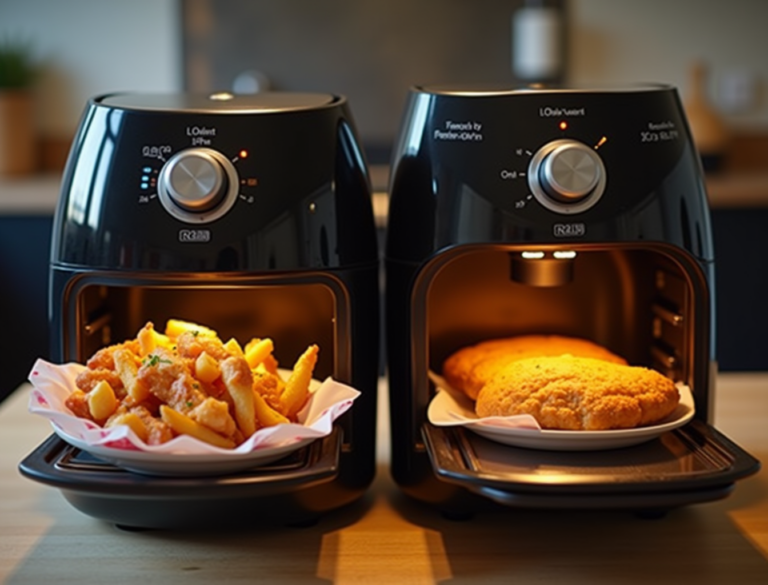
Yes — and this is one of the air fryer’s best use cases. Frozen fries, nuggets, fish sticks, pizza rolls, mozzarella sticks, tater tots, and frozen vegetables all cook significantly better in the air fryer than in the oven. Cook from frozen — no thawing required. Use the package oven temperature (or close to it) and reduce cook time by 30–40% compared to oven instructions. Shake halfway through. The circulating hot air crisps the coating far more effectively than a standard oven.
Q14: Can You Cook Raw Chicken in an Air Fryer?
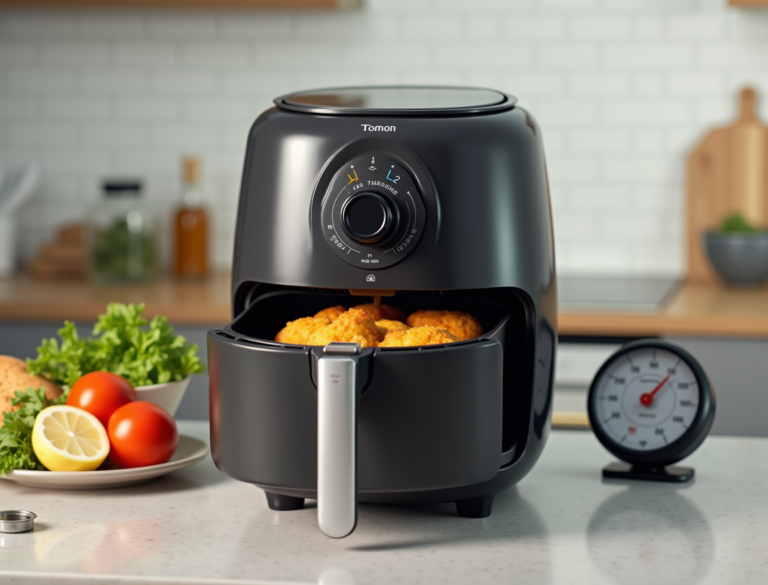
Yes, and raw chicken is one of the air fryer’s best proteins. Air fryer chicken comes out with a crispy skin or crust, stays juicy inside, and cooks in roughly half the oven time. Always verify doneness with a meat thermometer — chicken is safe at 165°F internal temperature. Bone-in pieces take longer than boneless. Never rely on color alone; air fryers can produce golden-brown exteriors before the interior reaches safe temperature, especially with thick bone-in pieces.
Q15: Can You Cook a Whole Chicken in an Air Fryer?
Yes, in models with sufficient capacity (typically 5.8 quart or larger). A 3–4 lb whole chicken at 360°F for 60–75 minutes (flipped at 30 minutes) produces exceptionally crispy skin with juicy meat inside. Season and truss before cooking. Verify the bird fits with space around it for air circulation before committing. Use a thermometer to confirm 165°F in the thickest part of the thigh (away from the bone) before removing. See the full Air Fryer Whole Chicken guide for the complete recipe.
Q16: Can You Cook Steak in an Air Fryer?
Yes — and air fryer steak is genuinely impressive for a weeknight cook. A 1-inch ribeye or NY strip at 400°F for 10–14 minutes (flipped at 6–7 minutes) produces a browned crust and a juicy interior. It won’t replicate a cast iron pan sear or grill, but it’s better than oven-broiling for speed and cleanup. Use a thermometer: 130–135°F for medium-rare, 140–145°F for medium. Always rest the steak 3–5 minutes after removing. See full time and temp details in the Air Fryer Cooking Times Chart.
Q17: Can You Cook Fish in an Air Fryer?
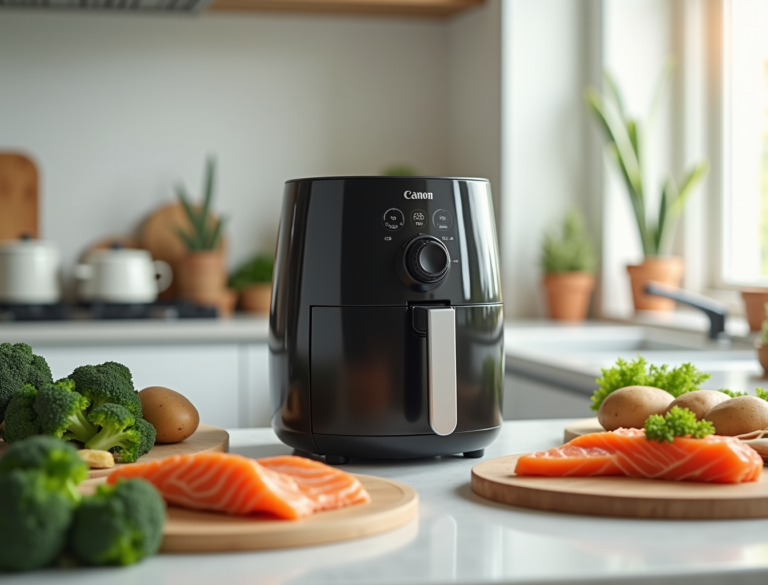
Yes. Salmon, tilapia, cod, halibut, and most fish fillets cook beautifully in the air fryer — fast, minimal cleanup, and excellent texture. Salmon at 400°F for 8–12 minutes (skin-side down, no flip needed) produces flaky, moist fish with a slightly crisped exterior. Use a parchment liner to prevent sticking and simplify cleanup. Fish is done at 145°F internal temperature — the flesh should flake easily with a fork. Thinner fillets check at 6 minutes to avoid overcooking.
Q18: Can You Cook Bacon in an Air Fryer?
Yes — and many air fryer devotees consider it the best method. Bacon at 350°F for 8–10 minutes (no flip needed for most thicknesses) comes out consistently crispy without the stovetop grease splatter. Place strips in a single layer; they can overlap slightly at the start as they shrink during cooking. Add 2 tablespoons of water to the bottom drawer before cooking to prevent the rendered fat from smoking on the heating element. Cook at 350°F rather than higher temperatures to slow fat rendering and further reduce smoke.
Q19: Can You Bake in an Air Fryer?
Yes, with size limitations. Cookies, brownies, muffins, banana bread, and cinnamon rolls all work well in air fryer-appropriate pans (6–7 inch round, small loaf pan, silicone molds). The key adjustments: reduce temperature by 25°F from your oven recipe, reduce time by 25%, and use the toothpick test for doneness — air fryers brown the exterior quickly while the interior may need more time. The basket size limits you to small-batch baking — standard 9×13 pans don’t fit in most basket models.
Q20: Can You Make Pizza in an Air Fryer?
Yes — small pizzas, personal-size pizzas, and reheated pizza all work well. For fresh pizza, use pre-made dough, press to fit your basket, add toppings, and cook at 375°F for 7–10 minutes. The crust crisps significantly faster than oven pizza. For reheated pizza (the air fryer’s best feature), 375°F for 4–5 minutes restores the original crust crispiness — far superior to microwave reheating. Frozen mini pizzas follow the package temperature with 30–40% time reduction.
Q21: Can You Make Eggs in an Air Fryer?
Yes, in several forms. Hard-boiled eggs: whole eggs in shell at 250°F for 15–17 minutes (submerge in ice water immediately for easy peeling). Scrambled eggs: in a ramekin at 300°F for 10–12 minutes with a stir at midpoint. Fried eggs: in a small oven-safe pan or silicone mold at 350°F for 3–5 minutes. Egg bites (like Starbucks-style): eggs beaten with mix-ins in silicone molds at 300°F for 12–15 minutes. Each method requires a vessel — eggs can’t be cracked directly into the basket.
Q22: Can You Reheat Food in an Air Fryer?
Yes — and reheating is one of the air fryer’s most impressive capabilities. Unlike a microwave, the air fryer restores crispiness. Pizza at 375°F for 4–5 minutes tastes freshly made. Fried chicken at 375°F for 6–8 minutes has a fully restored crunchy coating. Fries at 400°F for 3–5 minutes taste like they just came out of the fryer. For lean proteins that can dry out, add a small splash of water to the bottom drawer. Reheat times are short — check frequently to avoid overcooking. Full reheat times in the Air Fryer Conversion Chart reheating table.
Q23: Can You Cook Rice in an Air Fryer?
Not directly in the basket — rice requires liquid absorption in a covered vessel, which doesn’t work in an open air fryer basket. You can cook rice in a covered oven-safe dish or small pot inside the basket, but it’s more complicated and slower than a stovetop or rice cooker. The air fryer is not the right tool for cooking raw rice. For reheating rice, the air fryer works well: place rice in a small oven-safe dish, add a splash of water, cover with foil, and reheat at 350°F for 5–7 minutes.
Q24: Can You Air Fry Cheese?
Coated cheese — yes. Breaded mozzarella sticks, breaded brie, and cheese in a pastry casing all work because the coating contains the melting cheese. Uncoated cheese — no. Loose pieces of cheese without a coating will melt through the basket holes and create a messy burn-on. Parmesan crisps are the exception: thin, flat shavings of hard parmesan placed on parchment at 350°F for 5–7 minutes crisp up beautifully. The key variable is whether the cheese has something to contain it during cooking.
Q25: Can You Air Fry Wet Battered Foods?
Not effectively in the basket without a workaround. Wet batter (beer batter, tempura, pancake batter) drips through the basket before it sets, creating a burned mess on the heating element and uneven results. Solutions: (1) use dry breadcrumb or panko coatings instead of wet batter — these crisp excellently; (2) use a small oven-safe dish inside the basket to contain the batter; (3) freeze wet-battered items briefly before cooking to help them set faster. For faux-fried chicken, a panko coating produces a superior crispy result anyway.
Temperature and Timing Questions (Q26–Q33)
Q26: What Temperature Do You Air Fry Chicken?
It depends on the cut. Boneless breasts: 375°F for 18–22 minutes. Bone-in thighs: 375°F for 25–30 minutes. Wings: 400°F for 22–25 minutes. Chicken tenders: 400°F for 10–12 minutes. Drumsticks: 375°F for 20–25 minutes. Whole chicken (3–4 lb): 360°F for 60–75 minutes. All cuts must reach 165°F internal temperature — use a thermometer, not color, as your doneness indicator. For more chicken timing, see the Air Fryer Cooking Times Chart.
Q27: What Temperature Do You Air Fry Fries?
Fresh homemade fries: 380°F for 15–18 minutes, shaking halfway. Frozen store-bought fries: 400°F for 13–16 minutes, shaking halfway. Keep frozen fries at or close to the full recommended temperature (don’t reduce) — the coating needs high heat to crisp. For fresh fries, a two-stage method produces excellent results: first cook at 320°F for 10 minutes to cook through, then increase to 400°F for 5–8 minutes to crisp. See the full Air Fryer French Fries guide.
Q28: What Temperature Do You Air Fry Fish?
Most fish fillets: 400°F for 8–12 minutes. Salmon specifically: 400°F for 8–12 minutes (skin-side down). Cod, tilapia, halibut: 400°F for 10–12 minutes. Thin fillets (flounder, sole): 375°F for 6–8 minutes — check at 6 minutes to avoid overcooking. Fish is done at 145°F internal temperature — flesh should flake easily with a fork and appear opaque throughout. Use a parchment liner to prevent sticking on all fish. Fish cooks quickly; check early and pull when done.
Q29: What Temperature Do You Air Fry Steak?
For a 1-inch steak (ribeye, NY strip, sirloin): 400°F for 10–14 minutes, flipped at 6–7 minutes. Internal temperature targets: medium-rare 130–135°F, medium 140–145°F, medium-well 150–155°F. Always pull the steak 5°F before your target — carryover cooking during the rest period raises internal temperature another 3–5°F. Rest for 5 minutes before cutting. Pat the steak completely dry before seasoning for the best crust development. A cast iron pan can be placed in the basket for better searing contact on flat-bottomed steaks.
Q30: How Do I Know When Air Fryer Food Is Done?
For proteins: an instant-read meat thermometer is the only reliable method — target temperatures are chicken 165°F, pork 145°F, beef medium 140–145°F, fish 145°F. For vegetables: visual check — the edges should be slightly caramelized and the texture tender when pierced with a fork. For baked goods: toothpick test in the center — moist crumbs mean done, wet batter means more time needed. For frozen foods: follow the air fryer time estimate and check the color and texture at the early end of the range.
Q31: How Do I Convert Oven Recipes to Air Fryer?
Two rules: reduce temperature by 25°F, and reduce cooking time by 20–25% (multiply oven time by 0.75). A recipe calling for 400°F for 40 minutes becomes 375°F for approximately 30 minutes in the air fryer. Always check doneness at the earliest time estimate — models vary significantly. Frozen foods are the exception: hold the full temperature, only reduce time. For a complete reference table covering 20+ foods and a detailed explanation of when the rules apply and when they don’t, see the Air Fryer Conversion Chart.
Q32: Why Is My Air Fryer Food Burning on the Outside but Raw Inside?
Temperature is too high. The exterior surface reaches cooking temperature and forms a crust before the interior heat has time to penetrate — especially with thick proteins and dense vegetables. Fix: reduce temperature by 25°F from your current setting and extend cook time by 5–10 minutes. Also check piece size consistency — thicker pieces need lower temp and longer time. For a full troubleshooting guide including this and other common issues, see Air Fryer Troubleshooting.
Q33: Why Is My Air Fryer Not Getting Hot Enough?
Most common cause: the basket isn’t fully inserted. Air fryers have a safety switch that prevents heating unless the basket is completely and firmly seated. Pull the basket out entirely and reinsert with firm pressure until it’s fully seated. If the basket is properly inserted and the unit still underperforms, check whether the basket is significantly overloaded (restricts airflow), whether the temperature setting was set correctly, and whether the heating element shows visible damage. If the unit is new and consistently underheats, it may have a calibration or manufacturing defect — contact the manufacturer.
Safety Questions (Q34–Q40)
Q34: Is Air Frying Healthy?
Air frying is significantly healthier than deep frying. Studies show air frying reduces calorie content by 70–80% compared to deep-frying the same food by eliminating the oil absorption. Air frying also produces lower levels of acrylamide (a potentially harmful compound formed when starchy foods are cooked at high temperatures in oil) than deep frying. However, air frying doesn’t transform the nutritional profile of the food itself — a breaded frozen nugget is still a processed food whether air-fried or deep-fried. The health benefit is meaningful oil reduction, not a wholesale nutritional upgrade.
Q35: Is an Air Fryer Safe to Leave Unattended?
Modern air fryers include auto-shutoff features and are generally safer to leave briefly unattended than stovetop cooking. That said, air fryers should not be left unattended for extended periods, particularly when cooking very fatty foods (bacon, sausage) that can produce significant smoke or grease accumulation. Never leave an air fryer running and leave the house. Cooking sessions with fatty foods specifically warrant more attention — the 2 tbsp water in the drawer trick (see Q18) reduces risk significantly.
Q36: Can Air Fryers Catch Fire?
Under normal use, no — modern air fryers have multiple safety features including auto-shutoff, overheat protection, and basket safety switches. The risk scenarios are: accumulated grease igniting on the heating element (addressed by regular cleaning and the water-in-drawer trick), food pieces falling onto the element, or using a damaged unit. Keep the heating element clean, don’t let grease build up in the drawer, and regularly inspect the interior for debris. If you see black smoke, unplug immediately — do not open the unit until smoke stops.
Q37: Are Air Fryer Fumes or Smoke Harmful?
Fumes from normal cooking (white smoke from fatty foods) are not harmful but can be irritating and will trigger smoke detectors. New air fryer off-gassing during the first few uses is also not harmful to most people, though the fumes can be irritating — ventilate during the burn-in run. Fumes from overheating non-stick coatings at very high temperatures (above 500°F) can be a concern — this is why air fryers shouldn’t be run empty at maximum heat for extended periods, and why ceramic-coated baskets are a good alternative if you have concerns about PTFE.
Q38: Are Non-Stick Air Fryer Baskets Safe?
Yes, under normal use conditions. Most air fryer baskets use PTFE (polytetrafluoroethylene, the same material as Teflon) or ceramic coatings. PTFE is considered safe at normal cooking temperatures — concerns about PTFE arise only above 500°F, which is above most air fryer maximum temperatures. Practical rules: don’t use metal utensils that scratch the coating, don’t run empty baskets at maximum temperature for extended periods, and replace baskets showing visible flaking or peeling. Ceramic-coated baskets are an alternative if you prefer to avoid PTFE entirely.
Q39: Can You Put an Air Fryer on a Wooden Countertop?
Yes, with cautions. Place the air fryer on a heat-resistant mat, silicone pad, or ceramic trivet rather than directly on bare wood — the bottom of the unit gets warm during operation, and the exhaust vent releases hot steam. Maintain at least 5 inches of clearance around all sides, particularly at the rear exhaust. Don’t position the exhaust vent directly toward cabinets, walls, or flammable materials. Extended daily use directly on unsealed wood can cause discoloration or warping over time.
Q40: What Should You Never Do With an Air Fryer?
Never: use the air fryer without the basket inserted (can overheat the unit), use metal utensils that scratch the non-stick coating, spray aerosol cooking sprays directly on the basket (propellants degrade coating over time), overfill the basket beyond the manufacturer’s fill line, place the unit directly under kitchen cabinets without clearance for the exhaust steam, run the unit unattended with very fatty foods for extended periods, or use the unit if the basket or cord shows visible damage.
Cleaning and Maintenance Questions (Q41–Q46)
Q41: How Do You Clean an Air Fryer?
After each use: let the basket cool 10 minutes, remove it, and wash with warm soapy water using a non-abrasive sponge. Wipe the interior chamber with a damp cloth. For the heating element (accessible when the basket is removed), wipe gently with a soft damp cloth when the unit is cool and unplugged — never scrub it. The main unit body: wipe with a damp cloth only, never submerge. Most baskets are dishwasher safe — check your manual. Deep clean weekly or whenever you notice grease buildup in the drawer.
Q42: Can You Put Air Fryer Parts in the Dishwasher?
Most air fryer baskets and trays are dishwasher safe — check your manual to confirm for your specific model. The main unit (body, heating element) is never dishwasher safe — wipe only. Dishwasher cleaning works fine for baskets, but the high-temperature cycles and harsh detergents can accelerate non-stick coating degradation over time. Hand washing extends basket life. If you dishwash, use a gentle cycle and low-temperature setting when possible.
Q43: How Often Should You Clean an Air Fryer?
The basket and tray should be cleaned after every use — even a quick wipe prevents grease from becoming baked-on residue. The interior chamber and drawer should be wiped down at minimum weekly or whenever cooking fatty foods. The heating element should be checked monthly and cleaned when any food residue is visible. Regular light cleaning takes 2–3 minutes and prevents the deep cleaning situations that require soaking and extended scrubbing. Consistent light maintenance is faster than infrequent intensive cleaning.
Q44: Why Does My Air Fryer Smell Bad?
Persistent bad smells after cooking typically mean grease has accumulated in the drawer or on the heating element. Clean the drawer, basket, and element thoroughly — baking soda paste (mix baking soda with water to a thick paste, apply to greasy areas, let sit 15 minutes, then wipe clean) works well on stubborn grease. If you smell burning plastic from a unit you’ve had for a while, stop using it and inspect for damage — see Air Fryer Troubleshooting. A fishy smell that lingers after cooking fish is normal and clears after the next use.
Q45: How Do You Get Baked-On Grease Off an Air Fryer Basket?
Fill the basket with hot water and a few drops of dish soap, let soak for 15–20 minutes, then clean with a non-abrasive sponge. For stubborn baked-on grease, baking soda paste works well: mix baking soda and water to a thick paste, spread over greasy areas, let sit 15 minutes, then scrub gently with a soft brush and rinse. Avoid metal scrubbers or steel wool — they damage the non-stick coating. For the interior chamber and element (not the basket), use a soft toothbrush with baking soda paste for hard-to-reach buildup near the element.
Q46: When Should You Replace Your Air Fryer?
Replace your air fryer when: the non-stick basket coating is visibly flaking or peeling (coating fragments can enter food), the unit consistently underheats or overheats despite proper use, there’s a persistent electrical or burning smell that doesn’t resolve after cleaning, the fan makes grinding or irregular sounds, or the basket handle or structural components are damaged in a way that makes safe use difficult. Most quality air fryers last 3–5 years with regular use. Budget models may show coating wear earlier. Replacement baskets are available from most manufacturers separately, which can extend the unit’s life.
Purchasing and Comparison Questions (Q47–Q50)
Q47: What Is the Best Air Fryer to Buy?
For most households, a 5–6 quart digital basket air fryer in the $50–$120 range delivers the best combination of capacity, performance, and value. Top-rated models include the Cosori Pro II, Ninja AF101, and Instant Vortex Plus — all well-reviewed, reliable, and widely available. For larger households or those who want to replace more oven cooking, an oven-style air fryer with 10+ quart capacity is worth the higher price. For small households cooking for 1–2, a 3–4 quart model saves counter space. Buying recommendations by situation in the Best Air Fryer guide.
Q48: What Is the Difference Between a Basket and Oven-Style Air Fryer?
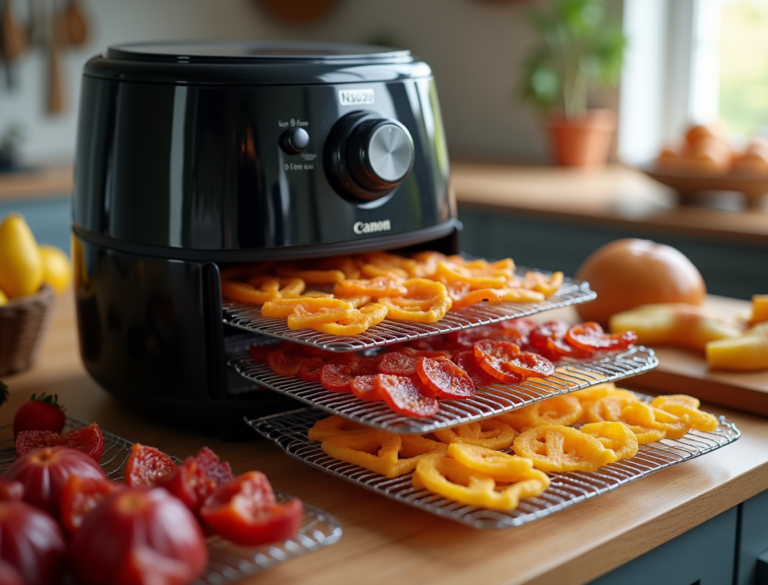
Basket air fryers have a drawer-style pull-out basket and are compact — great for most cooking up to 5–6 quarts. Oven-style air fryers look like a small toaster oven with a door and wire racks — better for larger batches, baking, and dehydrating (multiple rack levels). Basket models are faster to heat, easier to shake/stir, and more compact. Oven-style models have more cooking surface area but require flipping or rotating racks rather than shaking. For primarily protein and frozen food cooking, a basket model is typically better. For families, baking, or dehydrating, the oven-style offers more flexibility.
Q49: Air Fryer vs. Instant Pot — Which Is Better?
They serve different purposes and ideally complement each other. An air fryer excels at crisping, browning, and frying-style results — crispy chicken skin, crunchy fries, caramelized vegetables. An Instant Pot (pressure cooker) excels at braising, tenderizing tough cuts, making soups and stews, and batch cooking. If forced to choose one: for cooks who primarily make weeknight proteins and vegetables, the air fryer wins. For cooks who batch cook, make soups, or deal with tough cuts of meat, the Instant Pot wins. Many households own both — they cover opposite ends of the cooking spectrum.
Q50: Is a Dual Basket Air Fryer Worth the Extra Cost?
Yes, for households regularly cooking complete meals. Dual basket air fryers (like the Ninja DZ201) let you cook two different foods simultaneously at different temperatures and times — protein in one basket, vegetables in the other, finishing at the same time. For single people cooking minimal batches, the extra cost isn’t worth it. For households of 3+ where batching is a regular problem, the dual basket eliminates it entirely. The “sync finish” feature (both baskets complete at the same time despite different cook settings) is genuinely useful for weeknight efficiency. Expect to pay an additional $30–$60 over a comparable single-basket model.
Frequently Asked Questions
Q: How long does it take to preheat an air fryer?
Most air fryers preheat in 3–5 minutes. Some newer models with preheat indicators will alert you when the target temperature is reached. If your model doesn’t have a preheat function, simply run it empty at your target temperature for 3 minutes — the effect is identical.
Q: Can I use my air fryer and another appliance on the same outlet?
Avoid it. Air fryers draw 1,200–1,700 watts — comparable to a hair dryer. Running a coffee maker, toaster, or microwave on the same circuit simultaneously can trip the breaker. Use a dedicated outlet for the air fryer when possible. Never use cheap extension cords or power strips not rated for high-wattage appliance use.
Q: Why does my air fryer food taste different from restaurant fried food?
Air frying and deep frying produce different results — air frying is not a perfect substitute for deep frying, it’s a different cooking method that produces a different (and many prefer it) type of crispiness. The fat contribution of deep frying changes the flavor profile significantly — air frying produces a leaner, less oil-saturated result. For many foods, this is a plus. For traditional beer-battered fish and chips or donuts, deep frying produces an authentically different product. Air fryer food is excellent; it’s not the same as deep-fried food.
Q: Can I stack food in the air fryer basket?
For most foods, no — stacking prevents hot air from reaching all surfaces and produces uneven results. Exception: some foods can be stacked with shaking to redistribute mid-cook — shrimp, small cubed vegetables, and loose fries can handle some stacking if you shake frequently. For anything where even browning on all surfaces matters (chicken, fish, breaded items), stick to a single layer. Cooking in batches is always faster than the time lost to uneven results from stacking.
Q: How do I prevent my air fryer from smoking when cooking fatty foods?
Add 2 tablespoons of water to the bottom drawer (under the basket) before cooking fatty foods like bacon, sausage, and chicken thighs. The water catches rendered fat before it reaches the heating element, preventing ignition and smoke. Alternatively, place a slice of bread in the drawer to absorb dripping fat. Clean the drawer and element regularly to prevent grease buildup from causing smoke on subsequent cooks. Full details in the Air Fryer Troubleshooting guide.
More Air Fryer Resources
- How to Use an Air Fryer: Complete Beginner’s Guide
- Air Fryer Cooking Times Chart (100+ Foods)
- Air Fryer Conversion Chart: Oven to Air Fryer
- Air Fryer Troubleshooting: Smoking, Sticking, Uneven Cooking
- Air Fryer Dehydrator Guide
- Air Fryer Whole Chicken
- Air Fryer Beef Jerky
- Keto Air Fryer Recipes
- Best Air Fryer for Family