Air Fryer Eggs – Fluffy, Healthy, and Easy!
Why Are Air Fryer Eggs a Game-Changer for Breakfast?
Last updated: April 2026
PrintAir Fryer Eggs
Consistently cooked eggs made in an air fryer using silicone cups for fried eggs or directly in the shell for hard-boiled — no oil splatter, no stovetop monitoring required.
- Prep Time: 5 minutes
- Cook Time: 11 minutes
- Total Time: 16 minutes
- Yield: 2 eggs 1x
- Category: Breakfast
- Method: Air Fryer
- Cuisine: American
Ingredients
- 2 large eggs
- Salt and freshly ground black pepper
- Optional: ½ tsp butter (placed in bottom of cup for flavor)
- Optional: ½ tsp water (added to cup for a slightly steamed texture)
- Optional: fresh herbs, hot sauce, or shredded cheese for finishing
Instructions
- Preheat the air fryer to 370°F (190°C) for 3 minutes. Place a silicone egg cup or small ramekin in the basket during preheat.
- Add about ½ tsp butter to the bottom of the cup and let it melt for 30 seconds, or leave plain for an oil-free result.
- Crack one egg directly into the cup and season with salt and pepper. For a more gently cooked white, add ½ tsp of water alongside the egg before cooking.
- Cook at 370°F for 6–8 minutes. Check at 6 minutes for a runny yolk with fully set whites; cook 7–8 minutes for a firmer yolk. Whites should be completely opaque before removing.
- Use tongs to lift the hot cup from the basket. Slide a small spoon or spatula under the egg to release it, then season and serve immediately.
Notes
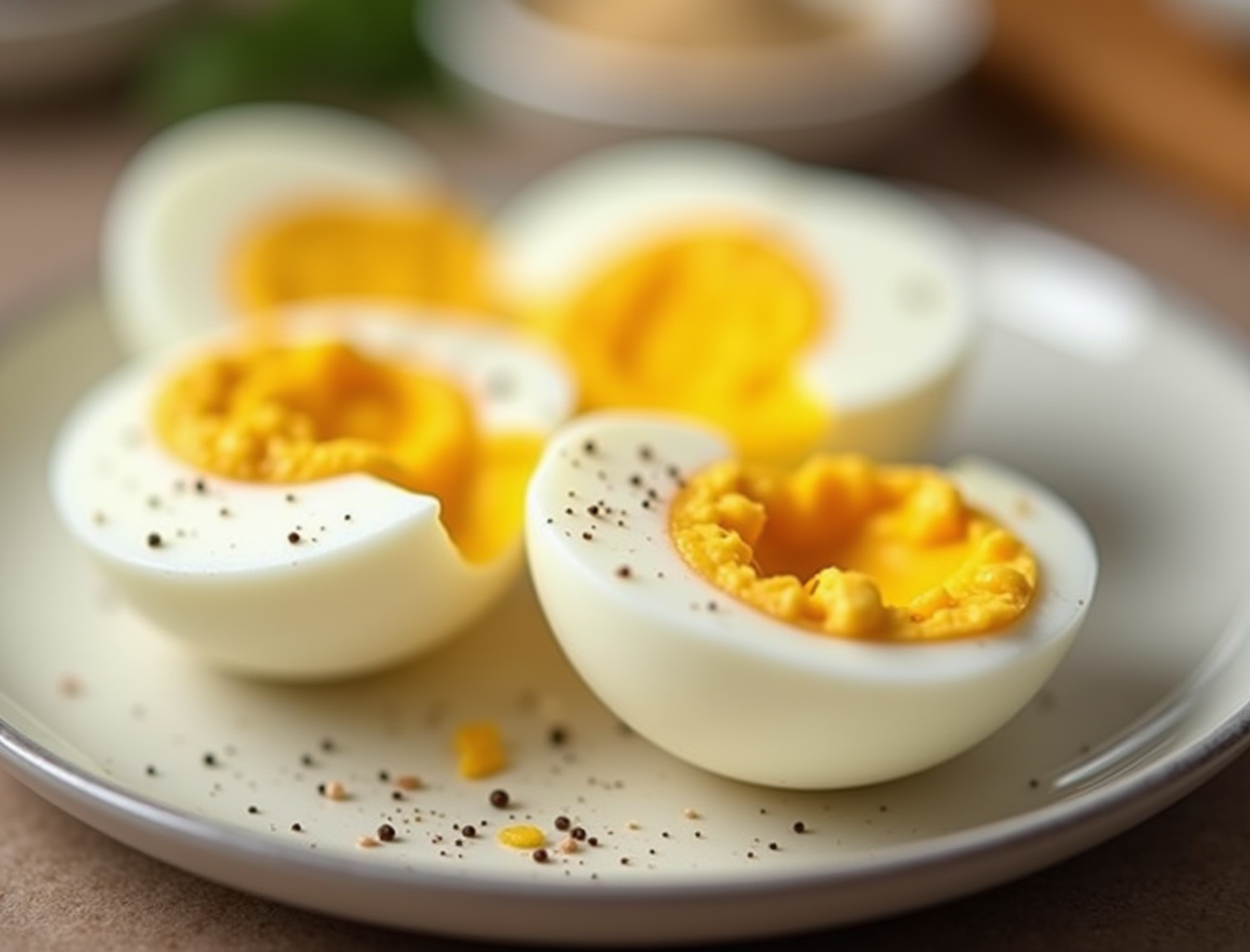
Hard-boiled method: Place whole eggs directly in the basket (no cup needed) and cook at 250°F — 13 minutes for soft-boiled (runny yolk), 15 minutes for jammy yolk, 17 minutes for fully hard-boiled. Transfer immediately to an ice bath for 5 minutes to stop carryover cooking and make peeling easier. Refrigerate unpeeled for up to 5 days.
Silicone egg cups (3–4 oz) are the most useful accessory — flexible, nonstick, and dishwasher-safe. A small oven-safe ramekin works equally well. Do not cook eggs directly on the basket grate without a vessel.
Air fryer eggs are one of the most practical discoveries in modern home cooking, and the reason is straightforward: the air fryer gives you consistent, repeatable results without the babysitting that stovetop eggs demand. No oil spatter. No pan to scorch. No standing over the stove adjusting heat while your coffee brews. The circulating hot air in an air fryer creates a gentle, even heat environment that works surprisingly well for eggs — producing whites that are fully set and yolks that you can dial in from runny to firm depending on cook time. Whether you are making a single fried egg for yourself or soft-boiled eggs for the week’s meal prep, the air fryer handles both tasks with the same reliable method. For anyone cooking eggs daily, shifting to the air fryer saves time and mental energy in the morning when both are in short supply.
KEY TAKEAWAYS
- Air fryer eggs require zero monitoring once the timer starts — set and walk away
- Results are highly consistent: same timing and temperature produce identical eggs every time, unlike stovetop variables
- No oil is required when using silicone cups, though a small pat of butter adds flavor without burning at 370°F
- Fried eggs cook in 6–8 minutes, hard-boiled eggs in 13–17 minutes, both with minimal hands-on effort
- Air fryer eggs produce tender, set whites and customizable yolks — prioritizing texture control over the crispy-edged stovetop style
The food safety note worth stating upfront: according to the USDA Food Safety and Inspection Service, eggs should be cooked until both the white and yolk are firm to ensure safety, though many people intentionally cook fried eggs with a runny yolk — a personal preference decision made with the understanding that soft yolks carry a small but real Salmonella risk. Egg dishes and casseroles containing eggs should reach 160°F internally.
How Does the Air Fryer Actually Cook Eggs?
An air fryer cooks eggs by circulating superheated air at 300–400 times per minute around your food, transferring heat far more efficiently than still oven air and allowing faster cooking at lower temperatures than conventional ovens. Understanding this mechanism helps you get better results and troubleshoot when eggs don’t turn out as expected.
For eggs, this means a few important things. First, the heat is coming from all sides simultaneously, not just from below as in a skillet. Second, because the heat is dry (no steam, no water), the exterior of an egg sets quickly while the interior cooks more slowly — which is why controlling cook time is the key lever, not adjusting heat. Third, the air fryer cannot replicate stovetop fried eggs exactly because there is no contact with a hot surface. Instead, air fryer fried eggs (cooked in a ramekin or silicone cup) produce a result that is closer to a baked or steamed egg — deeply set whites, no crispy brown edges, with the yolk done to your preferred level. For many people, this is actually preferable to the stovetop version.
Air Fryer vs. Stovetop Eggs: What Is the Real Difference?
| Factor | Air Fryer | Stovetop |
|---|---|---|
| Hands-on time | Minimal — set timer and walk away | Constant monitoring required |
| Oil needed | None required (use silicone cup) | Butter or oil almost always needed |
| Consistency | High — same result every time | Variable — depends on burner and pan |
| Crispy edges | No — whites are set but not crispy | Yes — hot fat creates lacy crispy edges |
| Cleanup | Rinse the silicone cup or ramekin | Scrub the pan (egg sticks) |
| Cooking multiple eggs | Easy with separate cups per egg | Crowded pan leads to uneven cooking |
What Do You Need to Make Air Fryer Eggs?
Ingredients
- 2 large eggs
- Salt and freshly ground black pepper
- Optional: a small pat of butter (placed under the egg for flavor)
- Optional: 1 tsp water (added to ramekin to create a slightly steamed texture)
- Optional: fresh herbs, hot sauce, or shredded cheese for finishing
Tools Needed
- Air fryer (basket-style or oven-style)
- Silicone egg cups or small oven-safe ramekins (3–4 oz size)
- A pin or toothpick (if cooking whole eggs in shell)
- Instant-read thermometer (for checking egg dishes that contain multiple eggs)
Silicone egg cups are the single most useful accessory for air fryer eggs. They are flexible, nonstick by nature, dishwasher-safe, and prevent the egg from spreading across the basket. A 3–4 oz ramekin works equally well. Avoid cooking eggs directly on the air fryer basket without a vessel — they will leak through the grate and make cleanup difficult.
How Do You Make Air Fryer Eggs Step by Step?
Method 1: Air Fryer Fried Eggs (in Silicone Cup)
- Preheat the air fryer to 370°F (190°C) for 3 minutes. A preheated air fryer produces more consistent egg whites — skipping this step often results in rubbery whites on the edges before the center sets.
- Prepare the silicone cup. Place it in the air fryer basket. Add a small pat of butter (about ½ tsp) to the bottom of the cup and let it melt for 30 seconds during preheat, or leave it plain for an oil-free result.
- Crack the egg directly into the cup. Season with salt and pepper. For a more gently cooked white, add ½ tsp of water to the cup alongside the egg before cooking.
- Cook at 370°F for 6–8 minutes. Check at 6 minutes for a runny yolk with set whites. Leave it for 7–8 minutes for a firmer yolk. The whites should be completely opaque and set — not translucent — before removing.
- Remove carefully. The silicone cup will be hot. Use tongs to lift it from the basket. Slide a small spoon or spatula under the egg to release it from the cup. Season with additional salt and pepper. Serve immediately.
Method 2: Air Fryer Hard-Boiled Eggs (in Shell)
- Place eggs directly in the air fryer basket in a single layer. No water, no cups needed.
- Cook at 250°F (121°C) for the following times: 13 minutes for soft-boiled (runny yolk), 15 minutes for jammy yolk, 17 minutes for hard-boiled (fully set).
- Transfer immediately to an ice bath and chill for 5 minutes. This stops carryover cooking and makes peeling significantly easier.
- Peel and serve, or refrigerate unpeeled for up to 5 days.
Doneness Reference Chart
| Style | Temperature | Time | Yolk Result |
|---|---|---|---|
| Fried (in cup) — runny yolk | 370°F (190°C) | 6 minutes | Liquid center, set whites |
| Fried (in cup) — firm yolk | 370°F (190°C) | 7–8 minutes | Mostly set, creamy center |
| In-shell soft-boiled | 250°F (121°C) | 13 minutes | Runny |
| In-shell jammy | 250°F (121°C) | 15 minutes | Custardy, partially set |
| In-shell hard-boiled | 250°F (121°C) | 17 minutes | Fully set, bright yellow |
What Are the Best Pro Tips for Perfect Air Fryer Eggs Every Time?
Common Mistakes to Avoid
Skipping the preheat. This is the most common reason for uneven eggs — the top of the white stays translucent while the edges overcook. Always preheat for at least 3 minutes.
Using a silicone cup that is too large. A 6 oz or larger cup spreads the egg too thin and produces rubbery whites with a yolk that overcooks before the white sets. Stick to 3–4 oz cups for single eggs.
Cooking eggs from cold. A refrigerator-cold egg dropped into a hot air fryer cooks unevenly. Let eggs sit at room temperature for 5–10 minutes first, especially for in-shell boiled eggs.
Overcrowding the basket. If cooking multiple eggs in individual cups, leave at least 1 inch of space between cups so air circulates freely around each one.
Brand-Specific Tips
- Ninja AF101 (4 qt) — Best for: Smaller kitchens and 4-person households: Use 370°F for 6–7 minutes for fried eggs. The compact basket heats more aggressively — check at 6 minutes and add 30-second increments if needed. Refer to Ninja’s official cooking charts for precise brand-tested guidelines.
- Philips Series 3000 — Best for: Budget-conscious cooks seeking reliable performance: 360°F for 7–8 minutes. The Philips runs slightly cooler than indicated — add 1 minute to any timing you read online. This is a common finding across air fryer models, where temperature accuracy can vary significantly.
- Cosori 5.8 qt — Best for: Large families and batch cooking: 370°F for 6–7 minutes. The larger basket can run hotter at the outer edges — place cups in the center of the basket.
- Instant Vortex — Best for: Users who prefer multiple cooking modes and flexibility: Use the “Air Fry” function (not “Bake”) at 370°F for 7 minutes. The Bake setting has less fan circulation and produces inconsistent results for eggs.
A consistent tip across all models: if your egg whites are rubbery, reduce temperature by 10°F and extend time by 1 minute. If whites are still translucent after the stated time, your air fryer runs cool — add 1–2 minutes. According to Consumer Reports testing, temperature variance across air fryer brands can be significant, with some models registering up to 67°F below the set temperature, so individual calibration is often necessary.
For reference, see our complete air fryer cooking times chart which includes eggs alongside 100+ other foods.
What Flavor Variations Can You Make with Air Fryer Eggs?
Air fryer eggs are highly versatile and accept flavor additions at multiple cooking stages, from raw (seasonings mixed into the egg) to mid-cook (cheese and vegetables) to finished (fresh herbs and toppings). Below are the most popular variations tested for consistent results.
Cheesy Air Fryer Eggs
At the 5-minute mark, open the air fryer and sprinkle 1–2 tablespoons of shredded cheese (sharp cheddar, gruyère, or Parmesan) directly over the egg white, avoiding the yolk. Close and cook for the remaining 1–2 minutes until the cheese is melted and starting to bubble. The yolk stays protected under the egg shape while the cheese sets into the white.
Breakfast Bowl Build
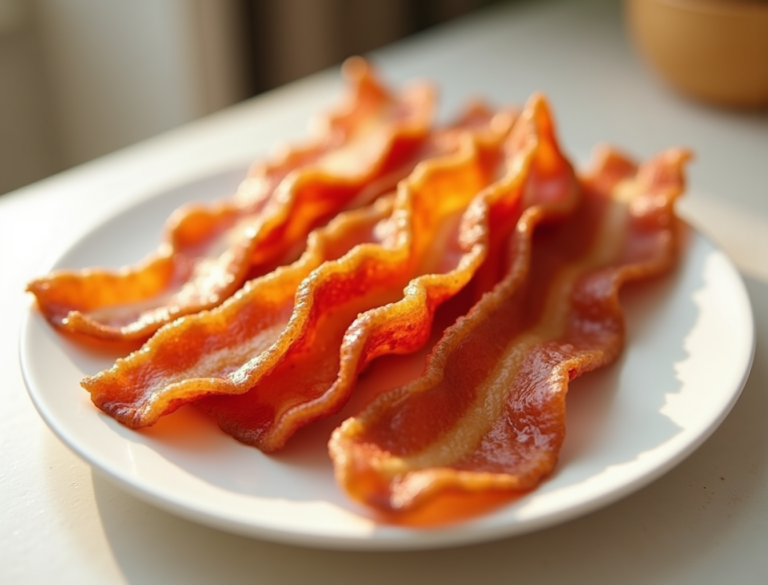
Cook your egg in the air fryer at 370°F for 7 minutes for a firm yolk. While it cooks, warm leftover grains (quinoa, rice, or farro) in a bowl. Top with the egg, sliced avocado, a drizzle of sriracha, and flaky sea salt. Air fryer bacon cooked in a prior batch makes a logical addition — see our air fryer bacon guide for timing.
Bacon-Egg Combination Cook
Cook 2–3 strips of bacon in the air fryer basket first at 375°F for 8–9 minutes. Remove bacon and drain. Lower the temperature to 370°F, place the silicone egg cup in the basket (residual bacon fat in the basket adds flavor), and cook the egg for 6–7 minutes. The egg picks up a mild smoky background note from the residual heat.
Herb and Spice Eggs
Before cooking, add a small pinch of any of the following to the egg cup: smoked paprika, everything bagel seasoning, dried chives, or red pepper flakes. Finish with fresh herbs (chives, dill, or parsley) after cooking — fresh herbs added before cooking turn brown and bitter in the air fryer.
How Do You Store and Reheat Air Fryer Eggs?
Fried eggs are best eaten immediately — they do not store or reheat particularly well because the yolk texture changes significantly when reheated. If you need to prep ahead, hard-boiled eggs are the better candidate for meal prep and storage.
Hard-boiled eggs: Store unpeeled in the refrigerator for up to 5 days. Peeled hard-boiled eggs can be stored in a bowl of cold water (changed daily) for up to 3 days in the refrigerator.
Egg-based dishes (egg muffins, frittatas cooked in the air fryer): Store in an airtight container for up to 3 days in the refrigerator. Reheat in the air fryer at 350°F (175°C) for 2–3 minutes. Avoid the microwave — it creates a rubbery, steamed texture. The air fryer “reheat” function (when available on your model) also works well, typically running at 300–325°F to warm through gently without overcooking the outside.
Frequently Asked Questions About Air Fryer Eggs
Can I cook multiple eggs at once in the air fryer?
Yes, provided each egg has its own silicone cup or ramekin and the cups are not touching each other. In a standard 5–6 qt basket-style air fryer, you can comfortably fit 3–4 individual egg cups. In a 3–4 qt smaller air fryer, 2 cups fit well. Avoid stacking cups — the eggs in the top cup will cook faster and unevenly. Cooking multiple in-shell boiled eggs requires no special setup: place them in a single layer on the basket floor, leaving a small gap between each egg.
Do I need to add oil to cook eggs in the air fryer?
No. When using silicone cups or ramekins, oil is optional. Silicone is nonstick by design, so the egg releases cleanly without any added fat. If you want richer flavor, a small pat of butter (about ½ tsp) adds a noticeable taste difference without burning at 370°F. A light spray of cooking oil also works to prevent sticking when using a ceramic ramekin.
How do I prevent the egg from cracking or exploding in the air fryer?
This concern applies specifically to in-shell eggs cooked in the air fryer (the boiled egg method). Whole eggs in shell are under internal pressure from expanding gas and liquid as they heat. To prevent cracking: use lower temperatures (250°F rather than 375°F+), and avoid sudden temperature changes by bringing eggs to room temperature before cooking. Do not pierce eggs — the shell is porous enough. Cracking is more common with very fresh eggs (less than a week old) because the air cell inside is smaller and the internal pressure is higher.
Why are my air fryer egg whites rubbery?
Rubbery whites are almost always caused by one of three things: cooking at too high a temperature, cooking for too long, or skipping the preheat. High heat denatures egg proteins quickly and causes them to contract and squeeze out moisture, producing a tough texture. Try reducing your temperature by 10–15°F and checking 1 minute earlier than you have been. Adding ½ tsp of water to the egg cup before cooking also helps — the small amount of steam softens the cooking environment and produces more tender whites.
Is the air fryer faster than boiling eggs on the stovetop?
For in-shell eggs, it is roughly comparable. Stovetop boiling (starting in cold water, bringing to a boil) takes approximately 12–15 minutes total from cold water to done. Air fryer in-shell eggs at 250°F take 13–17 minutes. Where the air fryer wins is convenience: you do not need to watch a pot, there is no boiling-over risk, and the method is consistent across batches without adjusting for water volume or altitude. For fried eggs, the air fryer (6–8 minutes from preheat) is roughly comparable to stovetop — but requires zero monitoring.