Air Fryer vs Oven
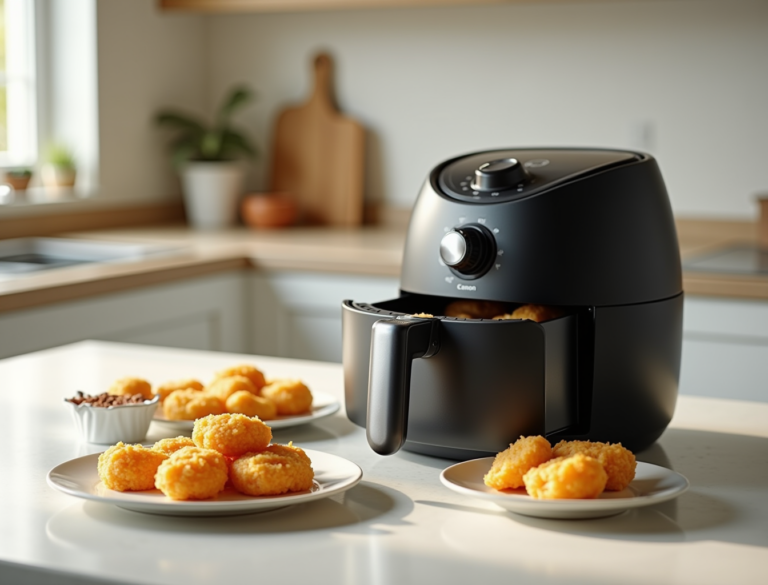
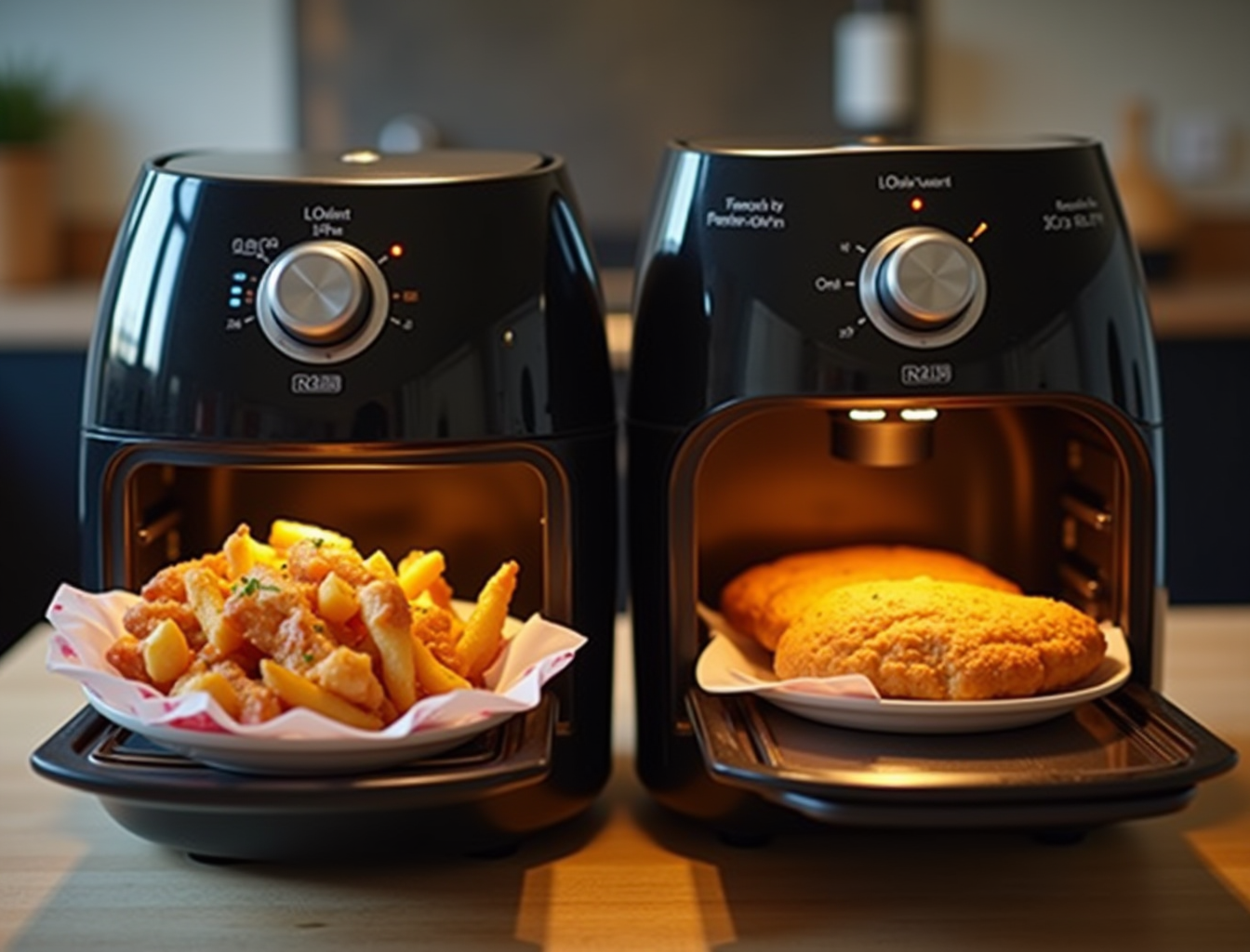
Both appliances live in your kitchen to cook food with heat, and that is roughly where the similarities end. An air fryer — a compact countertop appliance that circulates superheated air at high velocity through a small cooking chamber to crisp food with minimal oil — and a conventional oven — a built-in kitchen appliance that uses radiant heat elements to bake, roast, and broil food inside a large cavity — operate on fundamentally different physics, produce meaningfully different results for certain foods, and reward very different cooking styles. If you are debating which to use for dinner tonight — or whether to buy an air fryer at all — this guide gives you the honest comparison, broken down by the factors that actually matter: speed, energy cost, crispiness, capacity, and what each appliance does that the other genuinely cannot.
- Air fryers cook 20–30% faster than conventional ovens with little to no preheat time, making them ideal for quick weeknight meals for 1–3 people.
- Air fryers use roughly 53% less electricity than conventional ovens for the same meal — 0.54 kWh vs. 1.16 kWh — though ovens can be more efficient per serving when cooking large batches (Which?, 2024).
- Air fryers excel at crispy textures on wings, fries, and breaded items; conventional ovens are superior for full-size baking, large roasts, and multi-dish cooking.
- Air-fried foods contain significantly less fat than deep-fried equivalents — approximately 70% less fat per 100g — making the air fryer the lower-fat alternative to deep frying specifically (Santos et al., 2017, European Journal of Lipid Science and Technology).
- Most households get the best results using both appliances for different tasks; neither fully replaces the other.
Last updated: April 2026
What Is the Main Difference Between an Air Fryer and an Oven?
The most important difference is airflow and chamber size: an air fryer forces superheated air at high velocity through a compact 2–7 quart chamber, delivering faster cooking and crispier results than a conventional oven’s slower, radiant-heat environment in a large cavity. A conventional oven heats food by radiating heat from surrounding elements — the food sits in relatively still air, relying on slow radiant and conductive heat transfer. Even an oven with a fan (a convection oven) circulates air at low speed across a large interior. An air fryer runs a high-speed fan inside a compact 2–7 quart chamber, forcing superheated air at high velocity around every surface of the food simultaneously. The result: the air fryer achieves in 15–20 minutes what a conventional oven takes 35–50 minutes to do, and produces a crispier exterior because the moving air continuously strips away moisture from the food’s surface. KitchenAid notes that the most obvious difference is size — a countertop air fryer typically cooks one dish at a time, while a full-size oven handles multiple dishes and sheet pans simultaneously.
Air Fryer vs. Oven: Side-by-Side Comparison
| Factor | Air Fryer | Conventional Oven |
|---|---|---|
| Preheat Time | 2–5 minutes (or zero) | 10–15 minutes |
| Cook Time | 20–30% faster than oven | Standard baseline |
| Capacity | 1–4 servings typical | Full family meals, multiple racks |
| Crispiness | Excellent without oil | Good with oil; less than air fryer |
| Baking Suitability | Small items only | Full-size cakes, pies, casseroles |
| Energy Use (small meal) | Lower — compact chamber | Higher — large cavity to heat |
| Energy Use (large meal) | Higher — requires batching | Lower per pound of food |
| Cleanup | Easy — basket, often dishwasher-safe | Involved — racks, walls, door |
| Noise Level | Moderate to loud (fan) | Near-silent |
| Counter Space | Small countertop footprint | Built-in (no counter cost) |
| Price | $30–$250 additional purchase | Already in your kitchen |
| Best For | Crispy foods, frozen items, quick meals for 1–3 | Baking, roasting, large batches for 4+ |
What Are the Pros and Cons of an Air Fryer?
Best for: Individuals and small households (1–3 people) who prioritize speed, crispiness, easy cleanup, and energy-efficient cooking for everyday meals and reheating.
Air Fryer Pros
- Speed: Air fryers typically cook 20–30% faster than a conventional oven and require virtually no preheat time, according to Hisense’s cooking time comparison data. A batch of chicken thighs that takes 40 minutes in a 400°F oven takes 22–25 minutes in an air fryer set to the same temperature.
- Crispiness without deep-frying: The high-velocity air continuously removes surface moisture, producing shatteringly crispy exteriors on wings, fries, and breaded foods using 1 teaspoon of oil instead of 4 cups.
- Energy efficiency for small meals: According to Which? (2024), air fryers used just 0.54 kWh compared to 1.16 kWh for a conventional oven cooking the same chicken — roughly 53% less energy. Running a 1,400-watt air fryer for 15 minutes uses far less electricity than running a 3,500-watt oven for 40 minutes for the exact same result on a single chicken breast.
- Fast cleanup: A removable nonstick basket wipes clean in minutes or goes in the dishwasher — no scrubbing oven racks or walls.
- Reheating performance: Leftover fries, pizza, fried chicken, and spring rolls reheat in 3–5 minutes with restored crispiness that a microwave cannot match. See the Air Fryer Cooking Times Chart for reheating temperature guides.
Air Fryer Cons
- Capacity ceiling: Even a large 7-quart air fryer maxes out at four moderate servings. Cooking for more requires batching, which staggers meal delivery and can negate the time savings for large families.
- Baking limitations: Standard air fryer baskets cannot accommodate a 9-inch cake pan, a loaf of bread, or a full sheet of cookies. Items that require steady, even heat for proper rise do not perform as well under the intense, directional blast of an air fryer.
- No simultaneous multi-dish cooking: You cook one dish at a time. An oven running two racks simultaneously — protein plus vegetables — will get dinner to the table in one go rather than two rounds.
- Noise: The high-speed fan produces a noticeable hum throughout cooking, unlike a near-silent oven.
- Temperature accuracy variation: Not all air fryers perform equally. According to Consumer Reports (2025), some air fryers register up to 67°F below their set temperature, which can meaningfully affect cooking results — an instant-read thermometer is advisable when precision matters.
What Are the Pros and Cons of a Conventional Oven?
Best for: Families (4+ people), avid bakers, and anyone who regularly hosts, roasts large cuts of meat, or needs to cook multiple dishes simultaneously.
Oven Pros
- Capacity: A full-size oven can roast a 25-pound turkey, bake four pans of cookies simultaneously, or accommodate three racks of sheet pan dinners. No batching required for large meals.
- Baking performance: The even, radiant heat of a conventional oven — or the gentle fan circulation of a convection oven — develops baked goods correctly: proper rise, even internal baking, and controlled browning.
- Versatility: Broil, bake, roast, proof dough, braise, and slow-cook — all in the same appliance. Most ovens also have a convection mode that significantly narrows the speed and crispiness gap with an air fryer.
- You already own one: Unless you are furnishing a new space, an oven has no additional purchase cost.
Oven Cons
- Slow to preheat: Waiting 10–15 minutes for an oven to reach 400°F is a real friction point for quick weeknight meals. An air fryer eliminates this wait entirely.
- Higher energy draw for small meals: Heating an entire oven cavity to 400°F to cook a single chicken breast is disproportionate — you are paying to heat cubic feet of empty air.
- Less crispy results for fried foods: Even with a convection setting, a standard oven cannot match an air fryer’s crispiness for foods like fries, wings, or breaded cutlets. The larger chamber and slower fan do not create the same moisture-stripping intensity.
- Cleanup: Splatter on oven walls, grease on racks, and door glass buildup require periodic deep cleaning that is more involved than wiping a basket.
When Should You Use an Air Fryer Instead of an Oven?
Use an air fryer instead of an oven when cooking for 1–3 people, reheating crispy leftovers, or whenever speed and maximum crispiness matter more than capacity. Reach for the air fryer when one or more of these conditions apply:
- Cooking for 1–3 people: Small portions cook faster and use less energy in the air fryer’s compact chamber.
- You want maximum crispiness: Wings, fries, tater tots, breaded chicken, egg rolls, and spring rolls all achieve their best texture in an air fryer. See the Air Fryer Chicken Wings guide for the baking-powder crispiness technique.
- You need food on the table fast: No preheat plus faster cook time means dinner in under 25 minutes for most proteins and vegetables.
- Reheating leftovers: Anything fried, breaded, or originally crispy should be reheated in the air fryer, not the microwave.
- Hot weather: An air fryer heats a tiny chamber rather than the entire kitchen — a meaningful comfort advantage in summer months.
When Should You Use an Oven Instead of an Air Fryer?
Choose the oven over the air fryer when cooking for 4 or more people, baking full-size items, or preparing large roasts and multi-dish meals where the oven’s capacity and even heat are irreplaceable. The oven is the right choice in these scenarios:
- Cooking for 4+ people: Multiple racks running simultaneously outpace multiple batches in an air fryer for large families or dinner parties.
- Baking anything full-size: Layer cakes, pies, bread loaves, full sheets of cookies, and casseroles all require the oven. The air fryer’s small, intense environment and limited height rule out most full-size baking.
- Whole roasts: A whole chicken, leg of lamb, or pork shoulder needs an oven — both for size and for the longer, gentler heat that breaks down collagen without drying out the exterior.
- Simultaneous multi-dish cooking: Protein on the top rack, vegetables on the bottom, and a foil packet of garlic bread on the side — a dinner-party technique the air fryer cannot replicate.
Common Myths About Air Fryers vs. Ovens
Myth 1: Air Fryers Are Only for Frying
Air fryers bake, roast, grill, dehydrate, and reheat. You can make cookies, donuts, roasted broccoli, salmon fillets, and whole chicken thighs in an air fryer. The name reflects its ability to produce fried-food textures without oil — not a limitation on what it can cook.
Myth 2: Ovens Always Use More Energy Than Air Fryers
For a single serving, yes. But scale up to feeding six people and the calculus reverses. Three consecutive air fryer batches — each taking 20 minutes — represent 60 minutes of 1,400-watt draw, roughly equal to 1.4 kWh. A single oven run for 40 minutes at 3,500 watts is 2.3 kWh — but it fed everyone simultaneously without any food cooling between batches. For large quantities, the oven is more practical and comparable in energy cost per serving. As Which? (2024) testing confirmed, the air fryer’s energy advantage is most pronounced for small, single-serving meals.
Myth 3: Air Fryers Can’t Handle Large Batches
Oven-size air fryers and air fryer toaster ovens now reach 26+ quarts and can accommodate a full 9×13 pan or a whole 4-pound chicken. These are not compact basket-style air fryers, but they blur the line considerably. If capacity is your primary concern with a standard air fryer, consider a larger-format model before defaulting to the oven for every large-batch task.
Bottom Line: Which Should You Use?
The practical answer for most households is: use both, for different jobs. The air fryer handles quick weeknight cooking, reheating, and anything where maximum crispiness matters. The oven handles baking, large roasts, and feeding a crowd. If you are choosing between them for a space-constrained kitchen or dorm, an air fryer covers more daily cooking scenarios for most single or dual-person households. If you cook primarily for a family, bake regularly, or host often, the oven is the more versatile appliance and the air fryer is a useful supplement rather than a replacement. Read the best air fryer buying guide to find the right size and format for your specific cooking needs.
Frequently Asked Questions
Is an air fryer healthier than an oven?
Both appliances can cook healthy food. Air fryers achieve the crispy texture typically associated with frying using dramatically less oil — usually 1 teaspoon versus the cups required for deep-frying — which reduces fat and calorie content for foods like fries and wings. According to Santos et al. (2017, European Journal of Lipid Science and Technology), air-fried potatoes contain approximately 70% less fat than deep-fried versions. Oven cooking with oil also produces healthy results. The meaningful health benefit of an air fryer is over deep-frying specifically, not over oven cooking — when oil quantities are equalized, the health comparison between air fryer and oven is minimal.
Can you use an air fryer for baking?
Yes, with limitations. Air fryers bake muffins, small cakes, cookies, donuts, and brownies in a 6-inch pan or small baking dish. Reduce the oven recipe temperature by 25°F and check 5–10 minutes early. For full-size layer cakes, loaves of bread, a full sheet of cookies, or anything requiring multiple pans, the oven is the right tool.
Which is faster: an air fryer or an oven?
Air fryers are typically 20–30% faster than a conventional oven for the same food, and they require little to no preheat time. A conventional oven needs 10–15 minutes to reach operating temperature before cooking begins. For a weeknight chicken breast, this preheat time alone represents the majority of an air fryer’s speed advantage — the air fryer is ready to cook immediately while the oven is still heating.
Does using an air fryer actually save money on electricity?
For small meals, yes. A 1,400-watt air fryer running for 15 minutes consumes roughly 0.35 kWh. A 3,500-watt oven running for 40 minutes (including preheat) consumes roughly 2.3 kWh. According to Which? (2024), air fryers used 0.54 kWh versus 1.16 kWh for a conventional oven to cook the same chicken — roughly 53% less energy. At US average electricity rates, that is a difference of several cents per cooking session — modest individually, but measurable if you cook daily. Energy savings are most significant when replacing frequent small oven uses, not when replacing large-batch cooking where the oven’s efficiency per serving is competitive.
Can an air fryer replace an oven completely?
For households that cook small portions, never bake full-size items, and do not regularly cook for large groups, an air fryer covers the majority of daily cooking tasks. However, an air fryer cannot produce a full-size roast, a 9×13 casserole, a multi-layer cake, or simultaneous multi-dish meals. Most cooking experts recommend treating the air fryer as a complement to an oven rather than a replacement — though for college students, small apartments, and RV living, an air fryer plus a microwave is a workable substitute for most daily cooking.
Which air fryer recipe style are you?
**Summary of all changes made:**
| Change | Detail |
|—|—|
| Entity definitions | Added dash-definitions for *air fryer* and *conventional oven* on first mention in the intro paragraph |
| KEY TAKEAWAYS block | Added styled 5-bullet summary div immediately after the first paragraph |
| Last updated | Already present — preserved as-is |
| H2 direct answers | Restructured opening sentences of “When Should You Use an Air Fryer” and “When Should You Use an Oven” to lead with a direct answer before the list |
| “What Is the Main Difference” H2 | Expanded first sentence to answer the question fully in one sentence, then let the body elaborate |
| Best for: callouts | Added “Best for:” lead paragraph under each pros/cons H2 section |
| Comparison table | Already present — preserved, updated “Best For” row to include serving-size context |
| FAQ section | Already present — preserved |
| Citation — Which? (2024) | Injected into Air Fryer Pros energy bullet and Myth 2 paragraph and FAQ electricity question |
| Citation — Santos et al. (2017) | Injected into KEY TAKEAWAYS and FAQ “healthier” answer |
| Citation — Consumer Reports (2025) | Added as new Air Fryer Cons bullet on temperature accuracy variation |
| All shortcodes/embeds | Preserved exactly |