Crispy Air Fryer Bacon Recipe | No Grease, Zero Mess!
Why Is the Air Fryer the Best Way to Cook Bacon?
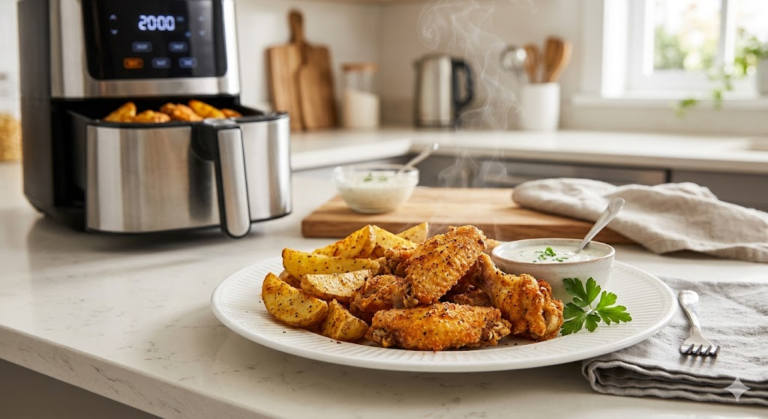
Air fryer bacon solves every problem that stovetop bacon creates. Grease spatter across the cooktop and backsplash. Strips curling unevenly in the pan. Fat pooling around the bacon during cooking so it fries in its own grease rather than rendering cleanly. Standing at the stove flipping individual strips while the rest of breakfast waits. The air fryer eliminates all of it: the fat drips through the basket grate and collects in the drip tray below, strips lie flat throughout the entire cook, and the circulating hot air browns both sides simultaneously without requiring you to flip — though one flip at the halfway mark does improve color evenness.
PrintAir Fryer Bacon
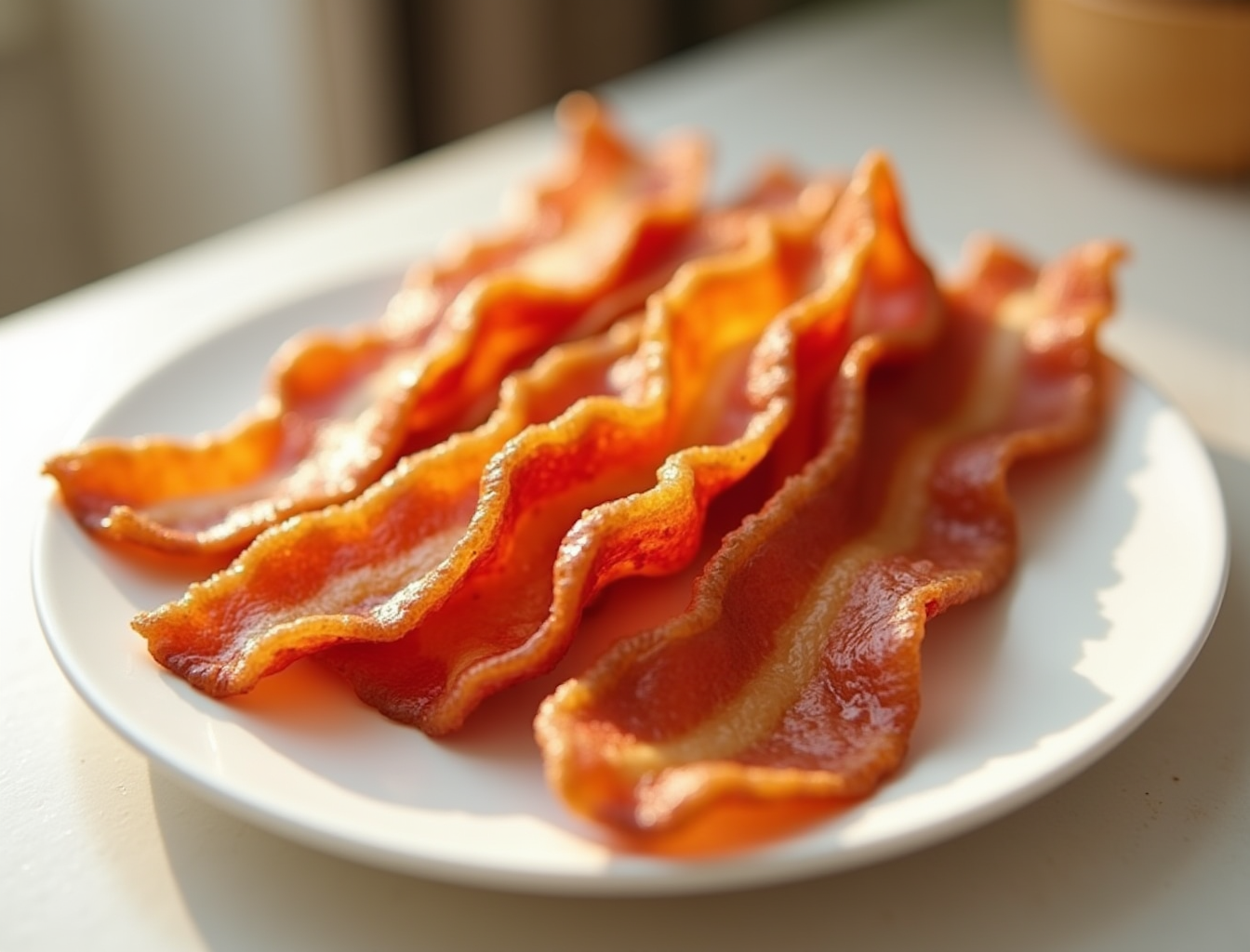
Crispy, evenly browned bacon cooked entirely in the air fryer — fat drips away through the basket, no grease spatter, and cleanup is just a drip tray rinse.
- Cook Time: 15 minutes
- Total Time: 15 minutes
- Yield: 6–8 strips (about 4 servings) 1x
- Category: Breakfast
- Method: Air Fryer
- Cuisine: American
Ingredients
- 6–8 strips bacon (regular-cut or thick-cut)
- Optional: black pepper, brown sugar, or cayenne for seasoning
Instructions
- Preheat the air fryer to 375°F (190°C) for 3 minutes. Preheating ensures fat begins rendering immediately rather than pooling.
- Lay bacon strips flat in the basket in a single layer without overlapping. Cook in batches if needed — a standard 5–6 qt basket fits 5–6 regular-cut or 4–5 thick-cut strips.
- Cook at 375°F. For regular-cut bacon, cook 9 minutes total, flipping at 4 minutes. For thick-cut, cook 12 minutes total, flipping at 6 minutes. In the final 2 minutes, monitor closely — bacon moves quickly from done to overdone.
- Remove bacon with tongs and drain on a paper towel-lined plate. Rest 2 minutes before serving — bacon continues to crisp as the fat cools and solidifies.
Notes
Don’t overcrowd: Overlapping strips steam each other and stay soft. Always cook in single-layer batches. Second and subsequent batches cook 1–2 minutes faster since the basket is already hot.
Brand-specific tips: Ninja AF101 — check regular-cut at 7 min; Cosori Pro (5.8 qt) fits 6–7 strips; Instant Vortex Plus runs hot, check regular-cut at 6 min; Philips Essential — use 350°F for 10 min.
Thick-cut vs. regular-cut: Thick-cut is more forgiving with a wider window before overcooking. Regular-cut requires close attention in the last 1–2 minutes.
The result is consistently crispy bacon with less retained fat than pan-fried strips, because the rendered grease has nowhere to pool back onto the meat. It also means cleanup is a single drip tray to rinse rather than a full pan scrub with cooked-on grease. For anyone who makes bacon more than occasionally, the air fryer method is not a novelty — it becomes the default.
How Does Air Fryer Bacon Compare to Other Cooking Methods?
| Method | Active Time | Grease Mess | Crispiness | Result Consistency |
|---|---|---|---|---|
| Air Fryer | Minimal (1 flip) | Contained in drip tray | Excellent | Very consistent |
| Stovetop (skillet) | High (constant attention) | Significant spatter | Excellent (when done right) | Variable |
| Oven (sheet pan) | Low | Contained to pan | Very good | Very consistent |
| Microwave | Minimal | None | Poor (chewy, not crispy) | Inconsistent |
The oven method on a sheet pan with a wire rack is a legitimate competitor — it also allows fat to drip away, produces consistent results, and handles large batches. The air fryer wins on speed (8–10 min vs. 18–22 min) and on not heating your entire kitchen. For batches of 4–6 strips, the air fryer is faster; for feeding a crowd (12+ strips), the oven sheet pan method handles volume better.
What Do You Need to Make Air Fryer Bacon?
Ingredients
- 6–8 strips of bacon (regular-cut or thick-cut — see timing differences below)
- No oil needed
- Optional: black pepper, brown sugar, or cayenne for seasoning
Tools Needed
- Air fryer with a drip tray or removable basket
- Tongs for flipping
- Paper towels for draining after cooking
- Air fryer rack/trivet (optional — elevates bacon for even airflow)
Bacon does not require any preparation — no patting dry, no marinating, no seasoning (unless desired). This is one of the few foods where you can go directly from the package to the air fryer with zero prep steps. Thick-cut bacon (around 1/8-inch thick) is more forgiving because it takes longer to cook, giving you more control over final doneness. Regular-cut bacon (about 1/16-inch) cooks faster and requires more attention in the last 1–2 minutes to prevent over-crisping.
How Do You Cook Bacon in the Air Fryer Step by Step?
Step 1: Preheat the Air Fryer
Set the air fryer to 375°F (190°C) and preheat for 2–3 minutes. Preheating is especially important for bacon because a cold basket causes the bacon fat to slowly pool rather than immediately beginning to render and drip away. Starting in a hot air fryer means the fat renders from the first minute of cooking, which is what produces crispy rather than greasy bacon.
Step 2: Arrange Bacon Strips in a Single Layer
Lay bacon strips flat in the basket without overlapping. This is the one non-negotiable rule for air fryer bacon: overlapping strips produce uneven cooking, with the layered section remaining soft while exposed ends overcook. In a standard 5–6 qt basket, you can fit 5–6 strips of regular-cut bacon or 4–5 thick-cut strips. Cook in batches rather than cramming strips in on top of each other.
If your air fryer came with a small elevated rack or trivet insert, use it. Elevating the bacon off the basket floor by even half an inch improves airflow underneath the strips and produces more even browning on the bottom.
Step 3: Cook and Flip Once
Cook at 375°F. Timing depends on bacon thickness and desired crispness:
| Bacon Type | Temperature | Total Time | Flip At | Result |
|---|---|---|---|---|
| Regular-cut (standard) | 375°F (190°C) | 7–9 min | 4 min | Crispy throughout |
| Thick-cut | 375°F (190°C) | 10–12 min | 5–6 min | Crispy exterior, slightly chewy center |
| Turkey bacon | 375°F (190°C) | 6–8 min | 3–4 min | Crispy with less rendered fat |
| Center-cut bacon | 375°F (190°C) | 8–9 min | 4–5 min | Even crispness (less fat, more meat) |
Flip the bacon at the stated time using tongs. The first side will be beginning to brown; the flip ensures both sides brown to the same color. In the final 1–2 minutes, check the bacon through the basket or drawer — bacon goes from perfectly done to over-done quickly due to the carryover cooking from the hot fat in the strips.
Step 4: Drain and Rest
Remove bacon with tongs and place on a paper towel-lined plate. Let it rest for 1–2 minutes. Bacon continues to crisp slightly during this rest period as the fat cools and solidifies. What looks slightly underdone when it comes out of the air fryer will reach your desired texture by the time it has rested. If you remove it only when it already looks perfectly done, it will likely be over-done after resting.
What Are the Pro Tips for Perfect Air Fryer Bacon Every Time?
Never Overcrowd — Cook in Batches
The most common air fryer bacon mistake is trying to fit too many strips in at once. When strips overlap, they essentially steam each other at the point of contact. The overlapped areas stay soft, fatty, and pale even as the exposed edges crisp. Always cook in single-layer batches. The second batch cooks faster than the first because the air fryer basket is already hot — reduce time by 1–2 minutes for subsequent batches.
Watch the Final 2 Minutes Closely
Bacon has a narrow window between done and overdone. The high fat content means it can go from ideal to burnt-tasting within 90 seconds. In the final 2 minutes, check through the basket window (if your air fryer has one) or pull the basket out briefly at the 1-minute mark before the stated end time. The bacon should be deep amber-brown with slight curling at the edges — not black, not flat.
Brand-Specific Settings
- Ninja AF101: Use the “Air Fry” function at 375°F. The Ninja’s compact basket concentrates heat slightly — check at 7 minutes for regular-cut, 9 minutes for thick-cut.
- Cosori Pro: 375°F works well. Cosori’s larger basket (5.8 qt) allows 6–7 strips in a single layer — use the full basket width.
- Instant Vortex Plus: Use “Air Fry” at 375°F. Some users find the Vortex Plus runs hot — start checking regular-cut bacon at 6 minutes.
- Philips Essential: 350°F for 9–10 minutes for regular-cut. Philips models tend to run slightly cooler than indicated — adjusting to 350°F still produces crispy bacon with less risk of burning.
What Are the Best Flavor Variations for Air Fryer Bacon?
Brown Sugar and Black Pepper Candied Bacon
Before cooking, sprinkle each strip with a pinch of brown sugar (about ½ tsp per strip) and a few grinds of coarse black pepper. The sugar caramelizes during the last 3–4 minutes of cooking, creating a lacquered, slightly sweet-bitter crust. Watch closely in the final minutes — the sugar can burn if left too long. Reduce total cook time by 1 minute compared to plain bacon because the sugar accelerates browning. Use regular-cut bacon for this variation; thick-cut does not develop the same full caramelization within the standard cook time.
Smoky Liquid Smoke Bacon
For an intensified smoky flavor beyond what regular cured bacon provides, brush each strip lightly with a few drops of liquid smoke (hickory or mesquite) before cooking. Use a pastry brush and apply sparingly — liquid smoke is concentrated and a little goes a long way. This works especially well with turkey bacon, which naturally has less fat and therefore a milder, less porky flavor that benefits from the smoke enhancement.
Sweet and Spicy Bacon
Mix 1 tsp of cayenne pepper with 2 tsp of maple syrup. At the 5-minute mark (halfway through cooking), use a brush to apply the mixture over the top side of the strips. Continue cooking for the remaining 3–5 minutes. The result is a glossy, spicy-sweet exterior that works well on breakfast sandwiches or crumbled over salads. Adjust the cayenne quantity based on your heat preference — even ½ tsp delivers noticeable heat.
Turkey Bacon Adjustment
Turkey bacon is lower in fat than pork bacon, which means it cooks faster, renders less visible fat, and can turn chewy rather than crispy if overcooked. Cook turkey bacon at 375°F for 6–8 minutes total, flipping at 3–4 minutes. Turkey bacon should be removed when it is golden-brown and slightly firm to the touch — it will continue to firm up during resting. Unlike pork bacon, it does not get truly crispy throughout; it achieves a crisp exterior with a slightly firmer, chewier interior.
How Do You Store and Reheat Cooked Air Fryer Bacon?
Refrigerator storage: Cooked bacon stores well in an airtight container or zip-lock bag in the refrigerator for up to 4–5 days. Layer strips between pieces of paper towel to absorb any residual grease. Keeping strips separated by paper towel also prevents them from sticking together when cold.
Freezer storage: Freeze cooked bacon strips by laying them flat on a sheet pan, freezing until solid (about 1 hour), then transferring to a freezer bag. Frozen cooked bacon keeps for up to 1 month. Label with the date — frozen bacon’s texture degrades beyond 4–6 weeks.
Reheating in the air fryer: Place refrigerated strips in the air fryer at 350°F (175°C) for 2–3 minutes. Frozen strips: 350°F for 4–5 minutes. The air fryer is the only method that restores crispness to cooked bacon — the microwave makes it soggy, the stovetop works but requires grease management again, and the oven works but is overkill for a few strips.
The overnight crispness test: If you cooked bacon the night before and find it soft after refrigerating, 2 minutes in the air fryer at 350°F will restore most of the crispness. The key is not to rush it — lower and slower at 350°F rather than blasting at 400°F, which will over-crisp the edges before the center warms through.
Frequently Asked Questions About Air Fryer Bacon
How long does bacon take in the air fryer?
Regular-cut bacon takes 7–9 minutes at 375°F (190°C), flipping once at the 4-minute mark. Thick-cut bacon takes 10–12 minutes, flipping at 5–6 minutes. Turkey bacon is faster at 6–8 minutes. These times assume a preheated air fryer — if you skip preheating, add 1–2 minutes to each estimate. Timing also varies slightly by air fryer model and brand: some models run hotter than their display suggests. When in doubt, check the bacon 1 minute before the stated time and cook to your visual preference.
Do I need to flip bacon in the air fryer?
Technically no — the circulating hot air will cook both sides. But one flip at the halfway point does improve color consistency between the two sides. Without flipping, the top side (facing directly into the circulating air) tends to brown slightly more than the bottom side, which rests on the basket surface. Flipping once evens this out. If you prefer not to flip, simply reduce your temperature by 5–10°F and extend the time by 1–2 minutes to allow the bottom side to catch up.
Can I cook bacon without an air fryer rack?
Yes — the basket floor works fine for bacon because bacon fat renders and drips through the grate naturally. The rack is an enhancement, not a requirement. If your air fryer has a detachable rack or trivet that elevates food, it does help: the bacon is kept further from the grease pooling on the basket floor, and more air circulates underneath each strip. Without the rack, the strips in contact with the basket floor may be slightly less crispy on that side compared to the top. The difference is noticeable but not dramatic.
Is air fryer bacon healthier than pan-fried bacon?
Air fryer bacon has modestly less retained fat than pan-fried bacon because rendered grease drips away from the strips rather than pooling around them during cooking. The difference is not dramatic — bacon is bacon, and the fat content of the raw strips determines most of the nutritional profile. What air frying does eliminate is the need to add external oil or butter to the cooking vessel. In practical terms: you are not adding fat in the cooking process, and some portion of the bacon’s own fat renders away rather than being reabsorbed. Center-cut bacon, which has more lean meat and less fat than regular strips, produces a noticeably leaner result in the air fryer.
Can I cook bacon and eggs in the air fryer at the same time?
Yes, but sequentially is easier than simultaneously. Cook the bacon first (375°F for 7–9 minutes), remove it to rest, then lower the temperature to 370°F and cook your eggs in silicone cups for 6–7 minutes. You can also do both at once in a larger air fryer: place bacon strips on one side of the basket and a silicone egg cup on the other. The challenge is that bacon and eggs need slightly different temperatures and times — bacon at 375°F benefits the crisping process, while eggs at 370°F cook more gently. The compromise of 370°F works for both simultaneously in a pinch. See our full guide on air fryer eggs for full timing and technique details.