Air Fryer Tuna Steak: Sear Without a Pan
Air Fryer Tuna Steak
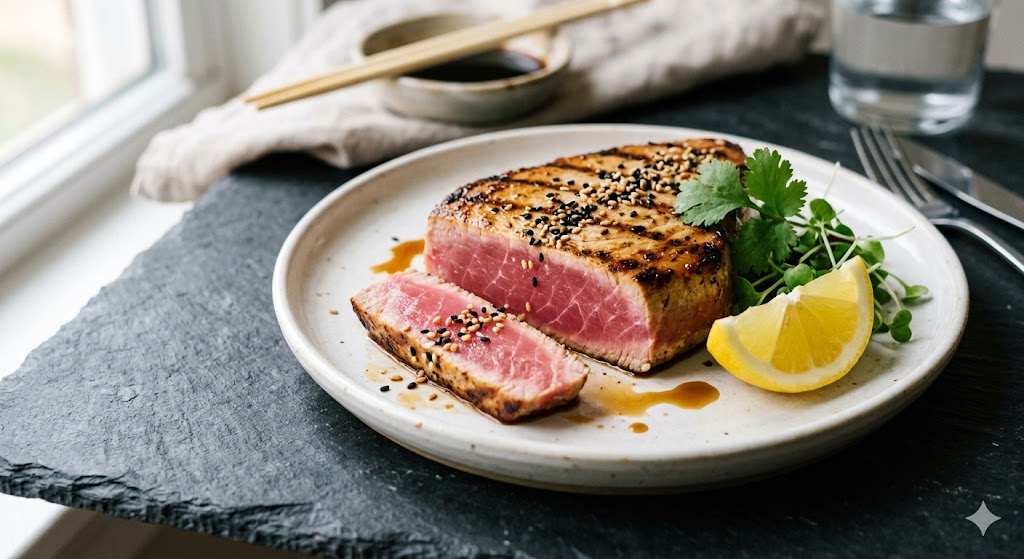
Perfectly seared ahi tuna steaks with a light crust on the outside and a vibrant pink center, cooked in the air fryer in just 6 minutes total.
- Prep Time: 5 minutes
- Cook Time: 6 minutes
- Total Time: 11 minutes
- Yield: 2 servings 1x
- Category: Dinner
- Method: Air Fryer
- Cuisine: Asian
Ingredients
- 2 ahi tuna steaks, 6–8 oz each, about 1 inch thick
- 1 tablespoon olive oil or sesame oil
- 1 teaspoon garlic powder
- ½ teaspoon salt
- ½ teaspoon black pepper
- Optional: 1 tablespoon soy sauce or teriyaki glaze
- For serving:
- Sesame seeds, sliced green onions, sliced avocado, steamed rice, soy sauce, wasabi, brined ginger
Instructions
- Pat the tuna steaks dry. Rub both sides with olive oil or sesame oil, then season generously with salt, pepper, and garlic powder. If using a soy-based glaze, brush it on now. Optional: press steaks into a shallow dish of sesame seeds for a crust.
- Preheat the air fryer to 400°F for 3 minutes. Lightly spray the basket.
- Place tuna steaks in a single layer in the basket, ensuring they do not overlap.
- For rare to medium-rare: cook for 4 minutes total, flipping halfway. For medium: cook 6 minutes, flipping halfway. For fully cooked: cook 8 minutes, flipping halfway (internal temp 145°F).
- Rest tuna steaks for 2–3 minutes. Slice against the grain into ½-inch slices and serve with desired accompaniments.
Notes
Preheat thoroughly — starting in a hot air fryer creates a better sear immediately.
Watch the time closely: tuna goes from perfect to overcooked in about 60–90 seconds. Check at the early end of the range.
Use a thermometer for precision: 115–120°F = rare, 125–130°F = medium-rare, 135°F = medium, 145°F = fully cooked.
For an Asian-leaning profile, use sesame oil instead of olive oil.
Quick Ponzu Sauce: mix 2 tablespoons soy sauce, 1 tablespoon fresh citrus juice, 1 teaspoon sesame oil, and ¼ teaspoon grated ginger. Drizzle over sliced tuna before serving.
A perfectly cooked tuna steak has a thin seared crust on the outside and a vibrant pink center — somewhere between rare and medium-rare. Achieving this in a skillet requires very high heat and constant attention for about 60–90 seconds per side. The air fryer does it differently but just as effectively: circulating heat creates a light crust on all surfaces simultaneously, and the timing is forgiving enough that you can hit that perfect doneness without standing over the stove. Six minutes total for a restaurant-quality tuna steak.
Choosing the Right Tuna
For tuna steaks meant to be cooked rare to medium-rare, quality matters. You want:
- Sashimi-grade or sushi-grade ahi (yellowfin) tuna — labeled as such at specialty fish counters or Japanese grocery stores
- Bluefin or bigeye tuna — premium options if available in your area
- Steaks about 1 inch thick — thinner cooks too fast, thicker takes too long to heat the center
If your intention is to cook tuna to fully cooked (165°F), the quality grade matters less. But for medium-rare, start with the freshest, best-quality tuna you can find. Ask your fishmonger — they know.
Ingredients (Serves 2)
- 2 ahi tuna steaks, 6–8 oz each, about 1 inch thick
- 1 tablespoon olive oil or sesame oil
- 1 teaspoon garlic powder
- ½ teaspoon salt
- ½ teaspoon black pepper
- Optional: 1 tablespoon soy sauce or teriyaki glaze
For serving: Sesame seeds, sliced green onions, sliced avocado, steamed rice, soy sauce, wasabi, brined ginger
Seasoning and Prep
Pat the tuna steaks dry. Rub both sides with olive oil or sesame oil (sesame adds an Asian-inspired flavor that works beautifully with tuna). Season generously with salt and pepper, and garlic powder. If using a soy-based glaze, brush it on now.
Optional: press the steaks into a shallow dish of black and white sesame seeds for a crust. This adds visual appeal and a subtle nutty flavor.
Air Fryer Temperature and Time
Preheat the air fryer to 400°F for 3 minutes. Spray the basket lightly. Place tuna steaks in a single layer — they should not overlap.
For rare to medium-rare (the preferred doneness): cook for 3–4 minutes total, flipping at the halfway point. The exterior will be browned and the center will be warm but translucent-to-pink.
For medium: cook 5–6 minutes, flipping halfway. Pink in the very center only.
For fully cooked: cook 7–8 minutes, flipping halfway. Internal temperature at 145°F. Note: fully cooked tuna becomes dry and opaque. It’s safe but loses the silky texture that makes tuna steak special.
Use a thermometer for precision: 115–120°F = rare, 125–130°F = medium-rare, 135°F = medium.
Resting and Slicing
Rest tuna steaks for 2–3 minutes before slicing. Slice against the grain (look for the muscle lines running lengthwise — cut perpendicular to them) into ½-inch slices. This produces clean, tender slices that fan out beautifully on the plate.
Serving Ideas
- Seared tuna salad: Over mixed greens with sliced avocado, cucumber, sesame ginger dressing
- Tuna rice bowl: Over steamed short-grain rice with soy sauce, sesame oil, sliced cucumber, and edamame
- Tuna tacos: Sliced tuna in small corn tortillas with avocado, shredded cabbage, and sriracha mayo
- Classic presentation: With wasabi, brined ginger, and soy sauce alongside — like sashimi, but warm
Quick Ponzu Sauce
Mix 2 tablespoons soy sauce, 1 tablespoon fresh citrus juice (lemon, lime, or orange), 1 teaspoon sesame oil, and ¼ teaspoon grated ginger. Drizzle over the sliced tuna right before serving. Simple, bright, and perfect.
Tips for Perfect Air Fryer Tuna
- Preheat thoroughly. Starting in a hot air fryer creates a better sear on the exterior immediately rather than cooking from cold.
- Watch the time closely. Tuna goes from perfect to overcooked in about 60–90 seconds. Set a timer and check at the early end of the range.
- Don’t overcrowd. Leave space around each steak for proper heat circulation.
- Dry the surface. As with all fish, patting dry before oiling gives better surface browning.
- Sesame oil adds flavor. If you want an Asian-leaning profile, use sesame oil instead of olive oil. It’s a small change that makes the dish taste more intentional.
Frequently Asked Questions
Is it safe to eat tuna steak rare or medium-rare?
The FDA recommends cooking all fish to 145°F. Many people eat seared tuna rare to medium-rare regularly without issue, but the FDA safety standard is 145°F. Using sashimi-grade tuna from a reputable source reduces risk. Use your own judgment based on the fish quality and your household.
What’s the difference between ahi and albacore tuna?
Ahi (yellowfin) is what you typically see as tuna steaks — dark red, meaty, and meant to be eaten seared rare. Albacore is lighter colored and often used for canned tuna; it can also be cooked as a steak but is typically cooked through rather than rare.
Can I use frozen tuna steaks?
Thaw completely and pat very dry. Frozen tuna often releases water as it cooks. If using for rare-seared preparation, buy fresh or sashimi-grade frozen and thaw properly.
My tuna came out dry and gray all the way through. What went wrong?
It was overcooked. Tuna goes from ideal to overdone very quickly — even a minute too long makes a real difference. Next time, reduce the cooking time by 1–2 minutes and check early with a thermometer.
Can I marinate tuna steak before cooking?
A brief marinade of 15–20 minutes in soy sauce, sesame oil, and ginger adds great flavor. Don’t marinate longer than 30 minutes — the salt in soy sauce begins to affect the surface texture.