Air Fryer Halibut: Perfectly Flaky Every Time
Air Fryer Halibut
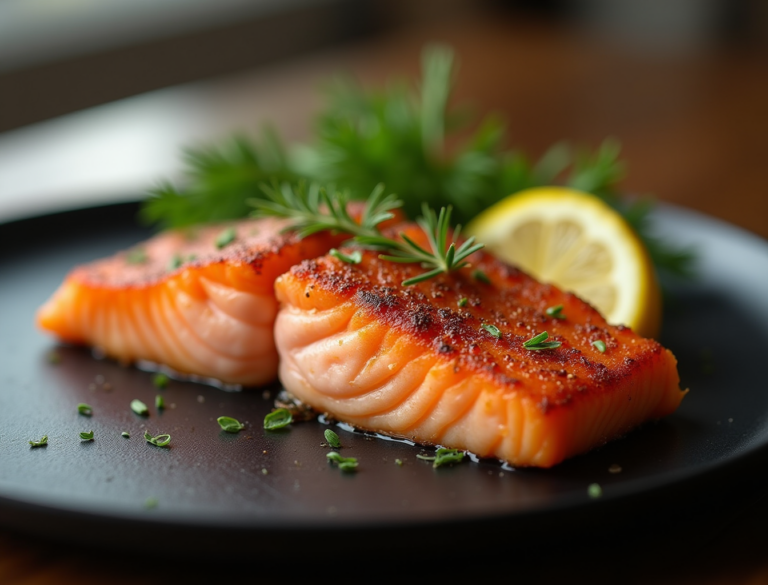
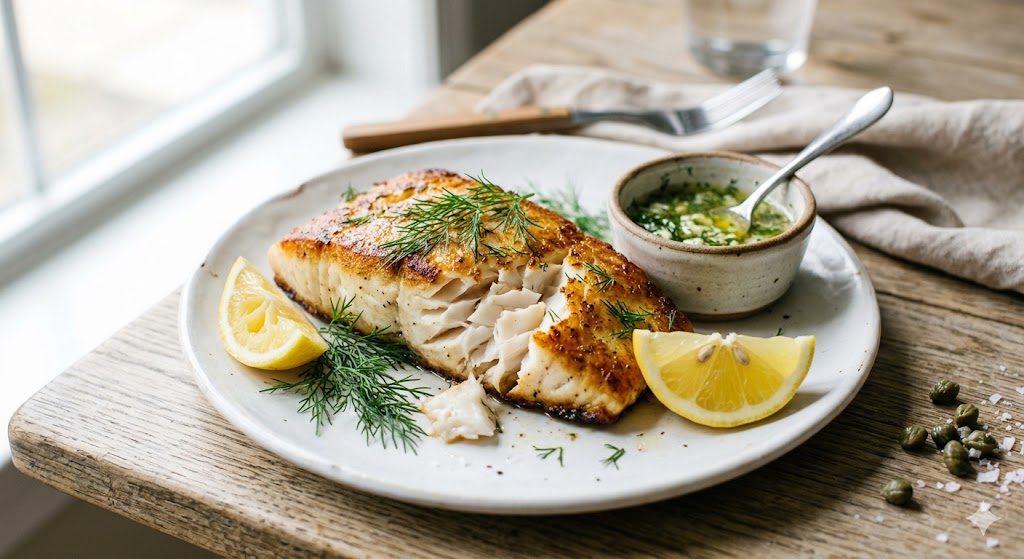
Mildly sweet, meaty halibut fillets seasoned with garlic, lemon, and paprika, then air-fried to perfectly flaky doneness in about 12 minutes. The circulating heat delivers consistent results without the risk of overcooking.
- Prep Time: 20 minutes
- Cook Time: 15 minutes
- Total Time: 35 minutes
- Yield: 4 servings 1x
- Category: Dinner
- Method: Air Fryer
- Cuisine: American
Ingredients
- 4 halibut fillets, 6 oz each, about 1 inch thick
- 2 tablespoons olive oil or melted butter
- 3 cloves garlic, minced
- 1 teaspoon lemon zest
- 1 teaspoon paprika
- ½ teaspoon dried thyme or dried dill
- 1 teaspoon salt
- ½ teaspoon black pepper
- Lemon wedges, for serving
Instructions
- If using frozen halibut, thaw overnight in the refrigerator. Pat fillets completely dry on both sides with paper towels.
- Mix together the olive oil (or butter), garlic, lemon zest, paprika, thyme, salt, and pepper. Brush or rub the mixture evenly over both sides of each fillet.
- Let the seasoned fillets rest at room temperature for 15–20 minutes to help them cook more evenly.
- Preheat the air fryer to 400°F for 3 minutes. Spray the basket lightly with cooking spray.
- Place fillets in a single layer with no overlap. Do not stack.
- Cook for 10–12 minutes (use 12 minutes as the upper bound). Check at 10 minutes — the fish should flake when pressed with a fork and the internal temperature should read 130–135°F for moist and tender, or 145°F for fully cooked per FDA standards.
- Do not flip the fillets. If your air fryer has hot spots, rotate the basket 180 degrees at the halfway point instead.
- Rest for 2–3 minutes before serving. Serve with lemon wedges.
Notes
Don’t overcook. Halibut has very little fat and dries out quickly. Use a thermometer and pull at 130–135°F for best texture.
Uniform thickness matters. Fold thin tail ends under to create a uniform piece before cooking.
Spray the basket. Halibut sticks more than most fish — a light coat of cooking spray makes a big difference.
Butter vs. oil. Olive or avocado oil is safer at high heat; brush butter on in the last 1–2 minutes for added flavor without smoking.
Quick brown butter caper sauce: Heat 3 tablespoons butter in a small pan over medium heat until amber and nutty, about 3–4 minutes. Add 1 tablespoon capers, juice of half a lemon, and a pinch of salt. Pour over fish before serving.
Halibut is a premium fish — mildly sweet, meaty, and beautifully flaky when cooked right. The challenge with halibut has always been nailing the texture: a minute or two over and it goes from silky to chalky. The air fryer is actually one of the best ways to cook halibut because the circulating heat is consistent and fast, giving you that perfectly cooked center without a long window of uncertainty. Ten to twelve minutes and it’s done.
What You’ll Need (Serves 4)
- 4 halibut fillets, 6 oz each, about 1 inch thick
- 2 tablespoons olive oil or melted butter
- 3 cloves garlic, minced
- 1 teaspoon lemon zest
- 1 teaspoon paprika
- ½ teaspoon dried thyme or dried dill
- 1 teaspoon salt
- ½ teaspoon black pepper
- Lemon wedges for serving
Prepping the Halibut
If your halibut is frozen, thaw it overnight in the fridge. Pat completely dry with paper towels — both sides. Halibut releases moisture as it cooks, and starting dry gives you a slightly better crust on the outside.
Mix the olive oil (or butter), garlic, lemon zest, paprika, thyme, salt, and pepper together. Brush or rub this mixture over both sides of each fillet. If you have 15–20 minutes, let the seasoned fillets sit at room temperature — this helps them cook more evenly by reducing the temperature differential between the surface and center.
Air Fryer Time and Temperature
Preheat your air fryer to 400°F for 3 minutes. Spray the basket lightly with cooking spray (halibut can stick). Place fillets in a single layer — no overlap.
Cook for 10–12 minutes. For fillets right around 1 inch thick, 10 minutes usually nails it. Check at 10 minutes: the fish should flake when pressed with a fork and the internal temperature should read 130–135°F for moist and just-cooked, or 145°F for fully cooked by FDA standards.
Halibut is best on the slightly less-done side — 130–135°F gives the most tender result. At 145°F it’s safe and still acceptable, just a bit firmer. Do not go beyond 145°F.
No-Flip Method
Unlike many air fryer recipes, halibut doesn’t need to be flipped. The circulating air cooks it evenly from all directions, and flipping risks breaking the delicate fillets. Leave it alone and let the air fryer do the work.
If your air fryer cooks unevenly (hot spots in the back), rotate the basket 180 degrees at the halfway point instead of flipping the fish. This technique ensures even cooking and is also useful for achieving the perfect crunch in crispy air fryer recipes.
Serving Suggestions
- Classic: With a squeeze of lemon, roasted potatoes, and green beans
- Mediterranean: Over orzo with cherry tomatoes, capers, and olives, finished with olive oil
- Asian-inspired: Glazed with a mix of soy sauce, sesame oil, and a touch of honey in the last 2 minutes of cooking
- Tacos: Flaked into warm corn tortillas with avocado crema and shredded cabbage
- Simple: Brown butter, capers, and lemon over the top — takes 3 minutes in a pan while the fish rests
Quick Brown Butter Caper Sauce
While the halibut cooks, heat 3 tablespoons of butter in a small pan over medium heat until it turns amber and smells nutty, about 3–4 minutes. Add 1 tablespoon of capers, the juice of half a lemon, and a pinch of salt. Pour immediately over the fish before serving. This sauce is why fancy restaurants can charge $35 for fish.
Tips for Perfect Halibut
- Don’t overcook. This is the cardinal rule with halibut. Use a thermometer and pull it at 130–135°F for best texture.
- Uniform thickness matters. If your fillets vary in thickness, fold thin tail ends under to create a uniform piece before cooking.
- Spray the basket. Halibut sticks more than other fish. A light coat of spray makes a big difference.
- Rest briefly. A 2–3 minute rest after cooking lets the juices settle. It makes a difference.
- Butter vs. oil. Butter adds flavor but can smoke at very high temps. Olive oil or avocado oil is safer for high heat; use butter for finishing (brush on in the last 1–2 minutes).
Frequently Asked Questions
Can I use frozen halibut without thawing?
You can in a pinch — add 4–5 extra minutes and accept that the texture will be slightly less optimal. Thawed and dried is always better for halibut specifically.
Is halibut always safe to eat at 130°F?
The FDA recommends 145°F for all fish for safety. 130–135°F is used by many chefs for quality, similar to beef temperatures. Use your judgment based on the freshness of the fish and your household’s health situation.
Why is my halibut dry?
It was cooked too long or too hot. Halibut has very little fat, so it dries out quickly past the ideal temperature. A thermometer is your best insurance.
Can I add a breadcrumb crust to halibut?
Yes — use the panko breading from the cod recipe. Press it on firmly and spray well. The crust adds great texture but makes it harder to monitor the internal temp (use a thermometer through the crust from the side).
What’s the difference between halibut and cod?
Both are mild white fish, but halibut is firmer, meatier, and more expensive. Cod has a slightly softer, more flaky texture. Both are excellent in the air fryer.
![Air Fryer Shrimp [Crispy, Healthy, 15-Minute Recipe]](https://airfrycentral.com/wp-content/uploads/2026/03/air-fryer-shrimp-768x585.png)